
I’m excited to share about the Doberman-Pitbull mix. This unique breed combines the best of both worlds. With over 1 million mixed-breed dogs adopted each year in the U.S., knowing about this mix is important.
This breed is more than just a mix. It’s a blend of the loyal and athletic Doberman and the strong and confident Pitbull. If you’re thinking of getting one, it’s key to understand its temperament, needs, and traits.
Key Takeaways
- Understanding the parent breeds is crucial.
- The Doberman-Pitbull mix is known for loyalty and strength.
- Potential owners should be aware of the breed’s needs.
- Training and socialization are key to a well-behaved pet.
- This hybrid breed requires regular exercise.
Overview of the Doberman and Pitbull Breeds
Learning about the Doberman and Pitbull breeds helps us understand their mix. It’s key to know their history and traits.
Origin and History of the Doberman
The Doberman Pinscher came from Germany in the late 1800s. It was made to be a guard dog, known for smarts, speed, and loyalty. Developed by Friedrich Louis Dobermann, it was meant to look tough but be loyal, making it a great protector and friend.
As dog historians say,
“The Doberman was created to be a fearless guard dog, combining the traits of various breeds to achieve the perfect balance of strength and loyalty.”
This background helps us see the Doberman’s part in the Doberman-Pitbull mix.
Origin and History of the Pitbull
The Pitbull started in England for bloodsports like bull-baiting. Over time, the breed evolved into a friendly, athletic pet, known for its strength, agility, and love for people.
The Pitbull’s history is complex, used for many things, including being a family pet. As breed fans say,
“Despite their tough past, Pitbulls have evolved into loving and loyal family pets.”
Key Characteristics of Each Breed
Both Dobermans and Pitbulls are smart, loyal, and athletic. Dobermans have a sleek coat, strong build, and alert look. Pitbulls are strong, agile, and friendly.
- The Doberman is highly trainable and often works as a police or guard dog.
- The Pitbull is known for its affectionate nature and is often described as a “nanny dog” due to its gentle interaction with children.
Knowing these traits helps us care for and train the Doberman-Pitbull mix better.
Physical Appearance of Doberman-Pitbull Mix
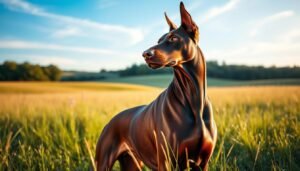
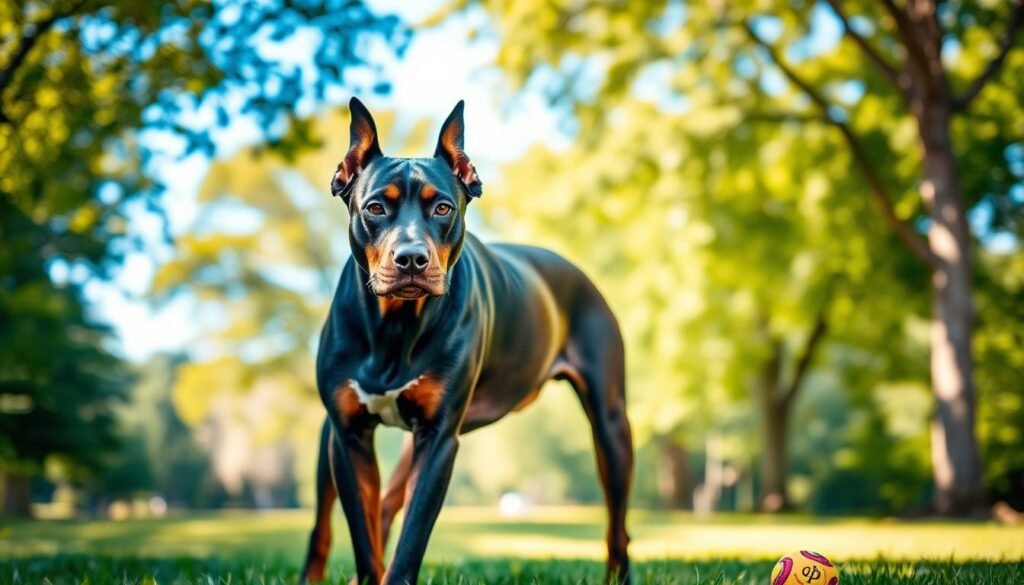
The Doberman-Pitbull mix is a stunning dog with a strong build and many coat colors. It combines the muscle and speed of both breeds. This makes it a standout dog with impressive looks.
Size and Build of the Hybrid
This mix is usually medium to large in size. It gets its muscle from the Pitbull and its sleek look from the Doberman. This results in a dog that’s strong, agile, and capable of great endurance.
Coat and Color Variations
The coat of a Doberman-Pitbull mix can be short and smooth or a bit longer. It comes in many colors like black, brown, fawn, and brindle, sometimes with white markings. Each dog’s coat and color are unique, thanks to its parents.
Distinctive Features
This mix has a muscular neck and shoulders from its Pitbull side. It also has a sleek body and distinctive facial structure from the Doberman. For more on similar breeds, like the Doberman and Rottweiler mix, there are many resources online.
Temperament and Personality Traits
Understanding a Doberman-Pitbull mix’s temperament is key for owners. This mix combines the loyalty and athleticism of both breeds. It results in a unique personality.
Friendly and Affectionate Nature
Doberman-Pitbull mixes are friendly and affectionate. They are great family pets because of their loyalty and love. These dogs are often called gentle giants, showing deep affection for their families.
Intelligence and Trainability
The Doberman-Pitbull mix is known for their intelligence and trainability. Both Dobermans and Pitbulls are smart and easy to train. Their mix thrives on positive reinforcement, learning many commands and behaviors with consistent training.
Potential for Aggression
Like any breed, the Doberman-Pitbull mix can be aggressive if not socialized and trained well. Early socialization is crucial for their development. Owners must invest time in training and socializing to prevent aggression.
| Trait | Description |
|---|---|
| Friendly and Affectionate | Loyal and loving towards their family |
| Intelligent and Trainable | Responds well to positive reinforcement training |
| Potential for Aggression | Requires early socialization and training to prevent aggression |
Health Considerations for Doberman-Pitbull Mix
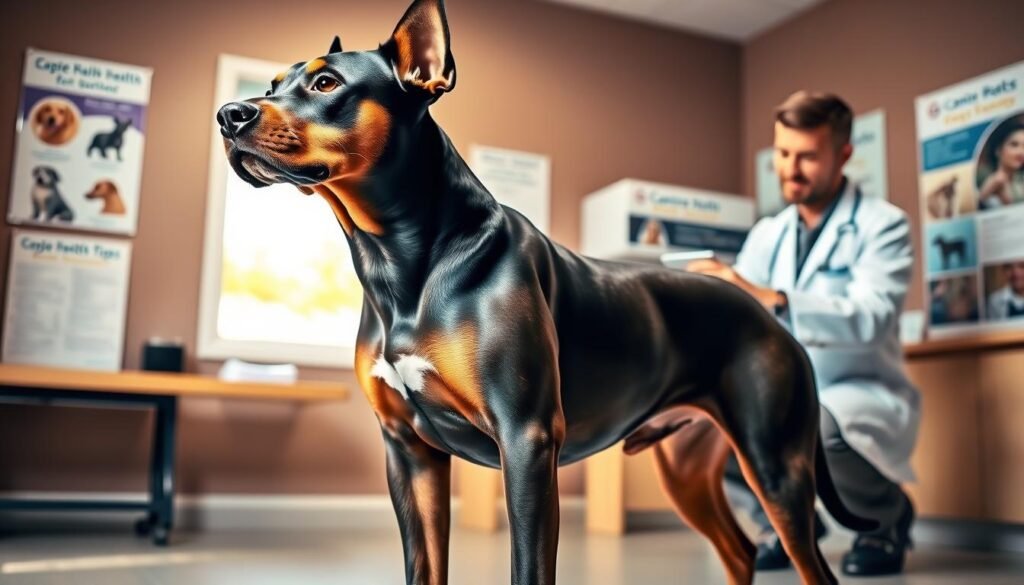
It’s important to know about the health issues of the Doberman-Pitbull mix. This mix can face health problems from its parent breeds. Knowing these can help you care for your dog better.
Common Health Issues
The Doberman-Pitbull mix may have health problems from its parents. Some common issues include:
- Cardiovascular problems: Issues like dilated cardiomyopathy can happen. Regular heart checks are key.
- Hip dysplasia: This can cause arthritis and mobility problems. Keeping your dog’s weight healthy is important.
- Allergies and skin issues: Skin allergies and problems can be uncomfortable. They need proper vet care.
Importance of Regular Vet Check-ups
Regular vet visits are crucial for catching health problems early. These visits help in:
- Monitoring overall health and detecting issues early
- Keeping vaccinations up to date
- Providing preventive care against parasites and diseases
Early detection can significantly improve the quality of life for your Doberman-Pitbull mix.
Tips for Maintaining a Healthy Diet
Feeding your Doberman-Pitbull mix a balanced diet is key. Here are some tips:
- Choose high-quality dog food: Make sure the food is full of nutrients and fits your dog’s needs.
- Avoid overfeeding: Watch how much food your dog eats to prevent obesity. Obesity can make health issues worse.
- Provide fresh water: Always have clean, fresh water for your dog to stay hydrated.
By understanding and addressing these health considerations, you can help ensure your Doberman-Pitbull mix leads a healthy, happy life.
Training Your Doberman-Pitbull Mix
The Doberman-Pitbull mix is smart and loves to please. This makes it easy to train with the right approach. It’s a mix of traits that needs careful training.
Basic Obedience Training
Basic obedience is key for a well-behaved Doberman-Pitbull mix. Teach commands like “sit,” “stay,” “come,” and “leave it.” Being consistent and using positive rewards is important.
Start with a routine of 10-15 minute training sessions, several times a day. Use treats and praise to encourage good behavior.
Socialization Techniques
Socialization is vital for the Doberman-Pitbull mix. It helps them feel comfortable around other animals and people. Start early to avoid fear and aggression.
Introduce the dog to parks, pet stores, and different breeds and people. Positive reinforcement is key during these interactions.
| Socialization Activity | Benefits |
|---|---|
| Puppy Classes | Helps with socialization and basic obedience |
| Dog Parks | Provides off-leash interaction with other dogs |
| Walks in Busy Areas | Exposes the dog to various sights and sounds |
Advanced Training Options
For more fun, try agility and tracking. These activities keep the dog’s mind and body active. They also strengthen the bond between dog and owner.
Agility training helps with coordination and confidence. Tracking uses the dog’s sense of smell, making it a fun challenge.
Using these training methods can make your Doberman-Pitbull mix a loving and well-adjusted companion.
Exercise Needs and Activities
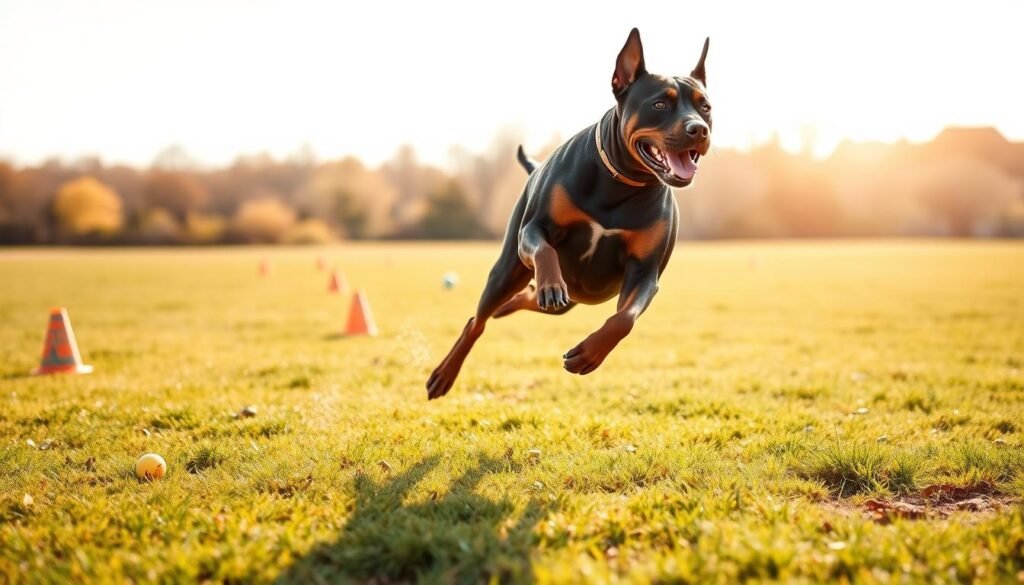
To keep your Doberman-Pitbull mix happy and healthy, it’s key to know their exercise needs. This mix of Doberman and Pitbull is energetic and athletic. So, they need regular physical activity.
Recommended Daily Exercise
Your Doberman-Pitbull mix needs at least an hour of exercise every day. This can be walks, runs, or playtime in the yard. Consistency is key to keep them physically healthy and prevent boredom.
Fun Activities and Enrichment
Fun activities like fetch, agility training, or obedience training are great. They provide physical exercise and mental stimulation. These activities strengthen your bond and keep your dog engaged.
Benefits of Physical Activity
Regular exercise is good for your Doberman-Pitbull mix. It improves their health, reduces stress, and strengthens your bond. It also prevents behavioral issues from too much energy or boredom.
By mixing physical exercise with mental stimulation, your Doberman-Pitbull mix will be happy and healthy. Remember, a tired dog is a happy dog. The right exercise keeps your furry friend engaged and content.
Family Suitability of the Doberman-Pitbull Mix
Understanding the Doberman-Pitbull mix’s temperament is key to knowing if they’re good for families. They can be great family pets if they’re well-socialized and trained.
Compatibility with Children
These mixes are loyal and loving to their families, including kids. But, how well they get along with children depends on early socialization. With the right training, they can be kind and patient, making them perfect for families with kids.
Interactions with Other Pets
How a Doberman-Pitbull mix gets along with other pets can differ. If socialized early, they can live peacefully with other pets. It’s important to introduce them slowly and carefully to keep the peace in the home.
Tips for Introducing Your Doberman-Pitbull Mix to Other Pets:
- Start with a slow introduction in a neutral area.
- Monitor body language and behavior.
- Reward calm behavior with treats.
Protective Instincts as a Family Guard
Doberman-Pitbull mixes have a strong protective instinct. They can be great family guards, making their owners feel safe. Their loyalty and protective nature make them a great choice for many families.
It’s important to train them well to avoid aggression towards strangers or other animals.
| Family Suitability Factors | Description | Importance Level |
|---|---|---|
| Compatibility with Children | Depends on socialization and training | High |
| Interactions with Other Pets | Requires careful introduction and socialization | High |
| Protective Instincts | Natural guarding ability, needs balanced training | Medium |
Grooming Requirements
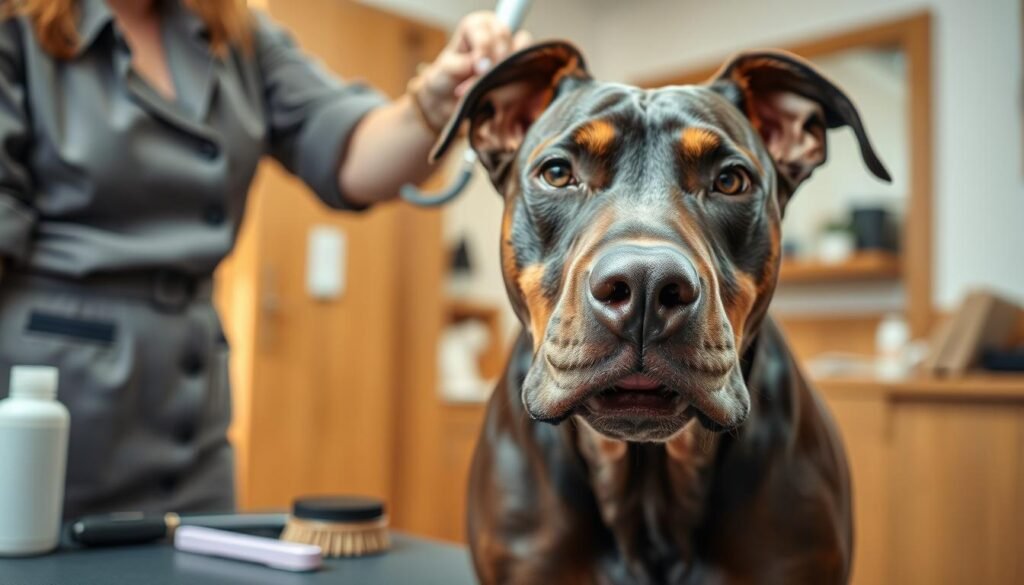
Grooming is key for a Doberman-Pitbull mix’s health and comfort. A clean dog looks and feels great. Regular grooming also stops health problems.
Coat Care and Maintenance
The Doberman-Pitbull mix has a short, smooth coat. Brushing it once or twice a week keeps it healthy and shiny. It removes dead hair and spreads skin oils.
Check their coat for skin issues during brushing. Catching problems early can stop them from getting worse.
Bathing and Brushing Tips
Bath your Doberman-Pitbull mix every 2-3 months. Unless they get dirty or smell bad. Use mild dog shampoo and conditioner to keep their coat clean.
Regular brushing is key. It cuts down on shedding and stops matting. Use a soft-bristle brush or grooming glove to remove loose hair and spread oils.
Nail Trimming and Ear Cleaning
Nail trimming is important. Trim your dog’s nails every 4-6 weeks to avoid health problems. Use a dog nail clipper or grinder carefully, avoiding the quick.
Ear cleaning is also crucial. Clean their ears weekly with a cotton ball or soft cloth. But don’t put anything in the ear canal.
Living Environment Recommendations
Knowing what a Doberman-Pitbull mix needs in their living space is key to their happiness and health. This mix requires a careful setup to ensure they do well.
Ideal Home Setup
An ideal home for a Doberman-Pitbull mix needs a big, safe area for exercise and play. A large yard with proper fencing is highly recommended for their safety.
Yard Space and Fencing Considerations
Yard size and security are important. Sturdy fencing is essential to stop them from escaping. The fence should be high to stop jumping, and check local laws for height.
Apartment Living Pros and Cons
Doberman-Pitbull mixes can live in apartments, but it’s a big decision. Pros include closer family bonding. But, cons include needing lots of exercise and mental play to avoid boredom and stress. Regular walks, play, and training can help.
Socialization and Behavioral Training
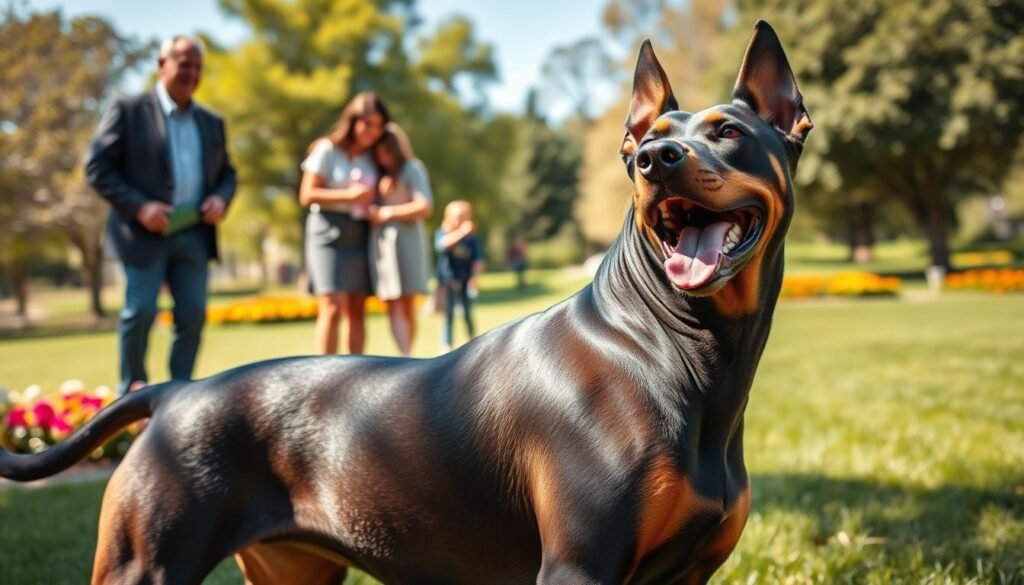
To make sure your Doberman-Pitbull mix is confident and well-behaved, socialization and training are key. This mix benefits a lot from being around different places, people, and animals early on.
Importance of Early Socialization
Early socialization is crucial for reducing the risk of anxiety or aggression in Doberman-Pitbull mixes. By slowly introducing them to new things, you build their confidence. This means dog parks, puppy classes, and time with family and friends.
- Expose your dog to different environments to broaden their adaptability.
- Introduce them to various people to foster friendly interactions.
- Socialize them with other animals to prevent aggression.
Dealing with Shyness or Fearfulness
Some Doberman-Pitbull mixes may be shy or fearful. Gentle, positive reinforcement training can help. It’s important to be patient and understanding, avoiding actions that make their fears worse.
For dogs that are shy or fearful, it’s crucial to:
- Start with small, manageable steps in their training.
- Use positive reinforcement techniques, such as treats and praise.
- Gradually increase their exposure to the sources of their fear.
Reinforcing Positive Behavior
Reinforcing positive behavior is essential for training. Rewarding good behavior with treats, praise, or play encourages your dog to do it again. Being consistent is key to raising a well-behaved dog.
To reinforce positive behavior effectively:
- Be consistent in your rewards and praise.
- Use high-value rewards for significant achievements.
- Combine rewards with affection to strengthen your bond.
Cost of Owning a Doberman-Pitbull Mix
Owning a Doberman-Pitbull mix means you’ll face several expenses. It’s not just the adoption fee. You’ll also need to budget for ongoing costs that keep your dog healthy and happy.
Adoption and Initial Costs
The adoption fee can vary a lot. It depends on where you get your dog from. For example, a reputable rescue might charge between $200 to $500. You’ll also need to pay for initial vaccinations, microchipping, and spaying/neutering, which can cost between $100 to $300. Learn more about the cost of a Doberman to understand the initial costs better.
Ongoing Maintenance Expenses
After the initial costs, there are ongoing expenses. These include high-quality dog food, regular vet visits, and supplies like toys and bedding. Food can cost between $50 to $100 a month, depending on your dog’s size and needs. Veterinary care, including preventive meds and check-ups, can also cost around $50 to $100 a month.
Affordable Training Resources
Training is key when you own a Doberman-Pitbull mix. While professional training can be expensive, there are cheaper options. Online courses, local dog training groups, and DIY resources can be effective and affordable. Training not only improves your dog’s behavior but also strengthens your bond with them.
| Expense Type | Initial Cost | Ongoing Monthly Cost |
|---|---|---|
| Adoption Fee | $200-$500 | – |
| Food | – | $50-$100 |
| Veterinary Care | $100-$300 | $50-$100 |
| Supplies | $50-$100 | $20-$50 |
| Training | $50-$200 | – |
By understanding and planning for these expenses, you can give your Doberman-Pitbull mix the best life possible.
Conclusion
The Doberman-Pitbull mix can be a great pet for the right owner. They have unique traits and needs.
Key Considerations for Ownership
For a happy dog, training, socialization, and care are essential. This means regular exercise, a good diet, and vet visits.
Embracing Responsible Ownership
If you’re thinking about a Doberman-Pitbull mix, think about your lifestyle first. A good home is crucial for your dog’s happiness. Being a responsible owner is key to a great relationship with your pet.