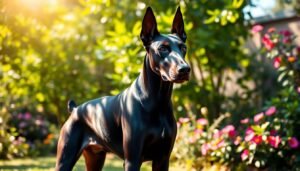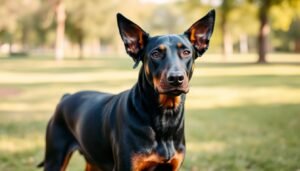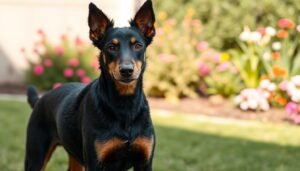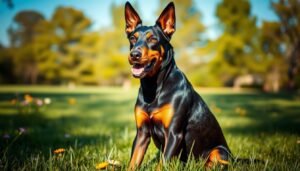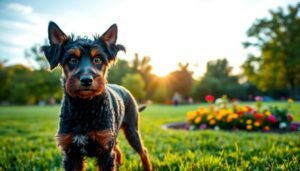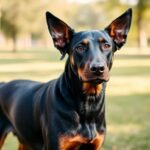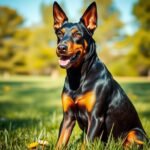

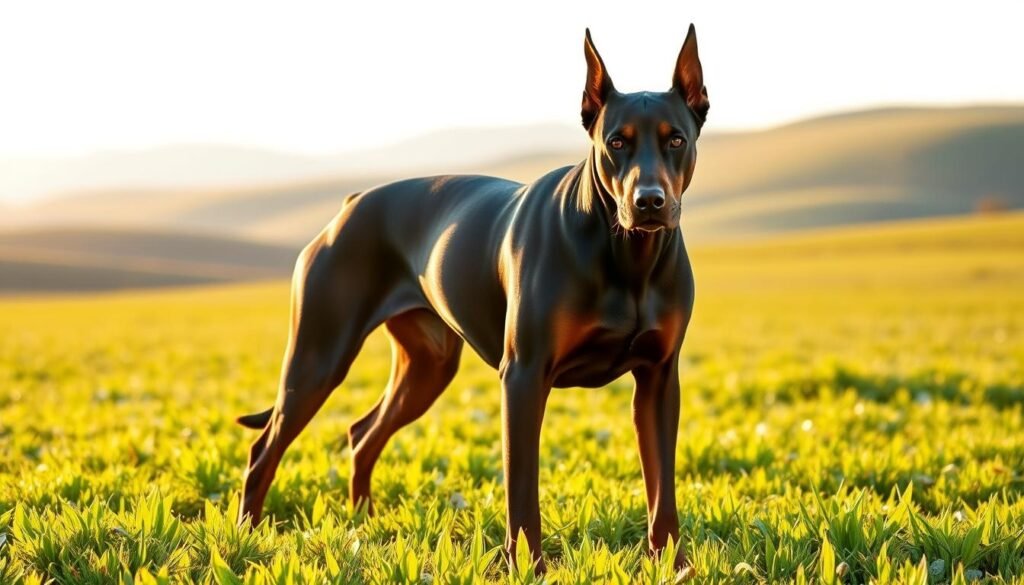
If you love dogs, you know how smart and loyal Doberman Pinschers and German Shepherds are. The Doberman Alsation Cross combines these traits, making it a unique and loving pet.
This mix creates a dog that’s smart, loyal, protective, and loving. If you’re thinking about getting a Doberman Alsation Cross, it’s key to know its personality, health, and grooming needs. For more info, including health issues and life expectancy, check out trusted sources.
Key Takeaways
- Understand the temperament of the Doberman Alsation Cross.
- Learn about the health considerations for this hybrid breed.
- Discover the grooming needs of the Doberman Alsation Cross.
- Find out about the training requirements for this intelligent breed.
- Explore the benefits of having a Doberman Alsation Cross as a pet.
What is a Doberman Alsation Cross?
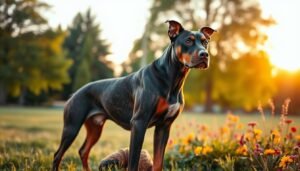
The Doberman Alsation Cross is a mix of the Doberman Pinscher’s speed and the German Shepherd’s bravery. It’s a smart, loyal, and protective dog. This makes it a special pet.
Understanding the Parent Breeds
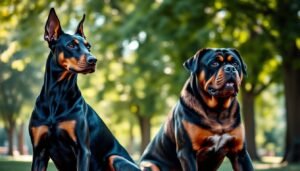
The Doberman Pinscher is known for being intelligent and athletic. It’s a favorite for families and as a guard dog. German Shepherds are also intelligent and known for their loyalty and protective instincts.
The Doberman Pinscher was bred in Germany in the late 19th century as a guard dog. German Shepherds were first used for herding sheep but became popular for other roles because of their smarts and adaptability.
Origin of the Hybrid
The Doberman Alsation Cross is a newer hybrid. It was made to bring together the best traits of both breeds. It aims to be smart, loyal, energetic, and protective.
This breed is becoming popular among dog lovers. They want a pet that is both loving and watchful.
Physical Characteristics
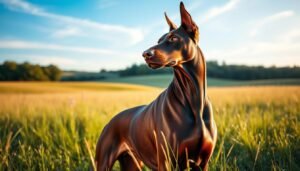
The Doberman Alsation Cross looks different based on its parents. It usually has a muscular build and is athletic. Its coat can be short or medium length and needs regular grooming.
Temperament of the Doberman Alsation Cross
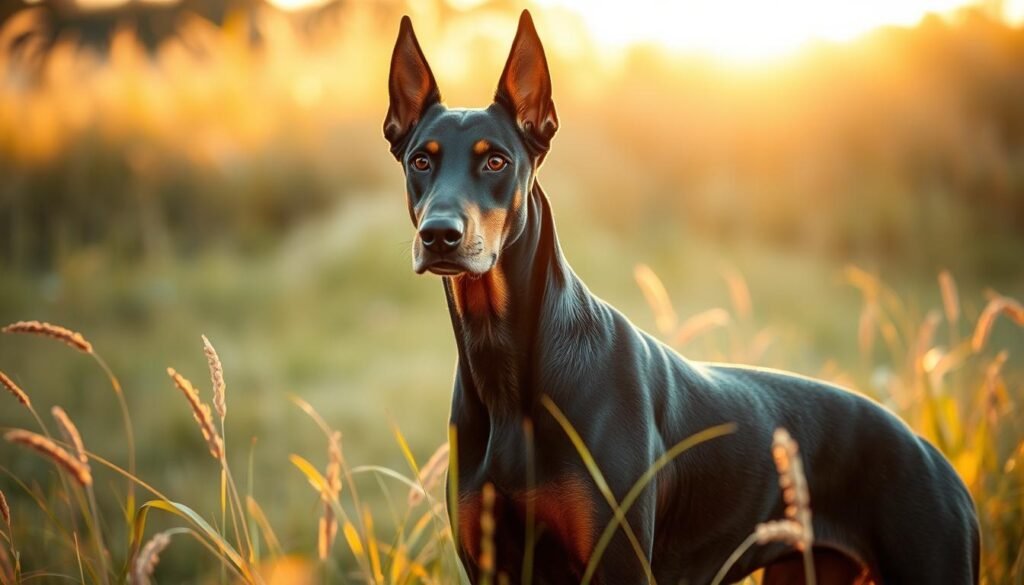
Knowing the temperament of the Doberman Alsation Cross is key for those thinking of getting one. This mix of the Doberman Pinscher and German Shepherd influences its personality.
Social Behavior
The Doberman Alsation Cross can be friendly and loyal with the right socialization. It’s great at protecting its family, making it a good watchdog. But, it might be cautious around new people, so early socialization is vital.
It’s important to introduce this hybrid to different places, people, and animals early. This helps it feel confident and less likely to be aggressive towards strangers.
Trainability and Intelligence
The Doberman Alsation Cross is known for its intelligence and trainability. Both parent breeds are smart and quick learners, traits they pass on to their offspring.
Training this cross requires patience, consistency, and positive feedback. They do well with clear rules and positive reinforcement. Here’s a look at their trainability:
| Trait | Description | Training Tip |
|---|---|---|
| Intelligence Level | Highly intelligent, capable of complex tasks | Engage in problem-solving activities |
| Response to Commands | Responsive to clear, consistent commands | Use positive reinforcement techniques |
| Training Requirements | Requires regular, structured training sessions | Maintain a consistent training schedule |
By tapping into the trainability and intelligence of the Doberman Alsation Cross, owners can build a strong bond. This ensures it becomes a well-behaved family member.
Health Considerations for the Hybrid

It’s important to know about the health of the Doberman Alsation Cross to care for it well. This hybrid breed can get health traits from both the Doberman Pinscher and the German Shepherd.
The Doberman Alsation Cross might face health problems because of its genes. Some common health concerns include:
Common Health Issues
- Hip dysplasia, a condition that affects the hip joint, potentially leading to arthritis or mobility issues.
- Heart problems, such as dilated cardiomyopathy, which can affect the heart’s ability to pump blood efficiently.
- Certain genetic disorders that can be inherited from the parent breeds.
Knowing about these health issues is the first step to managing them. Regular vet visits can help catch and treat problems early.
Preventive Care and Maintenance
Preventive care is key to keeping your Doberman Alsation Cross healthy. This includes:
- Regular vaccinations to protect against infectious diseases.
- Parasite control measures, such as flea, tick, and worm treatments.
- A balanced diet that meets the nutritional needs of your dog, supporting overall health and well-being.
By focusing on preventive care, you can lower the risk of health problems. It’s also crucial to watch your dog’s health closely and get vet advice if you see any signs of illness.
Here’s a summary of key health considerations and preventive measures in a tabular format:
| Health Issue | Preventive Measure | Importance |
|---|---|---|
| Hip Dysplasia | Regular Exercise, Balanced Diet | High |
| Heart Problems | Regular Check-ups, Healthy Diet | High |
| Genetic Disorders | Genetic Testing, Regular Monitoring | Medium |
As shown in the table, a balanced diet and regular vet visits are key to preventing or managing health issues in the Doberman Alsation Cross.
Coat and Grooming Needs

The Doberman Alsation Cross has a coat that varies based on its parent breeds. The coat’s type greatly affects the dog’s grooming needs.
Diverse Coat Types in the Hybrid
This cross can have a Doberman Pinscher’s short, sleek coat or a German Shepherd’s double coat. Knowing your dog’s coat type is key to proper care.
Coat Types:
- Short, sleek coat (similar to Doberman Pinscher)
- Double coat (similar to German Shepherd)
- Combination of both, resulting in a unique coat texture
Grooming Tips for a Healthy Coat
Regular grooming is crucial, no matter the coat type. It helps reduce shedding and prevent matting. Here are some tips:
- Brush your dog several times a week to maintain its coat.
- Regularly trim your dog’s nails to prevent overgrowth.
- Clean your dog’s ears regularly to prevent infections.
Grooming keeps your dog looking great and healthy. It also lets you check for health issues during grooming sessions.
| Grooming Activity | Frequency | Benefits |
|---|---|---|
| Brushing | Several times a week | Reduces shedding, prevents matting |
| Nail Trimming | Every 4-6 weeks | Prevents overgrowth, reduces health risks |
| Ear Cleaning | Weekly | Prevents infections, maintains hygiene |
Understanding and meeting your Doberman Alsation Cross’s grooming needs is crucial. It helps keep its coat and overall health in top shape, ensuring a happy life.
Exercise Requirements for the Doberman Alsation Cross
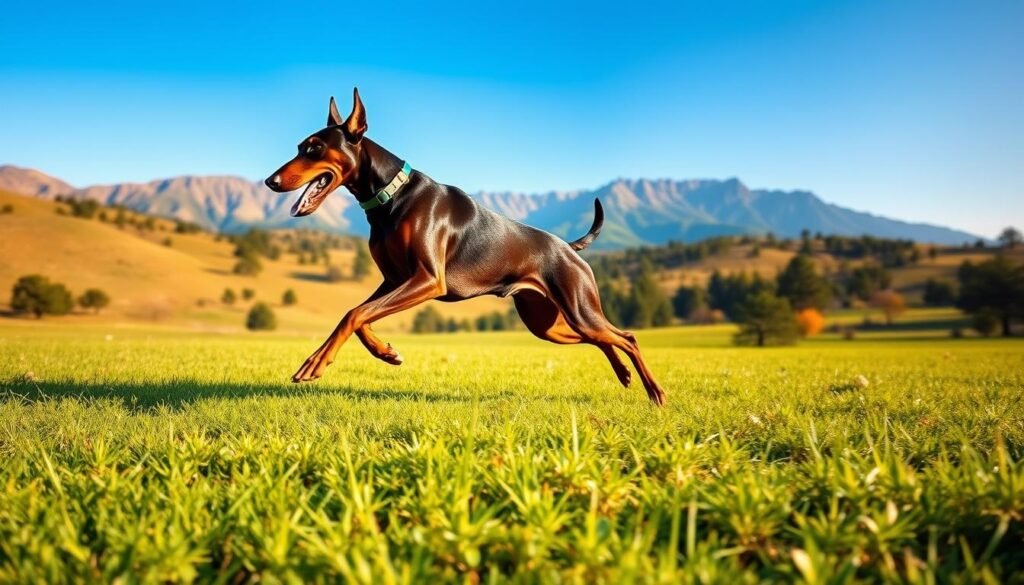
The Doberman Alsation Cross is a high-energy breed that needs a lot of exercise. It combines the energy of two active breeds. This means it needs both physical and mental stimulation.
To keep your Doberman Alsation Cross happy and healthy, it’s important to know its daily activity needs. This breed needs regular exercise to avoid boredom and destructive behavior. Aim for at least 60 minutes of exercise each day, including walks, playtime, and training.
Daily Activity Needs
The daily activity needs of the Doberman Alsation Cross include several parts:
- Morning Walks: A brisk walk in the morning helps burn energy and sets a positive mood.
- Playtime: Playing games like fetch or tug-of-war is key for physical exercise and bonding.
- Training Sessions: Daily training sessions are important for mental stimulation and discipline.
Ideal Play and Exercise Routines
Creating ideal play and exercise routines is crucial for your Doberman Alsation Cross’s well-being. Here are some tips:
| Activity | Duration | Frequency |
|---|---|---|
| Brisk Walking | 30 minutes | Daily |
| Playtime (Fetch/Tug-of-War) | 20 minutes | 3 times a week |
| Agility Training | 45 minutes | 2 times a week |
Having a yard is great for the Doberman Alsation Cross, offering space for play and exercise. But, owners without a yard can still meet their dog’s needs with creative routines. The key is to mix physical activity with mental stimulation.
In conclusion, the Doberman Alsation Cross needs a structured exercise plan to thrive. By understanding and meeting their exercise requirements, you can ensure a happy and healthy companion.
Living Conditions and Adaptability
The Doberman Alsation Cross is a versatile hybrid that can thrive in various living conditions. It needs adequate exercise and attention. This adaptability makes it a great companion for many families. Understanding its needs is crucial for providing a suitable home.
Space for exercise is a key factor in choosing a home for a Doberman Alsation Cross. While a yard is ideal, regular walks and playtime can substitute for a yard.
Best Home Environments
A home with a secure, fenced area is beneficial for a Doberman Alsation Cross. It allows for safe exploration and play. Apartments can also work if you’re dedicated to regular exercise and mental stimulation. The dog needs enough physical and mental activity.
How They Adapt to Families
The Doberman Alsation Cross is loyal and protective, making it great for families, including those with children. To ensure harmony, socialize your dog well and teach children to interact gently and respectfully. With proper training and socialization, it can be a loving and protective companion.
Before bringing a Doberman Alsation Cross home, consider your lifestyle and living situation. Understanding its needs and providing the necessary care can create a happy and healthy environment for your dog.
Nutrition and Diet Essentials
Right nutrition is key for your Doberman Alsation Cross’s happiness. A diet that fits its age, size, and activity level is vital. It keeps it healthy and happy.
Dietary Recommendations
Choose high-quality dog food for your Doberman Alsation Cross. It should have proteins, fats, carbs, vitamins, and minerals. Here’s what to look for:
- Protein-rich food for strong muscles.
- Complex carbohydrates for lasting energy.
- Essential fatty acids for a shiny coat.
- Adequate vitamins and minerals for health.
Make sure the food matches your dog’s life stage. Puppies, adults, and seniors have different needs. Your vet can guide you to the right diet.
Monitoring Weight and Health
Keep an eye on your dog’s weight and health. Obesity can cause many problems. Here’s how to stay on track:
- Check your dog’s weight and body condition often.
- Adjust their food based on their activity and age.
- Don’t overfeed and limit treats.
- Make sure they get enough exercise to stay healthy.
Regular vet visits are important. They help you understand your dog’s nutritional needs. A balanced diet and healthy weight improve your Doberman Alsation Cross’s life a lot.
Training Strategies for Success
Training a Doberman Alsation Cross needs a careful plan. It’s all about consistency, patience, and positive reinforcement. This mix of traits makes it eager to learn and please.
Choosing the right training methods is key. Positive reinforcement is best, as it rewards good actions without scaring or angering your dog. Learning about the Doberman breed helps understand your dog’s needs and traits.
Best Training Methods
The Doberman Alsation Cross thrives on engaging and challenging training. Here are some top strategies:
- Positive reinforcement with treats and praise is great for good behavior.
- Consistency in commands and expectations is vital to avoid confusion.
- Mental games and activities keep your dog happy and stress-free.
Socialization Techniques
Socialization is crucial for your dog’s growth. It makes them confident and calm in new situations. Here are some effective ways:
- Introduce your dog to various places, people, and animals early on.
- Encourage friendly interactions with strangers and other pets.
- Teach them to stay calm when faced with new or scary things.
By using the right training and socialization, your Doberman Alsation Cross will be a well-adjusted and loving friend.
Lifespan and Aging in the Hybrid
Knowing how long a Doberman Alsation Cross lives and how it ages is key to caring for it well. This hybrid breed gets traits from both Doberman and Alsation, affecting its life span and aging.
Average Lifespan
A Doberman Alsation Cross usually lives between 10 to 14 years. This depends on genetics, diet, and health. Genetics are very important in determining how long it lives. Regular vet visits and a good diet help a lot.
Tips for Senior Dog Care
As your Doberman Alsation Cross gets older, its needs change. Senior dogs need less exercise but more vet visits. It’s important to adjust their diet for aging dogs. Here are some tips for caring for your senior Doberman Alsation Cross:
- Provide a comfortable living environment with easy access to favorite resting spots.
- Modify their exercise routine to include shorter, more gentle activities.
- Monitor their health closely and adjust their diet according to their needs.
- Ensure regular veterinary check-ups to catch any potential health issues early.
By following these tips, you can help your Doberman Alsation Cross live a happy and healthy life into its senior years.
Why Choose a Doberman Alsation Cross?
The Doberman Alsation Cross is a unique dog mix. It combines intelligence, loyalty, and a protective nature. This makes it a great choice for the right owner.
Advantages of Owning This Hybrid
This breed offers many benefits to its owners. It’s very smart and easy to train. This makes it perfect for active families or individuals.
It’s also very loyal and protective. This gives its family a sense of safety.
Suitability for Various Owners
The Doberman Alsation Cross can be a loving pet. But, it’s not for everyone. It needs owners who can spend time training, socializing, and exercising it.
For new dog owners, this breed might be a challenge. But, with the right help, it can do well.
Deciding to get a Doberman Alsation Cross is big. You need to be ready to care for it. If you’re willing to put in the work, it can be a wonderful pet. It will bring joy and companionship into your life.