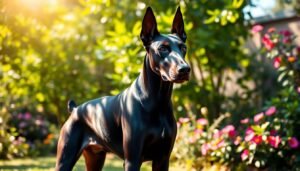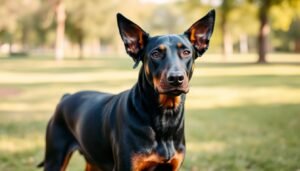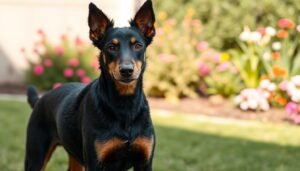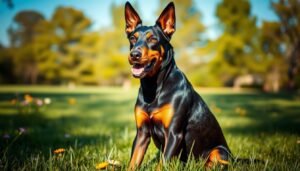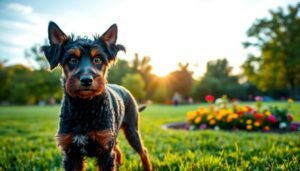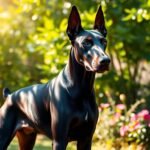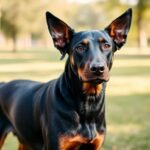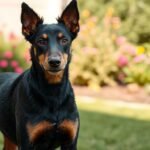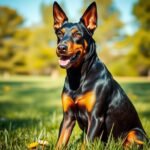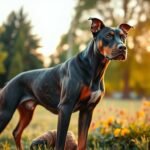

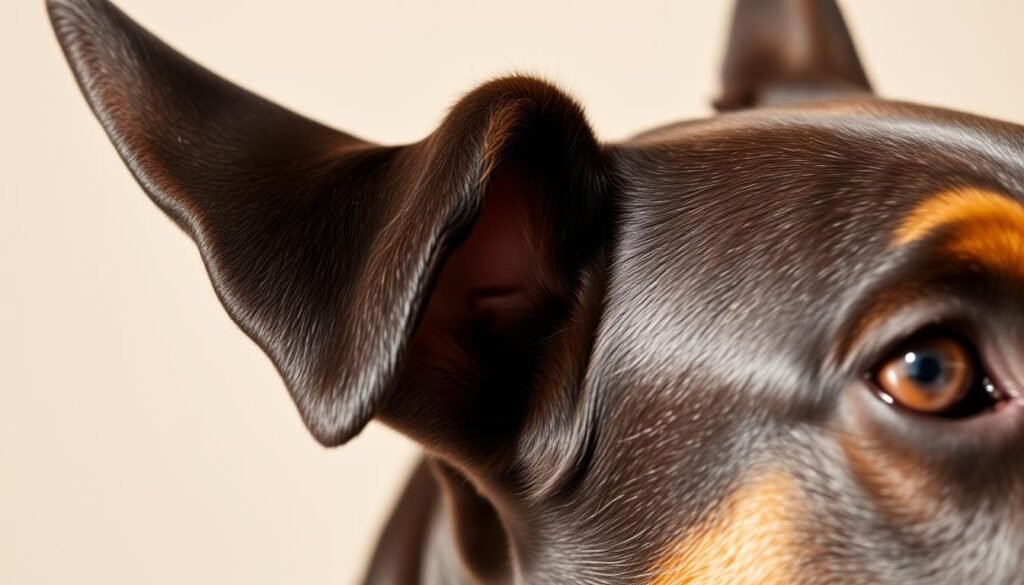
If you own a dog, you might have heard about ear cropping. Many Doberman owners choose this surgery to make their pet look better. They also think it might help prevent ear infections.
If you’re thinking about ear cropping for your Doberman, it’s important to know what it involves. This article will cover the good and bad sides of it. We’ll also talk about what happens during the procedure and how your dog will recover. This will help you decide what’s best for your pet.
Key Takeaways
- Understand the reasons behind doberman ear cropping
- Learn about the potential benefits and drawbacks
- Discover what to expect from the procedure
- Get insights into the recovery process
- Make an informed decision about your Doberman’s care
What is Ear Cropping in Dobermans?
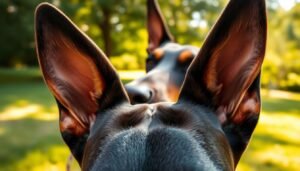
Ear cropping is a key topic for Doberman owners. It’s a surgery that changes a dog’s ears. This can be a removal or an alteration.
For many years, ear cropping has been part of grooming for Dobermans and other breeds. It’s usually done on puppies between 8 and 12 weeks old.
Definition and Purpose
Ear cropping definition is key to understanding it. It’s the removal of a dog’s ear parts, often for looks or health reasons. The main reason varies by breed and history.
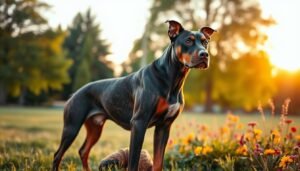
For Dobermans, doberman ear cropping is mainly for looks. It makes the breed look more traditional.
“The traditional Doberman look, with cropped ears and docked tail, is a distinctive feature of the breed.”
Historical Background
Ear cropping has a long history. It was once done on working dogs to prevent injuries. This practice goes back to ancient times, seen in Roman and Greek artifacts.
| Historical Period | Reason for Ear Cropping |
|---|---|
| Ancient Times | To prevent injuries during hunting or fighting |
| Modern Era | Aesthetic purposes |
The reasons for ear cropping have changed over time. This reflects changes in how dogs are viewed and used in society.
Today, deciding to crop a Doberman’s ears is a personal choice. It’s influenced by breed standards, personal taste, and animal welfare concerns.
The Pros of Doberman Ear Cropping
Some Doberman fans think ear cropping makes their dog look better and might help its health. Let’s look at the good points of this surgery.
Aesthetic Appeal
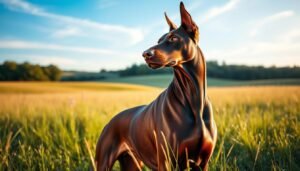
Many owners choose ear cropping to make their dog look more intimidating or sleek. They believe it matches the breed’s classic look.
A famous breeder says, “The cropped ear is a key part of the Doberman’s look, making it seem more powerful and alert.”
“The Doberman’s cropped ears are a big part of its identity, highlighting its strong muscles and sharp alertness.”
Health Considerations
Some people think ear cropping helps prevent ear infections by improving airflow. But, this idea is not widely accepted, and the real health benefits are still up for debate.
| Health Benefit | Description | Debate Status |
|---|---|---|
| Reduced Ear Infections | Less moisture accumulation | Debated |
| Improved Hearing | Better sound localization | Speculative |
Potential Behavior Benefits
Some owners believe ear cropping can make their Doberman more alert or responsive. But, there’s not much science to back this up. Behavior is shaped by many things, like training and socializing.
In conclusion, Doberman ear cropping has its good sides. But, it’s important to think about the downsides too. Decide what’s best for your dog and what you prefer as an owner.
The Cons of Doberman Ear Cropping
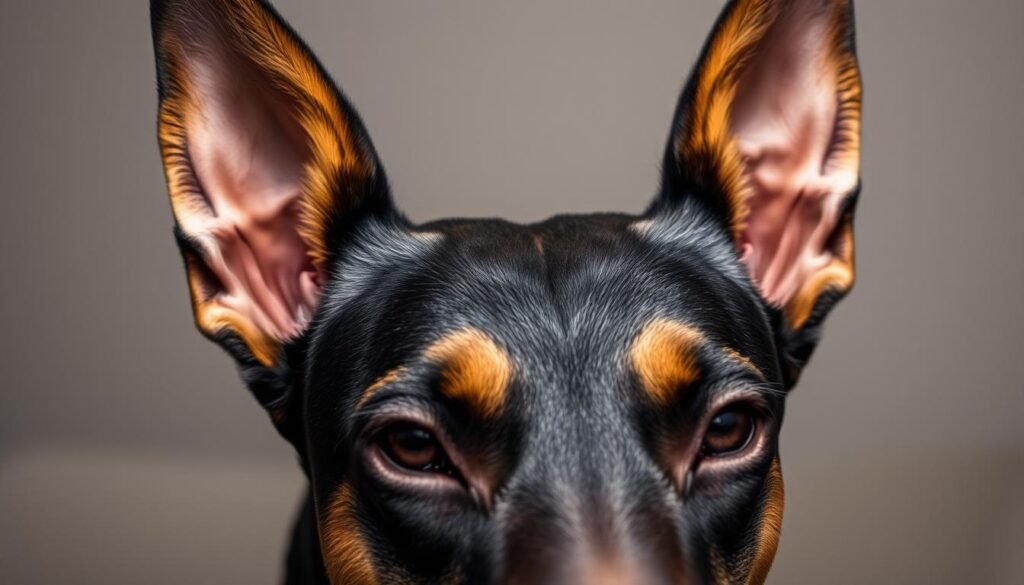
Ear cropping is common among some Doberman owners. But, it’s important to think about the downsides. Before deciding, understand the cons of the procedure.
Pain and Recovery
Ear cropping can be very painful for dogs. The recovery takes a long time. Owners must take care of their pet’s comfort during this time.
For more details, check out Doberman Planet’s article on ear cropping.
Ethical Concerns
Many people see ear cropping as unethical. They think it’s not needed and hurts animals. Owners should think about animal welfare when deciding.
Possible Complications
Ear cropping can lead to problems like infections and scarring. It’s important to know these risks. Talking to a vet can help understand how to avoid these issues.
In summary, ear cropping has its supporters but also its drawbacks. The pain, ethical issues, and possible problems are key to consider. Owners should weigh these carefully before deciding.
Legal Considerations in the U.S.

Ear cropping laws for Dobermans vary across the U.S. It’s important to know your state’s rules. As a dog owner, understanding these laws is key before making any decisions about your pet.
Regulations by State
Ear cropping laws differ from state to state. Some states ban it, while others allow it with rules. For example, Illinois and New York have banned it for looks. But, Texas and Florida let it happen if a vet does it.
It’s crucial to check your state’s laws on ear cropping. You can ask local vet groups or animal welfare groups for help. They can give you the latest info and advice for your area.
Ethical Treatment of Animals
Thinking about animal ethics is also important. Some say ear cropping hurts animals. Others see it as a choice that doesn’t harm dogs if done right.
As a dog owner, you must think about the good and bad of ear cropping. Make sure your choice fits your values and what’s best for your pet.
In the end, deciding on ear cropping for your Doberman is a personal choice. It should be thoughtfully considered, taking both legal and ethical sides into account.
The Ear Cropping Process
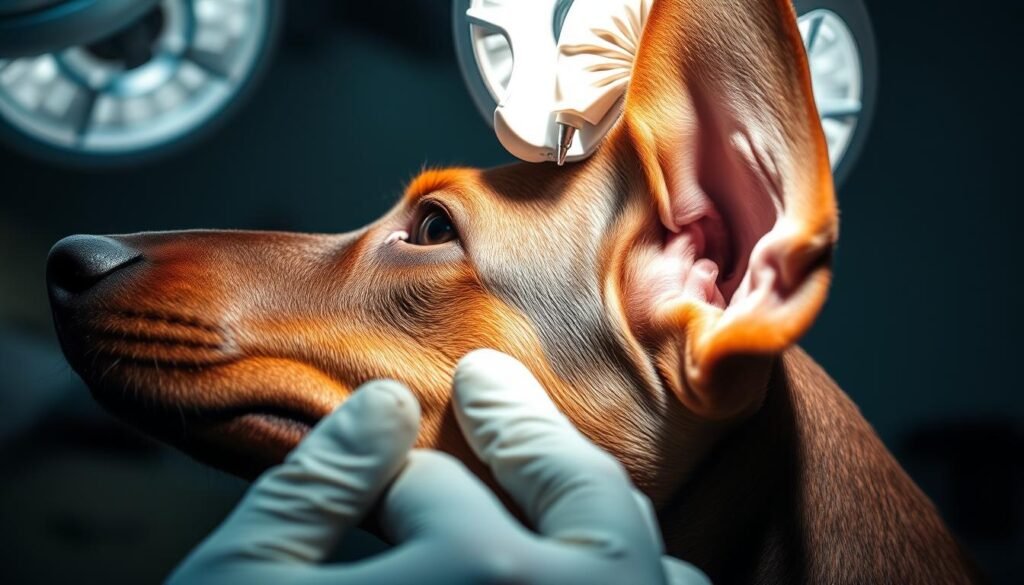
Ear cropping is a big decision that needs a full understanding of the steps involved. As a Doberman owner, knowing what to expect is key for your pet’s health. This ensures the best results for your dog.
Pre-Surgery Preparations
Your vet will give you specific instructions before the surgery. This includes not feeding or watering your dog for a while. They check if your dog is healthy enough for the surgery. It’s crucial to follow these steps carefully to avoid risks.
The American Veterinary Medical Association says, “Proper preparation is key to a successful surgical outcome.”
“The health and well-being of the animal should always be the top priority when considering any surgical procedure.”
The Surgical Procedure
The surgery is done under general anesthesia to keep your dog safe and comfortable. The vet removes part of the ear and shapes the rest. The vet’s skill and experience are very important for a good outcome.
Post-Surgery Care
After the surgery, your Doberman needs close care for healing. This includes giving medicines, keeping the area clean, and watching for any problems. Post-surgery care is as important as the surgery in avoiding infections and helping healing.
Thinking about ear cropping, it’s clear it’s not a decision to make lightly. The whole process, from start to finish, needs a lot of care and attention. By understanding it, you can make a choice that’s best for your Doberman.
Selecting a Veterinarian
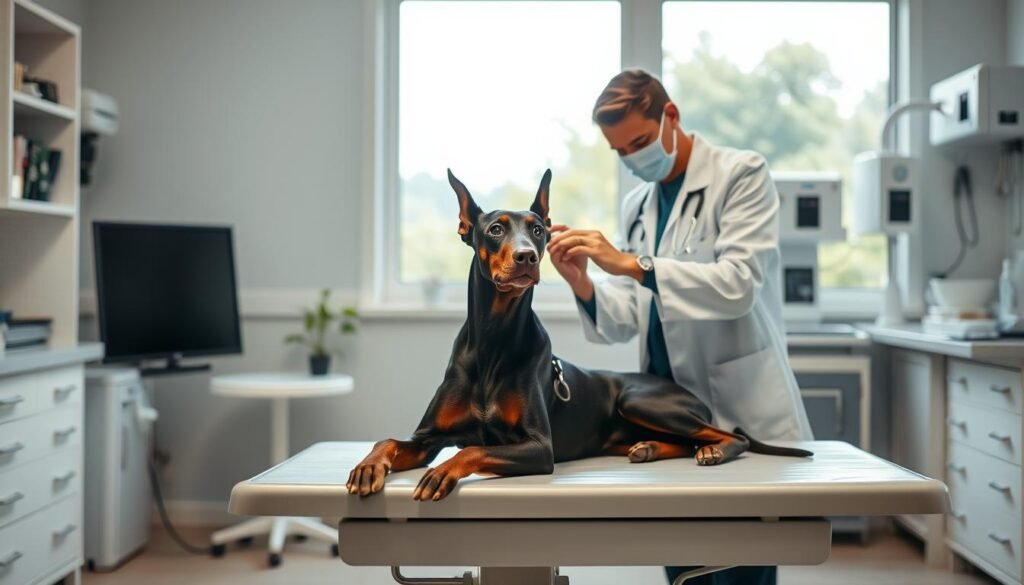
As a Doberman owner, finding the right vet for ear cropping is key. The vet’s skill can greatly affect your dog’s health and recovery. It’s important to choose wisely.
Qualifications to Look For
When choosing a veterinarian, look at their qualifications and experience. A vet certified by the American Animal Hospital Association (AAHA) is a good start.
A vet with lots of ear cropping experience can better manage any surgery issues. They also offer great advice on caring for your dog after surgery.
Questions to Ask
Before deciding, ask the right questions. First, ask about the vet’s experience with Doberman ear cropping. Find out about their success rates and how they deal with surgery problems.
- What is your experience with ear cropping procedures?
- Can you provide references or testimonials from previous clients?
- What is your approach to pain management during and after the surgery?
- What post-operative care instructions will you provide, and what support is available if complications arise?
By asking these questions and checking the vet’s qualifications, you can make a smart choice. This ensures the best care for your Doberman.
Alternatives to Ear Cropping
Choosing to keep your Doberman’s ears natural is a great option. It’s perfect for those who don’t want to go through surgery. Your pet’s natural beauty is a beautiful alternative.
Natural Ear Shapes
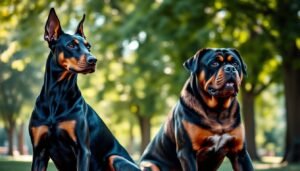
Dobermans with their natural ears are just as beautiful as those with cropped ones. Their ears can make them stand out, adding to their unique look. Many owners think their Doberman’s natural ears match their personality and style.
Tailoring Your Doberman’s Look Without Surgery
There are many ways to make your Doberman look great without surgery. Keeping their coat clean and well-groomed is key. You can also try non-surgical ear posting methods, like using a zip tie. Some owners have found this to be very effective.
By focusing on grooming and using non-surgical ear posting, you can get a look you love. You won’t need to crop your Doberman’s ears.
Training and Socialization
As a Doberman owner, you know how key training and socialization are. They greatly affect your dog’s behavior. These elements are vital, no matter if you choose to crop your Doberman’s ears.
Importance of Early Training
Early training is vital for Dobermans. It sets the stage for good behavior and stops bad habits. Starting early can greatly improve your dog’s obedience and attitude.
- Begin with basic commands like “sit,” “stay,” and “come.”
- Use positive reinforcement techniques, such as treats and praise.
- Be consistent in your training approach to avoid confusing your dog.
For more information on critical behavior periods in dogs, you can visit this resource.
Socialization Tips for Dobermans
Socialization is key for a well-adjusted Doberman. It means exposing your dog to different places, people, and animals. This helps them feel confident and calm in new situations.
- Introduce your Doberman to new environments gradually to prevent overwhelming them.
- Arrange meetings with other dogs and people to enhance their social skills.
- Consider enrolling your Doberman in puppy socialization classes.
Good socialization leads to a better relationship with your pet. It also lowers the chance of behavioral problems.
Conclusion: Making the Right Decision
When thinking about ear cropping for your Doberman, it’s key to look at both sides. The surgery is mainly for looks and is done on puppies between 7 to 12 weeks old. Knowing the surgery takes about 30 minutes and costs between $300 to $600 is important.
Key Considerations
Many countries, like the UK, Australia, and parts of Europe, ban or limit ear cropping. The American Veterinary Medical Association (AVMA) also doesn’t support it for looks. Keeping both cropped and natural ears clean is crucial to avoid infections. You can learn more at Doberman Ear Cropping.
Reaching a Decision
Think about your dog’s health, the law, and what you believe in. Ear cropping doesn’t change a Doberman’s behavior or personality. By considering these points, you can decide what’s best for your Doberman’s care.