


As a proud owner of a Doberman Lab mix, I can attest to their friendly and energetic nature. This hybrid breed is perfect for an active lifestyle. In this article, we’ll explore what makes them so special.
The Doberman Lab mix is a loyal companion and a loving family member. Their energetic personality makes them ideal for families who enjoy outdoor activities.
Key Takeaways
- Friendly and energetic nature makes them perfect for active families.
- Loyal companions with a unique blend of characteristics.
- Ideal for families who enjoy outdoor activities.
- Requires regular exercise to maintain their physical and mental health.
- A great addition to families looking for a loving pet.
Overview of the Doberman Lab Mix
The Doberman Lab mix is a unique cross between a Doberman Pinscher and a Labrador Retriever. It combines the intelligence and loyalty of a Doberman with the friendly and outgoing nature of a Lab.
What Is a Doberman Lab Mix?
The Doberman Lab mix is a new hybrid breed that’s becoming popular. It blends the athleticism of a Labrador with the protective instincts of a Doberman. Breeders aim to create a dog that’s both a loving companion and a capable guardian.
Characteristics of the Breed
The Doberman Lab mix can have a mix of traits. Here are some common ones:
- Intelligence: Both parent breeds are smart, making the Doberman Lab mix easy to train.
- Loyalty: Doberman Pinschers are known for their loyalty. When mixed with a Lab’s friendly nature, the result is a loyal and affectionate dog.
- Energy Level: This mix is energetic and needs regular exercise to stay happy and healthy.
- Physical Traits: The physical characteristics, like coat color and size, can vary based on the dominant breed traits.
Knowing these traits is key for potential owners. With the right training and care, the Doberman Lab mix can do well in many homes.
History of the Doberman and Labrador Retriever

To understand the Doberman Lab mix, we must look at its parent breeds’ origins. The Doberman Pinscher and Labrador Retriever have distinct histories. These histories shape the Doberman Lab mix’s traits.
Origins of the Doberman Pinscher
In the late 19th century, Germany bred the Doberman Pinscher as a guard and police dog. Friedrich Louis Dobermann, a German tax collector and dog breeder, created it. He wanted a dog that was both intimidating and loyal.
The Doberman Pinscher’s ancestry includes the German Pinscher, Black and Tan Terrier, and Rottweiler. These breeds added to its strength, intelligence, and protective nature.
The Doberman Pinscher became famous as a guard dog for its loyalty and fearlessness. It was also great at various tasks, from guarding to being a companion. Today, it’s known for its intelligence, athleticism, and loyalty.
Labrador Retriever History
The Labrador Retriever comes from Newfoundland and Labrador, Canada. It was bred to help fishermen and retrieve game. Its early role was to retrieve fishing nets and lost fish.
The Labrador Retriever’s intelligence, strong retrieving instinct, and friendly nature made it perfect for this job. According to the American Kennel Club, it was introduced to England and became a popular breed. It’s known for its versatility, intelligence, and affectionate nature.
The histories of the Doberman Pinscher and Labrador Retriever show their unique traits. Knowing these origins helps us understand the Doberman Lab mix’s potential characteristics.
Physical Traits of Doberman Lab Mix Dogs

Doberman Lab mix dogs have certain physical traits. These traits come from their parent breeds. Knowing these traits helps owners prepare for their dog’s needs.
Size and Weight
These dogs are usually medium to large in size. Their size comes from their Doberman Pinscher and Labrador Retriever parents. Doberman Pinschers are lean and muscular, while Labrador Retrievers are sturdy and athletic.
They can weigh between 60 to 90 pounds. Males are often bigger than females. They can be between 22 to 28 inches tall at the shoulder.
| Size Category | Weight Range (lbs) | Height Range (inches) |
|---|---|---|
| Male | 70-90 | 24-28 |
| Female | 60-80 | 22-26 |
Coat Color and Texture
The coat of a Doberman Lab mix can vary a lot. It depends on the parent breeds’ traits. They might have the Doberman Pinscher’s short, smooth coat or the Labrador Retriever’s longer, denser coat.
They can have black, brown, red, fawn, or a mix of these colors. The texture can be smooth, wiry, or a mix. Regular grooming is needed to prevent matting and tangling.
Regular grooming is key to keeping their coat healthy and looking good. This includes brushing several times a week and occasional baths.
Temperament and Behavior

The Doberman Lab mix is a great family pet because of its wonderful temperament. It combines the Doberman’s loyalty with the Labrador’s friendly nature. This makes the dog loving and protective.
Friendly Nature
The Doberman Lab mix is known for being friendly and outgoing. They love being around people and are very social. They are also very affectionate, making them perfect for families with kids.
Intelligence and Trainability
Both Doberman Pinschers and Labrador Retrievers are smart, and the Doberman Lab mix is no different. They are highly trainable and respond well to positive training. Their smarts and eagerness to please make training a breeze.
| Trait | Description | Training Tip |
|---|---|---|
| Intelligence | Highly intelligent, easy to train | Use positive reinforcement techniques |
| Trainability | Responds well to commands and training | Be consistent and patient |
| Energy Level | High energy, requires regular exercise | Engage in daily physical activities |
Energy Levels
The Doberman Lab mix has a high energy level. They get this from both parent breeds. They need lots of exercise to stay happy and healthy. Daily walks, playtime, and mental challenges are key to keep them from getting bored or destructive.
In conclusion, the Doberman Lab mix is perfect for active families. Their friendly nature, smarts, and energy mean they need an owner who can keep up with them. They need lots of exercise, training, and love.
Health Considerations
The Doberman Lab mix gets health traits from both Doberman and Labrador parents. Knowing these health issues helps owners keep their dogs healthy for a long time.
Common Health Issues
This mix might face hip dysplasia and cancer. Hip dysplasia affects the hip joint, leading to arthritis and mobility problems. It’s important to watch for it early.
Cancer is another big worry. The Doberman Lab mix can get lymphoma and other cancers. Regular vet visits and tests can catch it early.
| Health Issue | Description | Preventive Measures |
|---|---|---|
| Hip Dysplasia | Genetic condition affecting the hip joint | Regular vet checkups, maintaining a healthy weight |
| Cancer | Includes lymphoma and other types | Regular screenings, healthy diet, and lifestyle |
Importance of Regular Vet Checkups
Regular vet visits are key for the Doberman Lab mix. They help catch health problems early and keep them from getting worse. This care improves their life quality a lot.
Vets can give advice on diet, exercise, and health care. This advice is tailored to the Doberman Lab mix’s needs. It’s crucial for dealing with their health challenges.
Training Requirements
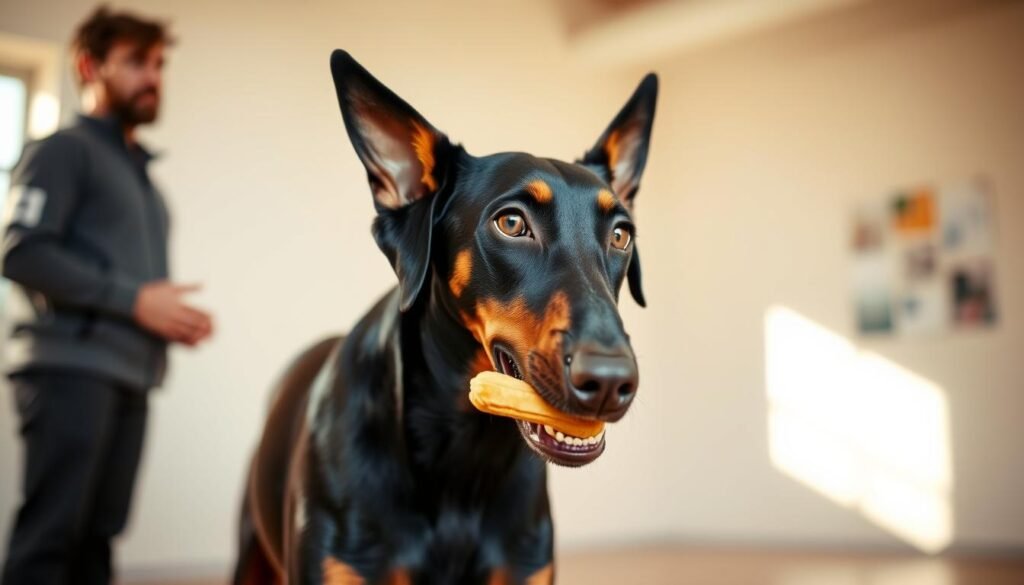
Training is key for Doberman Lab mixes to grow into well-behaved dogs. They get their smarts and eagerness to please from their parents. This makes them easy to train.
Basic Obedience Training
Basic obedience is the base for a well-behaved dog. It covers commands like “sit,” “stay,” “come,” and “leave it.” Consistency and positive reinforcement are crucial. Start training early, around 8 weeks old.
- Establish a routine: Dogs love routine, so set a regular training schedule.
- Use positive reinforcement: Reward your dog with treats, praise, and affection when they do something right.
- Keep training sessions short: Doberman Lab mixes are full of energy but have short attention spans. Keep sessions to 10-15 minutes.
Advanced Training Techniques
After basic obedience, you can try advanced training. This includes agility, complex commands, and tricks. Advanced training keeps your dog’s mind sharp and strengthens your bond.
- Agility training: Create an obstacle course in your backyard or join an agility class.
- Complex commands: Teach commands like “play dead” or “spin” to challenge your dog’s mind.
- Trick training: Teaching tricks is a fun way to bond with your dog and impress others.
Training is more than just teaching commands. It’s about building a strong bond with your dog. By putting in the effort, you’ll get a loyal and loving friend.
Exercise Needs
To keep your Doberman Lab mix in top shape, knowing their exercise requirements is key. They get their high energy from both Doberman Pinschers and Labrador Retrievers. So, they need regular physical activity.
Daily Exercise Recommendations
A Doberman Lab mix needs at least 60 minutes of daily exercise to be happy and healthy. This can include walks, runs, and playtime. For more details, check out AlphaPaw.
Spreading out the exercise into several sessions helps prevent exhaustion. A morning walk, afternoon playtime, and evening quiet time is a good routine.
Fun Activities for Your Doberman Lab Mix
Getting your Doberman Lab mix to do fun activities is great for burning energy and keeping their mind sharp. Fetch, agility training, and swimming are all excellent choices.
These activities not only wear them out but also challenge their minds. This reduces boredom and destructive behavior. Plus, it strengthens your bond with your dog.
By meeting your Doberman Lab mix’s exercise needs, you ensure they live a happy, healthy life. Regular exercise, a balanced diet, and proper care make them a loving and loyal friend.
Grooming Requirements
Grooming is key for a Doberman Lab mix’s health and comfort. It keeps their coat in top shape and checks for skin problems. Regular grooming is a must.
Coat Care
This mix has a short to medium-length coat. It needs brushing to reduce shedding and prevent mats. A rubber grooming brush or slicker brush works well.
Brushing also spreads skin oils. This makes their coat healthy and shiny.
Bathing and Nail Trimming
Bathing your Doberman Lab mix when needed is important. But, too much bathing can harm their coat. Bathing every 2-3 months is usually enough.
Unless they get really dirty or smell bad. It’s also vital to trim their nails regularly. This prevents them from getting too long and causing pain or health problems.
For more tips on caring for your Doberman Lab mix, check out AlphaPaw.
Starting a grooming routine early makes it easier for your Doberman Lab mix. It becomes a good experience for both of you.
Nutrition and Diet
Doberman Lab mixes need a special diet to stay healthy. A balanced diet keeps them full of energy and in top shape.
Best Foods for a Doberman Lab Mix
Choosing the right food for your Doberman Lab mix is key. Look for dog food that’s high in protein, has the right amount of fat, and not too many carbs. High-protein dog food helps keep their muscles strong and gives them lots of energy.
Top dog food brands for Doberman Lab mixes often have special formulas. These are made for big, active dogs. Remember to think about your dog’s age, size, and how active they are when picking their food.
| Dog Food Type | Characteristics | Benefits |
|---|---|---|
| High-Protein Dog Food | Rich in protein, moderate in fat | Supports muscle health and energy |
| Large Breed Dog Food | Formulated for large, active breeds | Supports joint health and overall development |
| Grain-Free Dog Food | Low in carbohydrates, no grains | Can be beneficial for dogs with dietary sensitivities |
Portion Control and Feeding Schedule
It’s important to feed your Doberman Lab mix the right amount at the right time. Divide their daily ration into 2-3 meals until they’re about six months old. Then, you can switch to twice a day.
Keep an eye on your dog’s weight and adjust their food portions as needed. Talking to your vet can help figure out the best feeding schedule and portion sizes for your dog.
Socialization Tips
To make sure your Doberman Lab mix is confident and calm, socialization is key. It helps them get used to new places, people, and animals. This reduces anxiety and aggression.
Importance of Early Socialization
Early socialization is vital for Doberman Lab mixes. It introduces them to different things, teaching them good manners and a stable mood. Starting early helps them interact well with their surroundings.
Benefits of Early Socialization:
- Reduces fear and aggression towards new people and animals
- Helps in developing a calm demeanor in new situations
- Enhances your dog’s ability to adapt to different environments
Recommended Socialization Activities
There are many ways to improve your Doberman Lab mix’s social skills. Some great activities include:
- Puppy classes: Enroll your dog in puppy classes to interact with other dogs and people.
- Dog parks: Regular visits to dog parks can help your dog socialize with other dogs.
- Meeting new people: Arrange meetings with friends and family to help your dog become comfortable around new individuals.
Here’s a summary of socialization activities and their benefits:
| Activity | Benefits |
|---|---|
| Puppy Classes | Socialization with other dogs, basic training |
| Dog Parks | Off-leash socialization, exercise |
| Meeting New People | Reduces fear and aggression towards strangers |
By focusing on socialization and trying these activities, your Doberman Lab mix will become a friendly and well-adjusted companion.
Pros and Cons of Owning a Doberman Lab Mix
Thinking about getting a Doberman Lab Mix? It’s key to know the good and bad sides of owning one. They are loyal, smart, and loving, making them wonderful pets. For more details, check out AlphaPaw.
Advantages of this Breed
Doberman Lab Mixes are friendly, smart, and full of energy. They’re ideal for families who love to stay active. They bond well with their family, thanks to their loyalty and love.
Challenges of Ownership
But, there are downsides too. They need lots of exercise, training, and grooming. This can take up a lot of time. They might also face health problems like heart issues and hip dysplasia. Knowing these points helps you decide if this breed fits your lifestyle.