

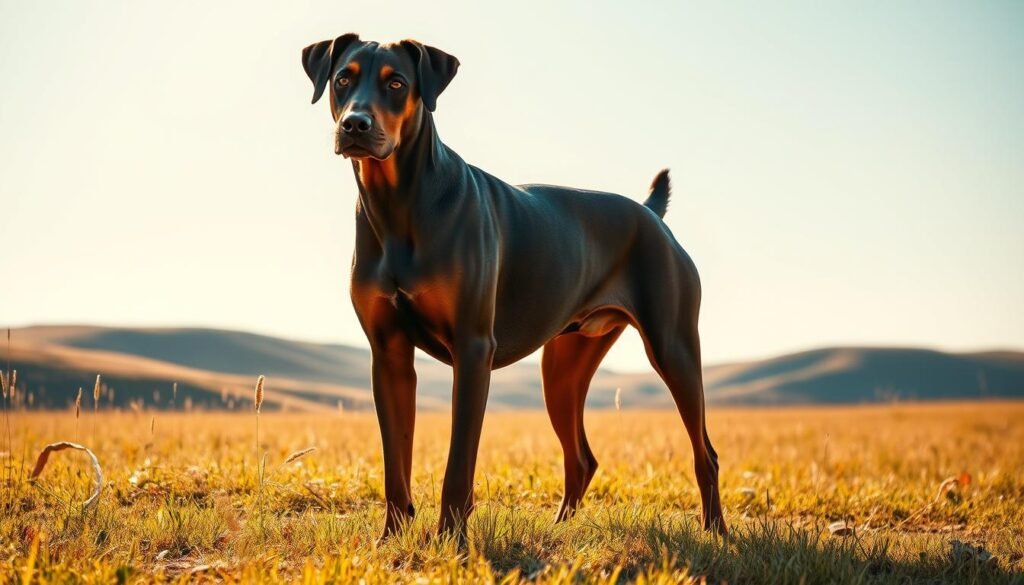
I’m thrilled to talk about the Rottie Cross Doberman. This breed is a mix of a Rottweiler’s loyalty and a Doberman’s smarts. It’s becoming more popular because of its great temperament and versatility. Mixed-breed dogs like this are becoming favorites for many families and individuals.
Learning about the Rottie Cross Doberman’s history, temperament, and needs will help you understand what it’s like to have one as a pet.
Key Takeaways
- The Rottie Cross Doberman is a unique mix of two powerful breeds.
- This breed is known for its loyalty and intelligence.
- Understanding the history and temperament is crucial for potential owners.
- The Rottie Cross Doberman requires proper training and socialization.
- This breed can make an ideal companion for active families or individuals.
Overview of the Rottie Cross Doberman
The Rottie Cross Doberman is a mix of Rottweiler and Doberman Pinscher. It’s known for its striking looks and great temperament. This mix combines the power of both breeds, making it a wonderful pet.
What Makes This Mix Unique?
This dog is loyal and protective, thanks to its Rottweiler and Doberman roots. It’s strong and agile, thanks to its parents. This makes it a great guardian.
Key characteristics of this mix include:
- Intelligence inherited from both breeds
- A strong protective instinct
- Physical attributes that can vary, taking after either parent breed
Physical Characteristics
The Rottie Cross Doberman’s looks can change a lot. It might have the Rottweiler’s muscle or the Doberman’s sleek coat.
| Characteristic | Rottweiler Influence | Doberman Influence |
|---|---|---|
| Coat Type | Thick, dense coat | Sleek, short coat |
| Build | Muscular, robust | Athletic, lean |
| Size | Large to giant | Medium to large |
Temperament Traits
The Rottie Cross Doberman’s personality is a mix of loyalty and protection. They are smart and easy to train. This makes them quick to learn and follow commands.
Loyalty is a key trait. These dogs bond strongly with their families. They are also great watchdogs, always ready to defend.
History of the Rottweiler and Doberman Breeds

The Rottweiler and Doberman Pinscher, the parents of the Rottie Cross Doberman, have interesting histories. Knowing their past helps us understand the Rottie Cross Doberman better.
Origins of the Rottweiler
The Rottweiler comes from ancient Rome, where it was a guard dog. It later became linked with Rottweil in Germany, a place known for livestock trading. Its strength, loyalty, and protective nature made it great for guarding and herding.
The Rottweiler’s history goes back to the Roman Empire. It was prized for its strength and guarding skills. As the Roman Empire grew, these dogs followed the legions, acting as guardians and draft animals.
Journeys of the Doberman Pinscher
The Doberman Pinscher was bred in Germany in the late 19th century. Friedrich Louis Dobermann wanted a loyal and intimidating guard dog. He mixed several breeds, including the Rottweiler, to get the right traits.
“The Doberman Pinscher is a relatively new breed, created with the intention of being a loyal companion and protector.”
The Doberman Pinscher is known for its intelligence and loyalty. It’s a favorite as a family pet and guard dog.
The Creation of the Rottie-Doberman Mix
The Rottie Cross Doberman combines the best of its parents. It’s loyal and protective. Knowing the Rottweiler and Doberman Pinscher’s histories helps us see the Rottie Cross Doberman’s traits.
This mix is a versatile companion. It’s perfect for active families or individuals who want a loyal pet.
Benefits of Owning a Rottie Cross Doberman
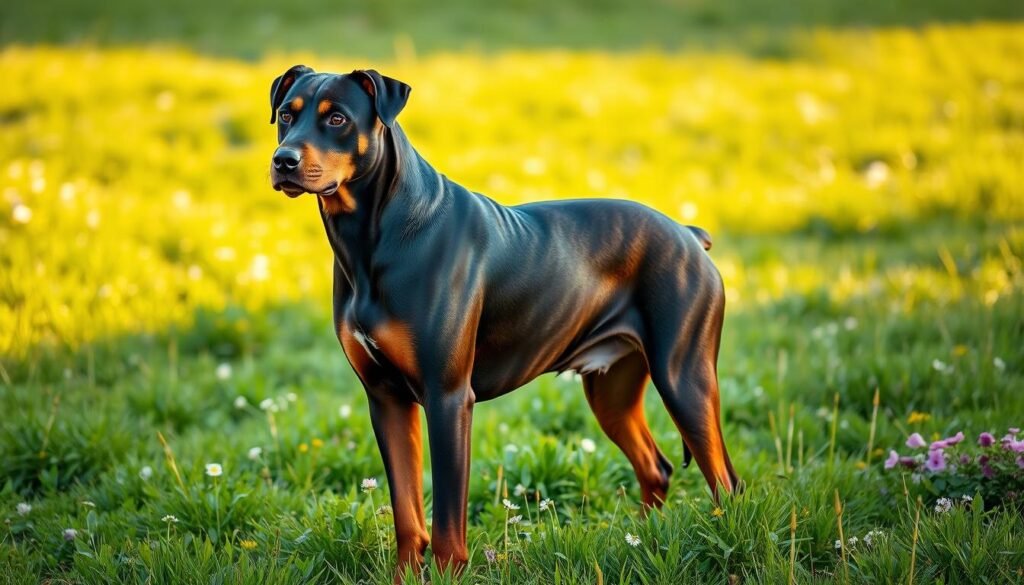
The Rottie Cross Doberman is a unique breed. It combines loyalty, intelligence, and affection. This makes it a perfect pet. It has the protective side of a Rottweiler and the agility of a Doberman Pinscher.
Loyalty and Protection
This breed is very loyal to its family. It forms strong bonds with its owners. It’s also protective, making it a great guard dog.
For more info on the Doberman-Rottweiler mix, check out this resource.
Intelligence and Trainability
The Rottie Cross Doberman is very intelligent and trainable. It responds well to training and commands. With the right training, it can learn many things.
Family Compatibility
Despite its size, the Rottie Cross Doberman is great with families. It’s affectionate and loving. With early socialization, it gets along well with children and other pets.
Health Considerations for Rottie Cross Dobermans
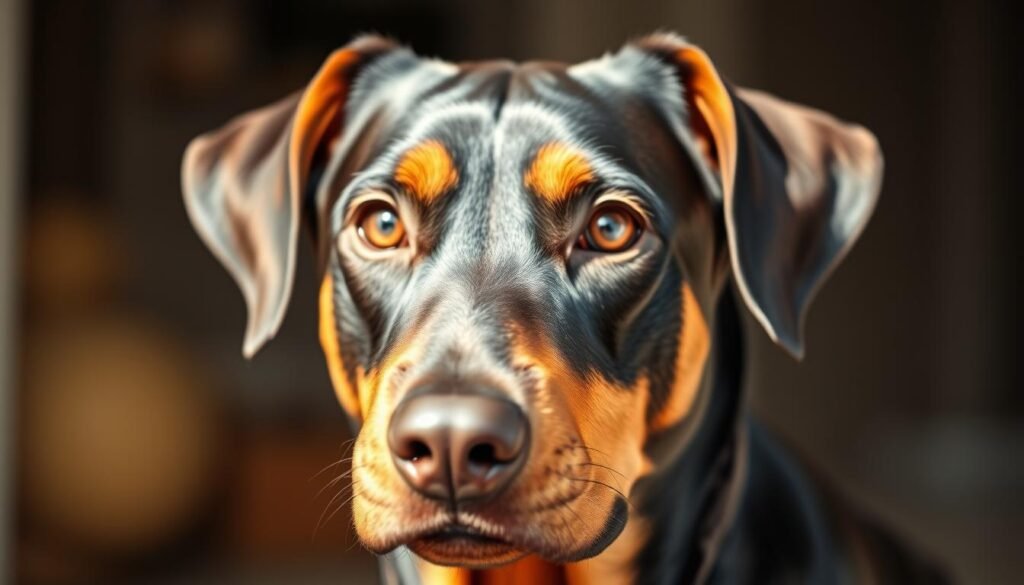
It’s important to know about the health issues of Rottie Cross Dobermans to keep them healthy and long-lived. They can get sick with certain problems that need care and prevention.
Common Health Issues
Rottie Cross Dobermans might get health problems from their parents, like hip dysplasia, heart issues, and cancers. Hip dysplasia can cause arthritis and make moving hard. Keeping them at a healthy weight and watching their health can help a lot.
For more info on the Doberman-Rottweiler mix, check out this resource.
Preventative Care
Preventative care is key for your Rottie Cross Doberman’s health. This means regular shots, a good diet, and keeping parasites away. A balanced diet is crucial for their health and can prevent some diseases.
“A healthy dog is a happy dog.” Regular vet visits and a proactive health care plan can greatly improve your Rottie Cross Doberman’s life.
Importance of Regular Check-ups
Regular vet visits are essential for catching health problems early. These visits help keep an eye on their health and prevent issues. A typical visit includes a check-up, shots, and talks about food and exercise.
| Health Issue | Preventative Measure | Importance |
|---|---|---|
| Hip Dysplasia | Maintain healthy weight, regular exercise | High |
| Heart Problems | Regular check-ups, balanced diet | High |
| Cancer | Regular screenings, healthy lifestyle | High |
By knowing about Rottie Cross Doberman health and taking action, you can ensure they live a long, happy, and healthy life.
Ideal Living Environment for a Rottie Cross Doberman
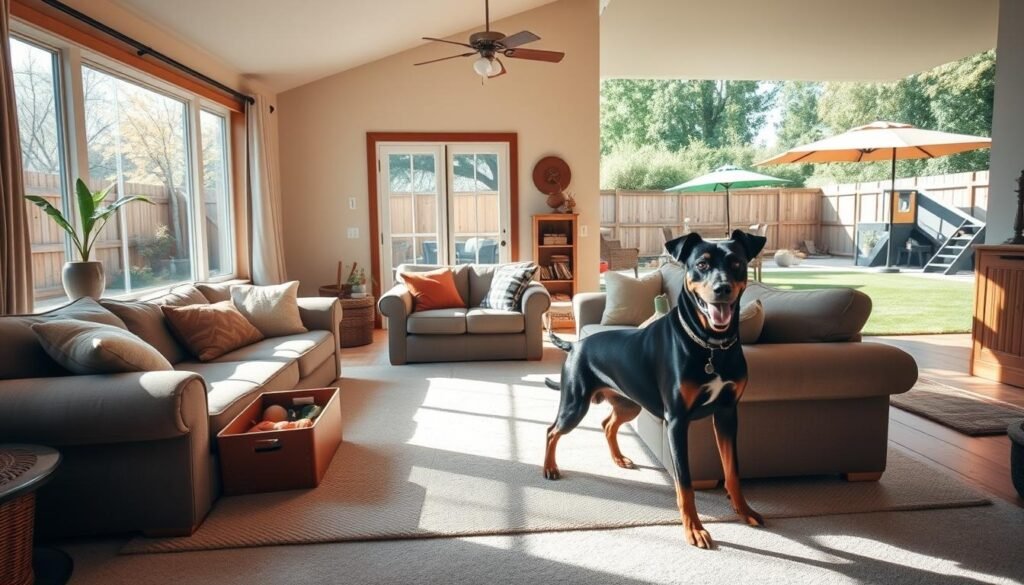
The perfect home for a Rottie Cross Doberman needs space, activity, and family time. This breed loves to exercise and be with its family.
Space Requirements
A Rottie Cross Doberman needs lots of room to move. A house with a yard is best. It gives them space for exercise and play.
- A minimum of 30 minutes of exercise per day is recommended.
- A yard allows for free play and exploration, which is crucial for this breed’s physical and mental health.
- Indoor space should also be considered, as this breed enjoys being close to its family members.
Best Situations: Apartment vs. House
While a house with a yard is preferred, apartments can work too. But, there are some things to keep in mind.
If you live in an apartment, remember to:
- Provide regular, rigorous exercise outside the apartment.
- Use nearby parks or open areas for daily walks and playtime.
- Think about the noise level and potential disturbance to neighbors.
Outdoor Activity Needs
Outdoor activities are key for a Rottie Cross Doberman’s health.
- Daily walks are a must, and they should be brisk and engaging.
- Playtime in a securely fenced area allows for safe exploration and exercise.
- Activities such as hiking, agility training, and obedience exercises can also be beneficial.
By understanding and meeting these needs, you can create a happy and healthy living environment for your Rottie Cross Doberman.
Training Techniques for Rottie-Doberman Mixes
The Rottie-Doberman mix is very smart and loves to learn. Training is more than just teaching commands. It’s about building a strong bond with your dog. With the right training, your Rottie Cross Doberman will be a joy to have around.
Basic Obedience Training
Basic obedience is key for a well-behaved Rottie-Doberman mix. Teach them to respond to commands like “sit,” “stay,” “come,” and “leave it.” Use treats, praise, and affection to reward them when they obey.
For example, to teach “sit,” hold a treat above their head and move it back towards their tail. As they follow the treat, they’ll naturally sit down.
Be patient and don’t rush the training. Every dog learns at their own pace. Avoid getting frustrated or using negative reinforcement, as it can cause problems.
Socialization Strategies
Socialization is vital for your Rottie Cross Doberman’s growth. It means exposing them to different people, animals, and places. Start socializing your puppy early, ideally from 8 weeks old.
- Take your dog on regular walks to expose them to different sights, sounds, and smells.
- Introduce your dog to other dogs and people in controlled environments, such as puppy classes or dog parks.
- Expose your dog to various textures, noises, and experiences to help them become desensitized to potentially frightening stimuli.
Good socialization can greatly reduce the risk of behavioral problems like fear aggression or anxiety.
Addressing Behavioral Challenges
Rottie-Doberman mixes can face behavioral challenges like destructive behavior, barking, or guarding. These issues need patience, understanding, and a specific approach.
| Behavioral Issue | Possible Cause | Solution |
|---|---|---|
| Destructive Behavior | Boredom, Lack of Exercise | Increase physical and mental stimulation through exercise and interactive toys. |
| Excessive Barking | Alerting, Anxiety | Train a “quiet” command, address underlying causes. |
| Resource Guarding | Possessiveness, Fear | Gradual exposure to sharing, rewarding calm behavior. |
As Dr. Ian Dunbar, a famous dog trainer, said, “The key to a well-behaved dog is not just training, but also understanding and meeting their emotional and physical needs.” By finding the cause of a behavioral issue and using the right training, you can help your Rottie Cross Doberman become a well-adjusted and loving companion.
Nutrition Guidelines for Rottie Cross Dobermans
To keep your Rottie Cross Doberman healthy, it’s key to know their nutritional needs. A balanced diet is vital for their health, energy, and growth. As a pet owner, giving them the right food is crucial for their well-being and long life.
Recommended Diets
Rottie Cross Dobermans need a diet rich in protein and moderate in fat. Choose high-quality dog food with meat as the first ingredient. Stay away from foods with fillers and by-products, as they can be hard for them to digest.
Nutritional Requirements:
| Nutrient | Recommended Amount | Importance |
|---|---|---|
| Protein | 25-30% of daily calories | Essential for muscle growth and repair |
| Fat | 15-20% of daily calories | Provides energy and supports skin and coat health |
| Carbohydrates | 40-50% of daily calories | Supplies fiber and energy |
Portion Control and Feeding Schedule
It’s important to control portions and follow a feeding schedule to avoid overeating and obesity. Feed your dog 2-3 meals a day until they are about six months old. Then, switch to twice a day.
Feeding Schedule Example:
- Puppies (up to 6 months): 3 meals a day
- Adults: 2 meals a day
Health Supplements for Optimal Growth
While a balanced diet is essential, some supplements can help your Rottie Cross Doberman’s health. Omega-3 fatty acids, for example, are good for their coat and joints.
- Omega-3 fatty acids
- Glucosamine and chondroitin for joint health
- Probiotics for digestive health
Grooming Needs of Rottie Cross Dobermans
Grooming is more than just making your Rottie Cross Doberman look good. It’s key for their health. It helps spot health problems early and strengthens your bond with them.
Coat Type and Maintenance
Rottie Cross Dobermans often have a short to medium-length coat. Brushing their coat 2-3 times a week is a must. It removes loose hair and keeps their skin and coat healthy and shiny.
Their coat can be dense and may need more brushing during shedding seasons. Knowing your dog’s coat type is important for good grooming.
Bathing and Brushing Tips
Bathing your Rottie Cross Doberman every 2-3 months is usually enough. But, it depends on their lifestyle and where they live. Use a mild dog shampoo that fits their coat type. Brushing regularly helps reduce shedding and spots skin problems early.
| Grooming Activity | Frequency | Tips |
|---|---|---|
| Brushing | 2-3 times a week | Use a brush suitable for their coat type |
| Bathing | Every 2-3 months | Use mild dog shampoo |
| Nail Clipping | Every 4-6 weeks | Avoid cutting the quick |
Nail Clipping and Ear Care
Nail clipping is very important. Clip your Rottie Cross Doberman’s nails every 4-6 weeks. Be careful not to cut the quick, as it hurts them. Ear care means checking and cleaning their ears weekly to avoid infections.
By following these grooming tips, your Rottie Cross Doberman will stay healthy and happy.
Activities for Keeping Your Rottie Cross Doberman Engaged
A Rottie Cross Doberman is full of energy and smart. They love to do fun and challenging things. This keeps them both fit and sharp mentally.
Exercise Routines
It’s key to keep your Rottie Cross Doberman active. They need at least 60 minutes of playtime each day. You can split this into several sessions.
- Brisk Walking: A daily walk is essential. You can make it more engaging by changing your route or incorporating short sprints.
- Running: If your dog enjoys running, this can be an excellent way to burn off excess energy.
- Playtime in the Yard: Allow your dog to run freely in a securely fenced yard.
Mental Stimulation Options
Mental games are as important as physical ones for Rottie Cross Dobermans. They help prevent boredom and bad behavior.
- Puzzle Toys: Fill puzzle toys with treats to challenge your dog and keep them occupied.
- Obedience Training: Regular training sessions not only teach new commands but also strengthen your bond with your dog.
- Hide and Seek: Hide treats or toys around the house or yard, encouraging your dog to use their sense of smell to find them.
Fun Playtime Ideas
Adding fun playtime to your day makes your Rottie Cross Doberman’s life better.
| Activity | Description | Benefits |
|---|---|---|
| Tug-of-War | Play tug-of-war with a sturdy rope toy. | Strengthens jaw muscles, promotes bonding. |
| Fetch | Throw a ball or toy for your dog to retrieve. | Improves agility, provides exercise. |
| Agility Training | Set up an obstacle course for your dog to navigate. | Enhances physical fitness, challenges mentally. |
By adding these activities to your dog’s daily life, they’ll be happy, healthy, and engaged.
The Adoption Process for Rottie Cross Dobermans
Thinking about getting a Rottie Cross Doberman? It’s important to know the adoption process. This includes finding a good breeder or rescue group. Also, getting your home ready for the new family member.
Key Considerations for Adoption
When looking for a reputable breeder, check their focus on dog health. They should show health clearances for the puppy’s parents. They should also be open about the puppy’s temperament and size.
Rescue Organizations
Adopting from a rescue is another option. Look for groups that focus on Rottweilers, Doberman Pinschers, or their mixes. Learn about their adoption process and what support they offer after you adopt.
Preparing Your Home
Preparing your home for a Rottie Cross Doberman means making it safe for a puppy. You’ll need to puppy-proof your space and set up a cozy area. Make sure you have a comfy bed, fun toys, and a safe spot for your dog to relax.


















One Response