


Excessive barking can be a big problem for dog owners. Doberman Pinschers often bark to express their needs or feelings. This can be really frustrating and stressful for owners.
If your Doberman barks too much, you’re not alone. Knowing why they bark is key to fixing the problem. In this article, we’ll look at why doberman pinscher barking happens and share ways to stop it. This will help make your home quieter and more peaceful.
Key Takeaways
- Identify the underlying causes of your Doberman’s barking
- Learn effective training techniques to curb excessive barking
- Understand how to create a more peaceful environment for you and your dog
- Discover the importance of consistency and patience in training
- Explore additional resources for further assistance
Understanding the Doberman Pinscher’s Barking Habits
It’s key to understand why Doberman Pinschers bark. They are loyal and protective, which can lead to too much barking.
Dogs bark to communicate, and Dobermans are no different. Knowing why your Doberman barks is the first step to solving the problem.
Why Do Dobermans Bark?
Dobermans bark for many reasons. They might alert you to danger, show anxiety, or want attention. Figuring out why your Doberman barks is the first step to fixing the problem.
If your Doberman barks at strangers, it’s because they want to protect you. If they bark when alone, they might be feeling anxious.
Common Triggers for Barking
There are several things that can make your Doberman bark. These include:
- Noises and strangers
- Other animals
- Boredom and lack of exercise
- Separation anxiety
Knowing what triggers your Doberman’s barking can help you reduce it.
| Trigger | Reason for Barking | Possible Solution |
|---|---|---|
| Noises and Strangers | Alerting or Protective | Training and Desensitization |
| Other Animals | Alerting or Play | Socialization and Training |
| Boredom and Lack of Exercise | Seeking Attention | Increased Exercise and Mental Stimulation |
Vocalization as Communication
Dogs bark to communicate their needs and feelings. Doberman Pinschers bark to send messages too.
By listening to your Doberman’s barking, you can understand what they’re trying to say. Pay attention to the tone, volume, and context.
The Impact of Doberman Pinscher Ears on Barking
The ears of a Doberman Pinscher are not just a distinctive feature; they significantly impact how the dog perceives and responds to its environment through barking. The structure and position of their ears can influence their sensitivity to noise and overall barking behavior.
Ear Position and Noise Sensitivity
The position of a Doberman Pinscher’s ears can significantly affect their noise sensitivity. When their ears are erect, they are more sensitive to sounds, which can trigger barking. If their ears are cropped or laid back, their sensitivity to certain frequencies may be reduced.
How Ears Affect Barking Volume
The structure of a Doberman Pinscher’s ears also plays a role in the volume of their barking. Dogs with erect ears tend to bark more loudly because their ears do not obstruct the sound as much as laid-back ears might. This can make their barking seem more pronounced.
Puppy Development and Ear Formation
It’s essential to understand that a Doberman Pinscher puppy’s ears are still developing. As they grow, the cartilage in their ears strengthens, and their ear position becomes more defined. This development can influence their barking habits as they mature.
Some key points to consider regarding Doberman Pinscher ears and barking include:
- Erect ears can increase noise sensitivity.
- The structure of their ears affects barking volume.
- Puppy ear development impacts adult barking behavior.
By understanding these factors, you can better address your Doberman Pinscher’s barking habits and develop effective training strategies.
Psychological Factors Behind Barking
Understanding why Doberman Pinschers bark is key to training them. Their barking can be linked to anxiety and stress. Knowing this helps us create better training plans.
Anxiety and Stress Responses
Doberman Pinschers, like many dogs, can feel anxious and stressed. This can cause them to bark a lot. It’s important to figure out what makes them anxious.
For example, some dogs get anxious when left alone. They bark a lot. Finding out what triggers this and using desensitization can help.
Territorial Behavior and Barking
Doberman Pinschers are naturally protective. They bark at things they see as threats or unusual sounds. This is because they want to protect their territory and family.
Teaching your Doberman to tell the difference between real threats and harmless things can reduce barking.
Socialization and Noise Reaction
Socialization is crucial for how your Doberman reacts to sounds and places. Early socialization helps them feel more confident and less likely to bark at every noise.
A well-socialized Doberman is less likely to bark at every little sound. Exposing them to different places and people helps a lot.
| Psychological Factor | Impact on Barking | Training Solution |
|---|---|---|
| Anxiety | Excessive barking due to stress | Desensitization and counterconditioning |
| Territorial Behavior | Barking at perceived intruders | Training to differentiate threats |
| Socialization | Reaction to new environments/noises | Early and continuous socialization |
Environmental Triggers for Barking
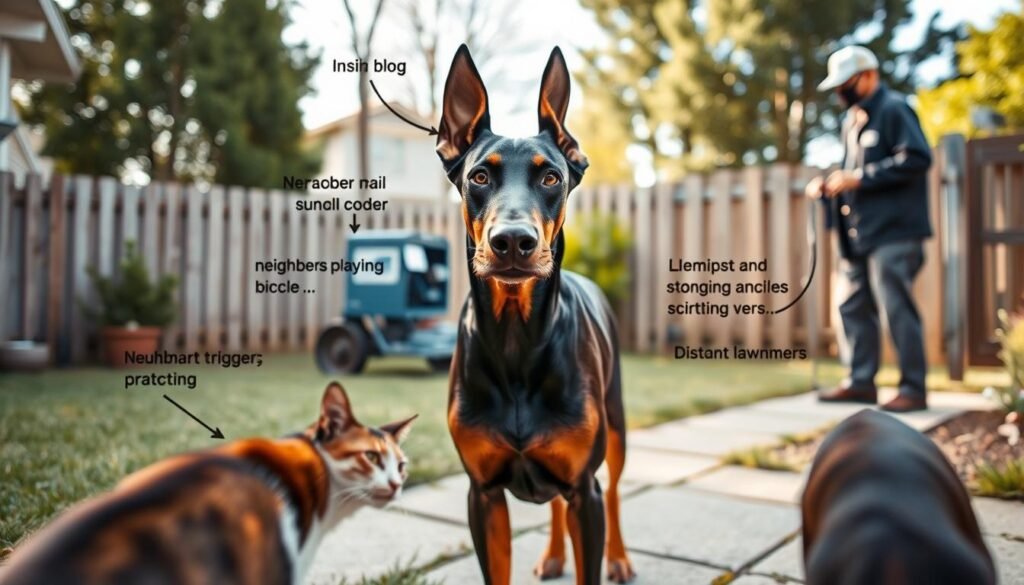
External noises and neighborhood dynamics can make your Doberman Pinscher bark a lot. Knowing what triggers this behavior is key to reducing your dog’s barking.
Barking Due to External Noises
Doberman Pinschers bark when they hear loud noises like sirens or thunderstorms. These sounds can scare or upset them, causing them to bark.
Common external noise triggers include:
- Sirens and emergency vehicles
- Construction or demolition work
- Thunderstorms and loud weather conditions
- Neighbor’s pets or animals
Impact of Neighborhood Dynamics
Your neighborhood’s vibe can affect your Doberman’s barking. Busy or noisy areas might make your dog bark more because of all the sounds.
| Neighborhood Factor | Potential Impact on Barking |
|---|---|
| High foot traffic | Increased barking due to strangers and noise |
| Nearby parks or playgrounds | Potential for increased barking due to other animals or children |
| Busy streets or highways | Constant noise may lead to more frequent barking |
Family Interactions and Noise
Family noise and interactions can also make your Doberman bark. For instance, loud arguments or boisterous play can excite your dog and lead to barking.
To minimize barking triggered by family interactions, consider:
- Maintaining a calm environment
- Avoiding loud arguments or disciplining
- Engaging in calm, gentle play
Effective Training Techniques to Curb Barking
Effective training techniques can greatly reduce barking in Doberman Pinschers. By using the right methods, you can have a well-behaved and quiet pet.
Training is key for any dog, and Doberman Pinschers are no different. Their intelligence and loyalty make them quick to learn the right ways.
Positive Reinforcement Strategies
Positive reinforcement is a strong training tool. It rewards your Doberman for good behavior, like being quiet. Rewards can be treats, praise, or playtime. For example, giving a treat when they stop barking helps them learn to be quiet.
To use positive reinforcement well:
- Find out what makes your Doberman bark.
- Reward them for staying calm or quiet when they see these triggers.
- Slowly increase the triggers while keeping the rewards for calm behavior.
Setting Boundaries with Commands
Clear boundaries and commands help manage barking. Teaching your Doberman the “quiet” command is very effective. Say “quiet” when they bark, hold a treat, and give it to them when they stop.
Being consistent is crucial when teaching commands. Make sure everyone uses the same commands and rewards to avoid confusing your dog.
Consistency in Training Methods
Consistency is essential in dog training. A routine is important and should be followed. Inconsistent training can confuse your dog and hinder the training. For example, always respond to barking with the same commands and rewards.
Here’s a summary of the key training techniques:
| Training Technique | Description | Benefits |
|---|---|---|
| Positive Reinforcement | Rewarding desired behaviors | Encourages good behavior, builds trust |
| Setting Boundaries | Using commands to manage barking | Helps in managing barking, establishes authority |
| Consistency | Maintaining a consistent training routine | Prevents confusion, reinforces learning |
For more detailed information on training your Doberman Pinscher, you can visit Doberman Planet for additional resources and tips.
Understanding the Role of Exercise in Barking

Doberman Pinschers need regular exercise to cut down on barking. This is because they have a lot of energy. Exercise also keeps their minds sharp, which is important for this smart breed.
Benefits of Regular Exercise for Dobermans
Exercise is great for Doberman Pinschers. It helps them use up their energy, stay healthy, and feel good mentally. A Doberman that gets enough exercise is less likely to bark too much.
Some key benefits of exercise for Dobermans are:
- Less destructive behavior
- Better heart health
- More mental stimulation
- Improved social skills
Activities to Reduce Excess Energy
To lower excess energy in Dobermans, there are many activities. These include:
| Activity | Description | Energy Expenditure |
|---|---|---|
| Running | Running alongside a bike or on a treadmill | High |
| Swimming | Swimming in a pool or a safe, natural body of water | High |
| Agility Training | Obstacle courses that challenge physically and mentally | Medium to High |
Fun Ways to Engage Your Doberman
Playing with your Doberman is fun and helps reduce barking. It also makes your bond stronger. Here are some fun ways to engage your Doberman:
- Hide and seek games
- Scent work
- Interactive puzzle toys
These activities keep your Doberman’s mind and body active. They help use up their energy and reduce barking.
The Importance of Socialization
Proper socialization is key to raising a confident Doberman Pinscher. It makes them less likely to bark too much. Socialization helps your dog feel calm in new places, with new people, and around other animals. This reduces anxiety and fear-based barking.
Reducing Barking Through Socialization
Socialization is vital in reducing barking caused by fear or anxiety. By exposing your Doberman to different things, they become more confident. This makes them less likely to bark at things that might scare them.
As Stanley Coren, a renowned expert in canine behavior, notes, “Socialization is not just about exposing your dog to new experiences; it’s about doing so in a way that is positive and not overwhelming.” This approach helps in reducing stress and anxiety, which are common causes of excessive barking.
Introducing Dobermans to New Environments
Gradually introducing your Doberman to new places is crucial. Start with small steps, like short walks in different neighborhoods or visits to dog-friendly parks. This helps your dog get used to new sights, sounds, and smells. It reduces barking caused by unfamiliarity or fear.
- Begin with short outings to minimize overwhelm.
- Gradually increase the duration and variety of environments.
- Reward calm behavior to reinforce positive experiences.
Playdates with Other Dogs
Playdates with other dogs are great for socializing your Doberman. These interactions help your dog learn how to interact with others without aggression. It also reduces barking triggered by other dogs.
“Play is a dog’s way of learning social skills, including how to interact with others without aggression.” This natural behavior is crucial for developing a well-adjusted dog. It makes them less likely to bark excessively at other dogs.
By focusing on thorough socialization, you can significantly reduce your Doberman Pinscher’s barking. This leads to a more harmonious and enjoyable companionship.
Health Issues That May Lead to Barking

As a Doberman owner, it’s important to know that health problems can make your dog bark a lot. If your Doberman is barking too much, it might be due to a health issue.
Common Health Problems in Dobermans
Doberman Pinschers often face health issues that can cause barking. Some common problems include:
- Cardiomyopathy: A heart condition that can cause pain and discomfort, leading to barking.
- Hip Dysplasia: A genetic condition that affects the hip joint, causing pain and mobility issues.
- Hypothyroidism: A condition where the thyroid gland doesn’t produce enough hormones, leading to various symptoms including barking.
For more information on Doberman health problems, you can visit this resource that provides detailed insights.
When Barking is a Sign of Pain or Discomfort
If your Doberman is barking more than usual, it could be a sign of pain or discomfort. Watch their behavior and look for other signs of distress, such as changes in appetite or mobility.
Consulting a Veterinarian
If you think your Doberman’s barking is due to a health issue, see a vet first. A vet can diagnose the cause and suggest treatment.
| Health Issue | Symptoms | Action |
|---|---|---|
| Cardiomyopathy | Barking, lethargy, loss of appetite | Consult a veterinarian for diagnosis and treatment |
| Hip Dysplasia | Barking, limping, difficulty walking | Consult a veterinarian for diagnosis and potential surgery |
| Hypothyroidism | Barking, weight gain, skin issues | Consult a veterinarian for hormone replacement therapy |
By understanding the health issues that can cause barking in Dobermans and taking action, you can help your dog feel better and bark less.
Managing Barking in Different Situations
Barking can be a big problem in many situations. As a Doberman owner, it’s important to know why your dog barks and how to stop it. This helps keep your home peaceful.
Dealing with Doorbell Barking
Many Doberman owners struggle with doorbell barking. It happens when the doorbell suddenly rings. To fix this, start by desensitizing your dog to the doorbell sound. Play a recording of the doorbell at a low volume and reward your dog for staying calm. Slowly make the volume louder.
Another good idea is to train an alternative behavior. Teach your Doberman to go to a certain spot or do a task when the doorbell rings. This distracts them from the noise.
Barking While on Leash
Barking on a leash can be tough, mainly if your Doberman reacts to other dogs, people, or sounds. Proper training and socialization are crucial. Begin by exposing your dog to the things that make them bark at a safe distance. Reward them for staying calm.
- Practice loose-leash walking to reduce tension and reactivity.
- Use positive reinforcement training to teach your dog to focus on you.
- Consider using equipment like harnesses and head halters to help manage pulling and barking.
Barking During Alone Time
Barking when alone can mean your Doberman is anxious or bored. Make sure they get adequate physical and mental stimulation every day. This includes exercise, training, and fun toys.
Try a gradual separation routine to help your dog get used to being alone. Begin with short times apart and slowly increase it.
Managing barking in different situations needs patience, understanding, and a custom plan. By knowing why your dog barks and how to stop it, you can make your home a happier place.
Techniques to Encourage Quiet Behavior

Teaching your Doberman Pinscher to be quiet takes patience and the right methods. Understanding your dog’s needs is key. With the right strategies, you can reduce barking and make your home quieter.
Teaching the “Quiet” Command
Teaching your Doberman the “quiet” command is a great way to manage barking. Start by saying “speak” when they bark and give them a treat. Then, say “quiet” when they stop, and reward them again. Being consistent is important.
Dog training expert Karen Pryor says, “The key to successful training is to reinforce the behavior you want, rather than scolding the behavior you don’t want.” This method works well for the “quiet” command.
“The key to successful training is to reinforce the behavior you want, rather than scolding the behavior you don’t want.” – Karen Pryor
Introducing Distractions During Barking
Introducing distractions when your dog barks is another technique. It helps them learn to stay calm when they see things that usually make them bark. Start with small distractions and increase them as your dog gets better. Always reward them for staying calm.
- Begin with low-level noise distractions.
- Gradually increase the intensity of the distractions.
- Reward calm behavior.
Using Calming Aids and Tools
There are many calming aids and tools to help reduce your Doberman’s barking. These include calming collars, pheromone diffusers, and calming treats. Always talk to a vet before using any new tools to make sure they’re safe for your dog.
| Calming Aid | Description | Benefits |
|---|---|---|
| Calming Collars | Collars that emit calming signals. | Reduces anxiety and barking. |
| Pheromone Diffusers | Devices that mimic natural calming pheromones. | Creates a calming environment. |
| Calming Treats | Treats formulated with calming ingredients. | Helps reduce stress and barking. |
Using these techniques together can help your Doberman be quieter. Remember, patience and consistency are key in training.
Building a Strong Owner-Dog Bond
Building trust and affection with your Doberman is key to less barking. A strong bond helps in training and reduces barking due to stress or anxiety.
Importance of Trust and Affection
Trust and affection are the base of a good relationship with your Doberman. Showing consistent love and care makes your dog feel safe and understood. This bond grows through regular interactions and positive training.
For more on bonding with your Doberman, check out this resource. It offers tips on creating a strong connection.
Training Together and Building Routine
Training is key to a strong bond. Regular training sessions teach your Doberman new things and strengthen your bond. A routine helps your dog know what’s expected, reducing confusion and anxiety.
| Training Activity | Benefits |
|---|---|
| Positive Reinforcement Training | Encourages good behavior, builds trust |
| Regular Exercise | Reduces excess energy, promotes bonding |
| Socialization | Helps your Doberman become confident in new environments |
Recognizing Your Doberman’s Needs
Knowing your Doberman’s needs is crucial for a strong bond. Paying attention to their body language and behavior helps you see where they need support or comfort. This way, you can adjust your training and interaction to meet their needs.
By focusing on trust, training, and understanding your Doberman’s needs, you can build a strong bond. This bond improves your relationship and helps reduce barking caused by stress or anxiety.
When to Seek Professional Help
If your Doberman Pinscher’s barking is a problem, it might be time to get help. Persistent barking often means there’s an underlying issue that needs expert care.
Indicators for Professional Training
Signs your Doberman needs a pro include barking that disrupts your day, or if you’ve tried many training methods without success. A professional can find the cause of the barking and create a plan just for your dog.
Approaches to Professional Training
Trainers use different methods, like positive reinforcement or clicker training. Learning about these can help you choose the right one for your dog.
Selecting the Right Trainer
When picking a trainer, look at their experience with Doberman Pinschers. Also, check their methods and what others say about them. The right trainer can really help with your dog’s barking.