

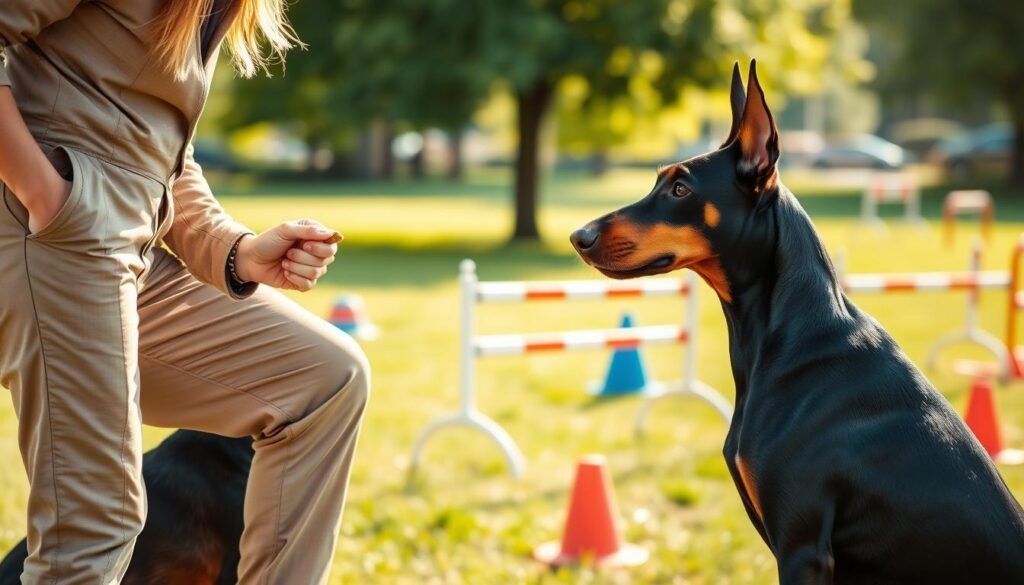
Did you know your Doberman Pinscher can become a loving and well-behaved companion? The right training is essential to unlock their potential.
I’ll show you how to raise a happy pup. We’ll cover everything from understanding the breed to advanced training techniques.
Follow this guide to learn how to train your Doberman Pinscher effectively. You’ll gain the knowledge and confidence you need.
Key Takeaways
- Understand the importance of early training for your Doberman Pinscher
- Learn how to establish a strong bond with your pup
- Discover effective techniques for housebreaking and basic obedience
- Explore advanced training methods to address specific behaviors
- Gain confidence in your ability to train your Doberman Pinscher
Understanding the Doberman Breed
To train a Doberman Pinscher well, you must first know the breed’s traits and temperament. They are smart, athletic, and loyal. This makes them great pets and working dogs.
Characteristics of Doberman Pinschers
Doberman Pinschers have a muscular build and sleek coat. They are medium to large in size. Known for their intelligence and trainability, they stand out.
- High energy levels requiring regular exercise
- Loyal and protective nature, making them great guard dogs
- Intelligent and responsive to training
- Athletic and agile, benefiting from activities that challenge them physically and mentally
Temperament and Behavior Traits
The Doberman’s temperament comes from genetics, socialization, and training. They are loyal and loving to their families. But, they can be cautious with strangers.
Proper socialization is crucial for their adjustment and confidence. Some common traits include:
- Alert and watchful, often serving as an effective watchdog
- Active and requiring regular mental and physical stimulation
- Responsive to commands and training, with positive reinforcement
Knowing these traits helps tailor your training. It builds a strong bond between you and your Doberman.
Importance of Early Socialization
Socializing your Doberman from a young age is crucial. It helps them become confident and calm. Early socialization means exposing your puppy to many environments, people, and animals. This makes them well-adjusted adult dogs.
Benefits of Early Exposure
Early exposure to various stimuli is beneficial for Doberman Pinschers. It reduces anxiety and aggression, making them more at ease in new situations. The Doberman Pinscher Club of America emphasizes the importance of early socialization for puppy development.
The benefits of early socialization include:
- Reduced fear and anxiety in new situations
- Improved behavior around other dogs and people
- Enhanced confidence in new environments
- Better adaptability to changes in the household
How to Socialize Your Doberman Effectively
Effective socialization needs a careful and consistent plan. Begin by taking your Doberman to parks, pet stores, and friends’ homes. Make sure these experiences are positive by using positive reinforcement techniques like treats and praise.
| Socialization Activity | Benefits | Tips for Implementation |
|---|---|---|
| Meeting new people | Reduces stranger danger, improves social behavior | Invite friends over, visit dog parks |
| Encountering other dogs | Enhances canine social skills, reduces aggression | Arrange playdates, attend puppy classes |
| Exploring new environments | Improves adaptability, reduces anxiety | Visit new places, take different routes on walks |
For more detailed guidance on socialization, consider consulting resources like the Doberman Pinscher Club of America. They offer valuable insights into puppy development and socialization.
Basic Training Commands for Dobermans
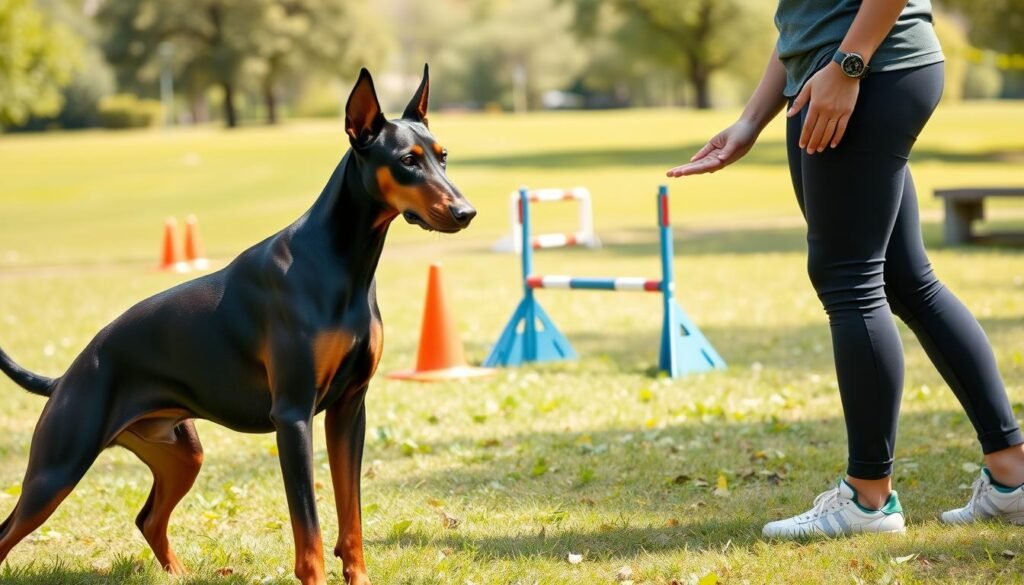
To ensure your Doberman Pinscher is well-behaved, start with basic training commands. These commands help in clear communication with your dog. They also prepare your dog for more advanced training.
Essential Commands Every Doberman Should Know
Every Doberman should learn basic commands like “sit,” “stay,” “come,” “down,” “leave it,” and “heel.” These commands help manage your dog’s behavior in different situations. For example, the “stay” command is great for keeping your dog in control in public.
Teaching your Doberman to follow these commands takes patience and consistency. Start with short training sessions. Then, increase the time as your dog gets more focused.
Step-by-Step Training Techniques
Training your Doberman is a step-by-step process. Start with the “sit” command: Hold a treat above your dog’s head. When they sit, say “sit” and give them the treat. For “stay,” have your dog sit, then take a few steps back and say “stay.” Gradually increase the distance and time.
For more detailed guidance, check out the AKC’s Doberman training guide.
Consistency is crucial when training your Doberman. Make sure all family members use the same commands and techniques. Positive reinforcement, like treats and praise, makes training easier.
By following these steps and being consistent, your Doberman will become a well-behaved and loyal companion.
Positive Reinforcement Techniques

Understanding and using positive reinforcement techniques is key to training a Doberman. This method encourages good behavior instead of punishing bad behavior.
By linking desired actions with rewards, you create a positive learning space for your Doberman. This method not only speeds up learning but also strengthens your bond with your dog.
What is Positive Reinforcement?
Positive reinforcement is a powerful training method. It encourages good behavior by linking it with rewards. When your Doberman does something right, like sitting, you reward them with something they like.
This reward could be a treat, praise, or playtime. The reward makes the behavior more likely to happen again. The goal is to teach your Doberman that good things happen when they behave well.
Effective Rewards to Use During Training
Choosing the right rewards is key for successful training. Here are some effective rewards:
- Treats: Small, tasty treats work well, even for food-motivated dogs.
- Praise: Verbal praise and affection motivate many Dobermans.
- Play: Using a favorite toy or game as a reward is very effective.
It’s important to stop using rewards as your Doberman gets better. Start by rewarding every other successful attempt. Then, increase the ratio as they get more proficient.
| Reward Type | Effectiveness | Tips for Use |
|---|---|---|
| Treats | High | Use small, healthy treats to avoid overfeeding. |
| Praise | Variable | Be sincere and enthusiastic in your praise. |
| Play | High | Use a favorite toy or game to keep training fun. |
By using positive reinforcement in your Doberman training, you’ll get a well-behaved dog. You’ll also build a strong, loving bond with your pet.
Setting Up a Training Schedule

For a well-behaved Doberman, a consistent and adaptable training schedule is key. A routine helps your dog know what’s expected. At the same time, being flexible keeps training relevant as your Doberman grows.
Creating a Consistent Routine
Begin by setting training times and commands. Be realistic about daily training time. A short, daily session is better than a long one that’s rare.
Here’s a basic outline to follow:
| Day | Training Time | Commands to Practice |
|---|---|---|
| Monday | 15 minutes | Sit, Stay |
| Tuesday | 15 minutes | Come, Down |
| Wednesday | 15 minutes | Stay, Heel |
Adjusting the Schedule as Your Doberman Grows
As your Doberman matures, their training needs change. Puppies need short, frequent sessions. Older dogs can handle longer, less frequent ones. Be ready to adjust the complexity and duration of your training.
- Puppies (under 6 months): Short, frequent sessions focusing on basic commands.
- Adolescents (6 months to 1 year): Moderate sessions introducing more complex commands.
- Adults (over 1 year): Longer sessions focusing on advanced training and reinforcing previous learning.
Addressing Behavioral Issues
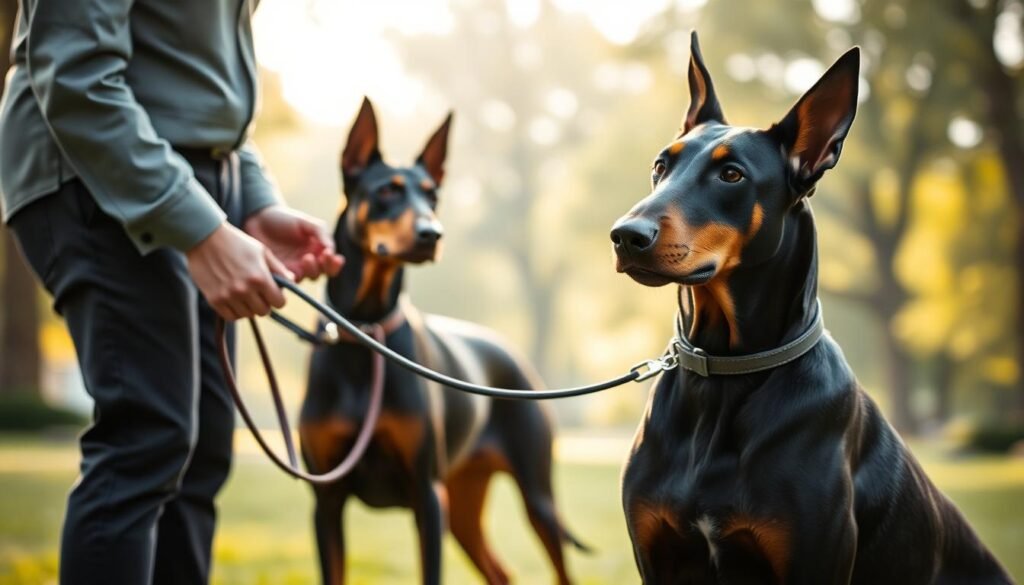
Dealing with your Doberman’s behavior is crucial. You’ll face issues like barking, chewing, and separation anxiety. Knowing why these problems happen is the first step to fixing them.
Common Problems with Doberman Training
Doberman Pinschers are smart and full of energy. But, they might act out if they’re not trained right. Some common problems include:
- Barking and howling: Often a sign of boredom or anxiety.
- Chewing and destructive behavior: Can be a result of teething or lack of stimulation.
- Separation anxiety: Dobermans are social dogs and can become distressed when left alone.
Tips for Overcoming Specific Issues
Every problem needs a special solution. Here are some tips:
- For barking and howling: Make sure your Doberman gets enough exercise and mental challenges. Training sessions that keep their mind active are great.
- For chewing and destructive behavior: Give them the right chew toys and keep them busy with puzzle toys filled with treats.
- For separation anxiety: Start by leaving for short times and then longer. Leave a treat-filled toy to keep them occupied.
By understanding why your Doberman behaves a certain way and using these tips, you can help them become a well-behaved and happy family member.
Advanced Training Techniques
Once you’ve learned basic commands, you can try advanced training with your Doberman. This isn’t just about learning new tricks. It’s about keeping your dog active, mentally sharp, and happy.
Agility training is a great way to start. It involves guiding your Doberman through obstacle courses. These courses have tunnels, jumps, and more. It’s great for burning energy and boosting confidence.
Introducing Agility Training
To start agility training, set up a simple course in your backyard. Start with easy obstacles and add more as your dog gets better.
Agility training is good for both body and mind. It keeps your dog active and sharp. Plus, it’s a fun way to spend time together and meet other dogs.
Advanced Commands and Tricks to Try
You can also teach your Doberman new commands and tricks. Try “play dead,” “spin,” and “jump through a hoop.” These tricks are fun and keep your dog’s mind active.
Teaching advanced commands takes patience and consistency. Break down hard commands into simpler steps. Reward your dog for small successes. With time, they’ll learn these new skills.
| Command/Trick | Description | Training Tip |
|---|---|---|
| Play Dead | Lies down on their side or back, remaining still. | Start by having your dog sit, then use a treat to lure them into a downward position. |
| Spin | Rotates in a circle on command. | Hold a treat above your dog’s head and move it in a circle, encouraging them to follow with their nose. |
| Jump Through a Hoop | Jumps through a hoop held by the owner. | Begin by holding the hoop low to the ground and gradually raise it as your dog becomes more confident. |
Advanced training keeps your Doberman healthy and happy. Agility training and new tricks are key. They keep your dog active and engaged.
Incorporating Fun into Training
Making training fun for your Doberman can really help them learn better. It keeps them interested and eager to learn, making training more effective.
Playful Activities to Reinforce Training
Playing games with your Doberman is a great way to reinforce their training. Activities like hide-and-seek, fetch, and agility training are fun and mentally stimulating. For example, hiding treats or toys around the house or yard helps your Doberman use their sense of smell and solve problems.
Using games in training makes it more fun for both you and your dog. It’s important to change these activities often to keep things interesting and prevent boredom.
The Role of Games in Learning
Games are key in teaching Dobermans new things. They help with obedience, recall, and better behavior. By adding games to your training, you make learning a positive experience. This makes your Doberman more likely to follow commands and instructions.
Some effective games to try with your Doberman include:
- Fetch: Enhances retrieval skills and provides exercise.
- Hide-and-Seek: Improves scent work and problem-solving.
- Agility Training: Develops physical fitness and coordination.
By making training fun and engaging, you can build a stronger bond with your Doberman. This leads to better training results.
Resources for Doberman Owners
Supporting your Doberman’s training is key. You have many tools and guides to help. These can make training better for you and your dog.
Recommended Books and Guides
There are many books and guides for Doberman training. Here are some top picks:
- “The Doberman Pinscher” by G. Cristina and R. De Prisco – A detailed guide to the breed.
- “Doberman Pinschers: A Complete Pet Owner’s Guide” by Jacqueline O’Neill – Covers care, training, and health.
- “The Culture Clash” by Jean Donaldson – Helps understand dog behavior.
These resources can deepen your understanding of your Doberman. This makes training more effective.
Local Training Classes and Workshops
Books and guides are great, but local classes and workshops are even better. They offer hands-on learning and expert advice. Here are some options:
- Local dog training clubs with Doberman Pinscher classes.
- Workshops on positive reinforcement training.
- Agility classes for physical and mental health.
Joining these classes can boost your Doberman’s training. It also lets you meet other dog owners.
Connecting with Doberman Rescue Florida
Being a Doberman owner can really benefit from connecting with groups like Doberman Rescue Florida. They help rescue and find new homes for Dobermans. They also offer great resources and support for training.
Support for Training
Doberman Rescue Florida guides on solving behavioral issues and better training methods. Their help can deepen your understanding of training Dobermans. It also provides the support needed to raise a well-behaved dog.
For more info on professional dog training, including Doberman training, check out Dog Training Elite. Their expertise can help create a balanced home and improve your dog’s health.
Access to Resources
Doberman Rescue Florida also connects you with experienced trainers and resources. This is super helpful for new owners or those dealing with specific behavior issues.
Using these resources ensures your Doberman gets the training and care they need to do well.