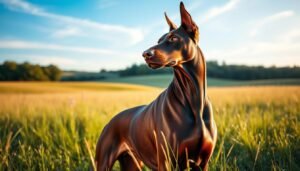

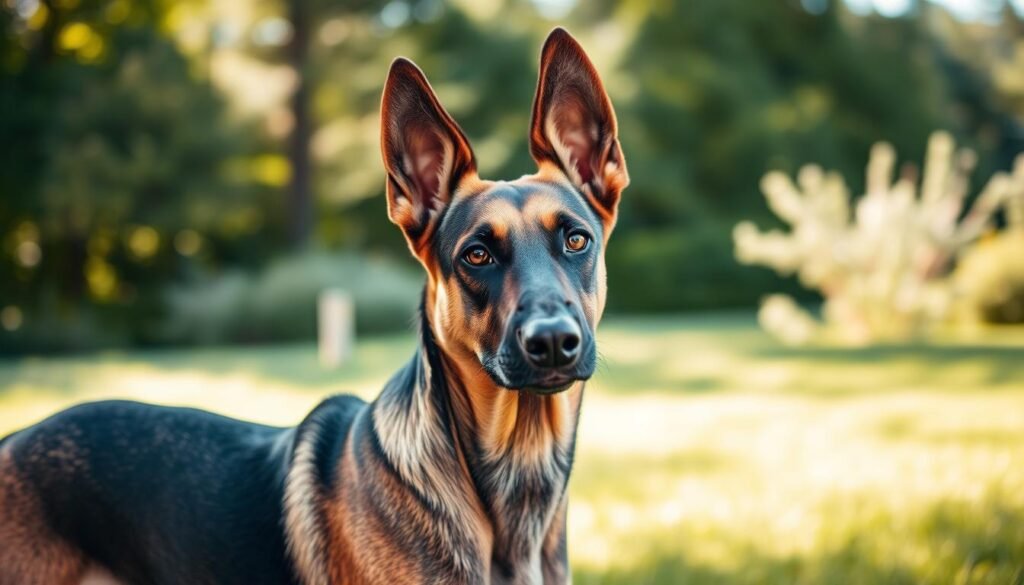
Did you know mixing a German Shepherd with a Doberman Pinscher creates a unique hybrid? This dog combines the intelligence, loyalty, and protective nature of both breeds. It’s a dog that’s both captivating and complex. Let’s dive into what makes this breed so intriguing.
If you’re thinking of adding this mix to your family, it’s important to know their needs and traits. Experts say both Dobermans and German Shepherds need regular exercise and mental stimulation. You can learn more about their compatibility from my previous article on whether a Doberman can live with a German.
Key Takeaways
- The German Shepherd and Doberman mix combines the best traits of both breeds.
- This hybrid requires regular exercise and mental stimulation.
- Early socialization is crucial for this mix to be well-rounded.
- They are highly intelligent and trainable.
- Understanding the needs of both breeds is essential for their care.
Understanding the German Shepherd and Doberman Mix
The German Shepherd and Doberman mix is a unique crossbreed. It combines the best traits of two famous working dog breeds. To understand this hybrid, we need to know about its parent breeds and what makes it special.
History of the Parent Breeds
The German Shepherd was bred for herding. It’s known for its smarts, loyalty, and protective nature. The Doberman Pinscher was bred as a guard dog. It’s known for its athleticism, smarts, and loyalty.
Both breeds are great at police and military work. They’re smart and have a strong work ethic.
This mix is intelligent, loyal, and protective. Knowing the history of the parent breeds helps us understand what the mix might be like.
Characteristics of the Mix
This hybrid is smart, loyal, and protective. It’s a great choice for active families or individuals. It’s likely to be easy to train because of its high intelligence.
The exact traits can vary. It depends on which parent breed’s traits are more dominant.
Key characteristics include:
- High intelligence and trainability
- Loyalty and protective nature
- Potential for high energy levels, requiring regular exercise
Why Choose This Hybrid?
Choosing a German Shepherd and Doberman mix is a great choice. It’s loyal and protective. This breed is perfect for active people or families who can give it the exercise and training it needs.
If you’re ready to invest time and effort, this hybrid can be a wonderful companion.
Before bringing one home, think about your lifestyle. Make sure you can meet the needs of this energetic and smart breed.
Physical Appearance of the German Shepherd-Doberman Mix
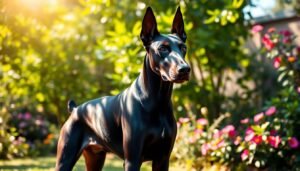
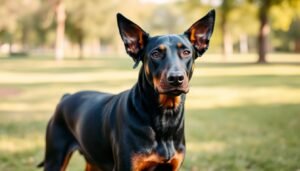
The German Shepherd-Doberman mix is often muscular and athletic. It combines the Doberman’s strong build with the German Shepherd’s agility. This makes the dog powerful yet nimble.
Size and Weight
The size and weight of this mix vary based on the parent breeds. It’s usually a medium to large-sized dog. Males weigh 75-100 pounds and stand 24-28 inches tall. Females weigh 60-85 pounds and stand 22-26 inches tall.
Coat Colors and Patterns
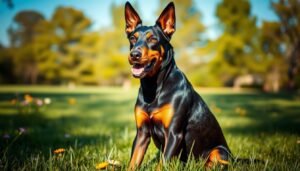
The mix’s coat can be short and smooth or medium-length. It may have the Doberman’s sleek coat or the German Shepherd’s double coat. Colors include black, tan, red, blue, and fawn, with distinctive markings. Some may have the floppy eared doberman trait, but it’s not common.
For more info on the German Shepherd-Doberman mix, including their temperament and health, visit https://dobermanpinscherhome.com/german-shepherd-mix-doberman-pinscher/.
Distinct Features
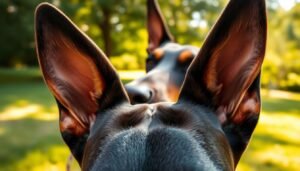
This mix has a muscular build from both parents. Their ears can be erect or floppy, and their eyes are alert and expressive. The tail is long and may be docked or left natural, depending on the owner’s choice and local laws.
The German Shepherd-Doberman mix looks robust and agile. Their unique traits make them a striking companion.
Personality Traits of the German Shepherd-Doberman Mix
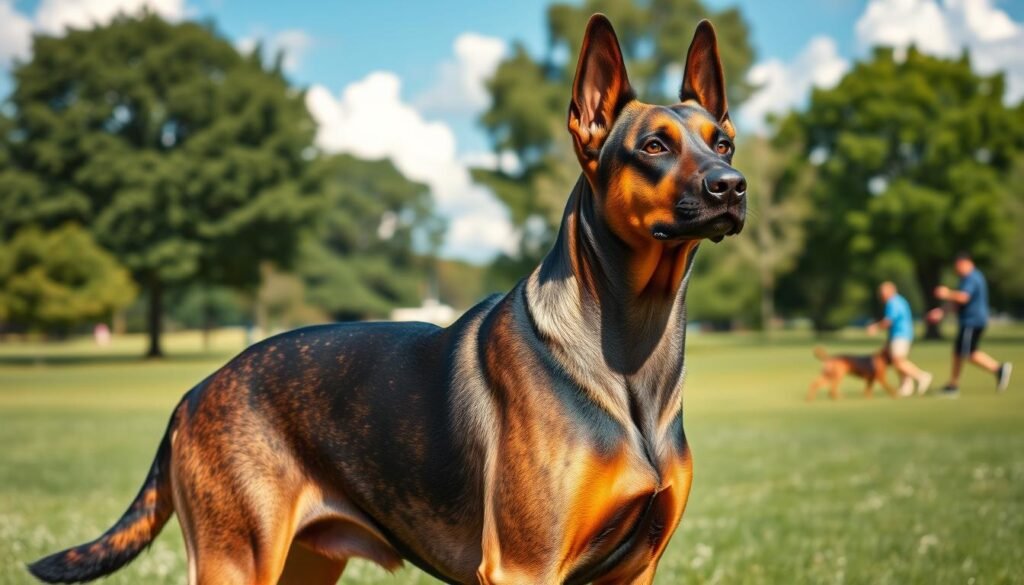
The German Shepherd-Doberman mix is a unique dog. It combines the loyalty and smarts of both breeds. This makes it a great pet for active families or individuals.
Temperament Overview
This mix is loyal, brave, and protective. They are naturally suspicious of strangers, making them great watchdogs. But, they need early socialization to avoid being too aggressive.
In families, they are loving and gentle if socialized right. They are very loyal and bond strongly with their family. It’s important to set clear rules and train them consistently.
Socialization Needs
Socialization is key for a well-adjusted German Shepherd-Doberman mix. Early exposure to different environments, people, and animals is crucial. It helps them know when to be protective and when not to.
- Introduce them to new experiences gradually.
- Positive reinforcement during social interactions is key.
- Consistency in socialization efforts yields the best results.
Intelligence and Trainability
Both German Shepherds and Doberman Pinschers are smart, and their mix is no different. This breed is highly trainable, responding well to positive reinforcement. Their smarts and desire to please make them great for many roles, like family pets or service dogs.
| Trait | Description | Training Tip |
|---|---|---|
| Intelligence | Highly intelligent, capable of complex tasks | Engage in puzzle toys and challenging training |
| Loyalty | Extremely loyal to family and territory | Reinforce loyalty through consistent training and positive reinforcement |
| Protective Instinct | Strong protective instinct, naturally wary of strangers | Socialize extensively to manage protective behavior |
Health Considerations for the Crossbreed
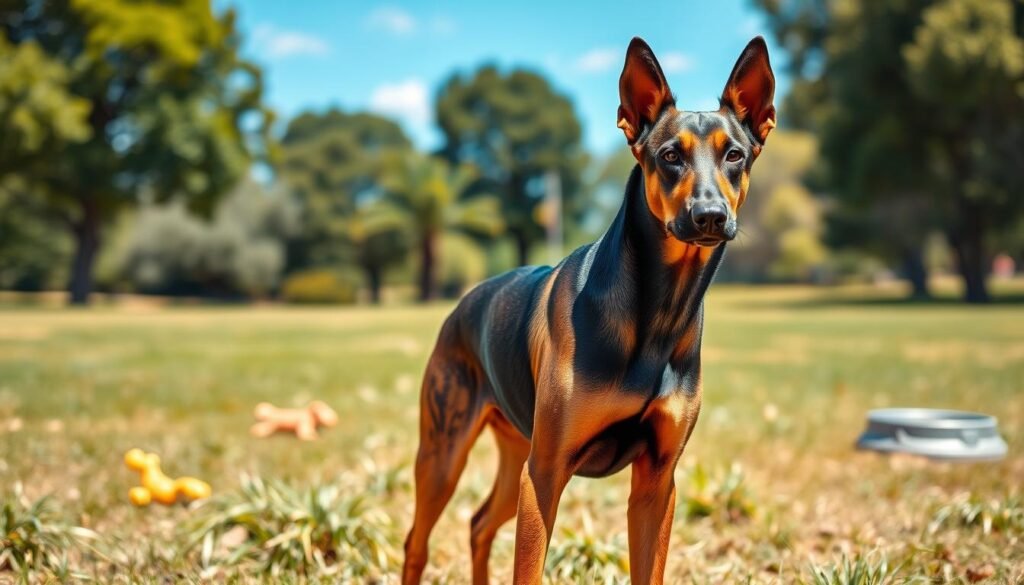
The German Shepherd-Doberman mix has its own health concerns. Knowing these is key to caring for your dog well.
Common Health Issues
This mix may face health problems due to its parents’ genes. Some common issues include:
- Hip dysplasia, which can cause arthritis or mobility problems.
- Cardiac issues like dilated cardiomyopathy, affecting the heart’s pumping ability.
- Gastric dilatation-volvulus (GDV), a serious stomach condition.
Regular vet visits are crucial to catch these problems early.
Preventative Health Care
Preventive care is essential for your German Shepherd-Doberman mix’s health. This includes:
- Regular vaccinations to fight off diseases.
- A balanced diet to meet your dog’s nutritional needs.
- Regular exercise to keep your dog healthy and fit.
“A healthy lifestyle is key to preventing many health issues in dogs.” The American Kennel Club says a healthy lifestyle and vet care can greatly improve a dog’s life.
Lifespan Expectations
German Shepherd-Doberman mixes usually live between 10 to 12 years. But, with the right care, some may live longer. Genetics, diet, exercise, and health conditions all play a role in lifespan.
By understanding health concerns and taking proactive steps, you can help your German Shepherd-Doberman mix live a long, healthy life.
Grooming Needs of the Floppy Eared Doberman
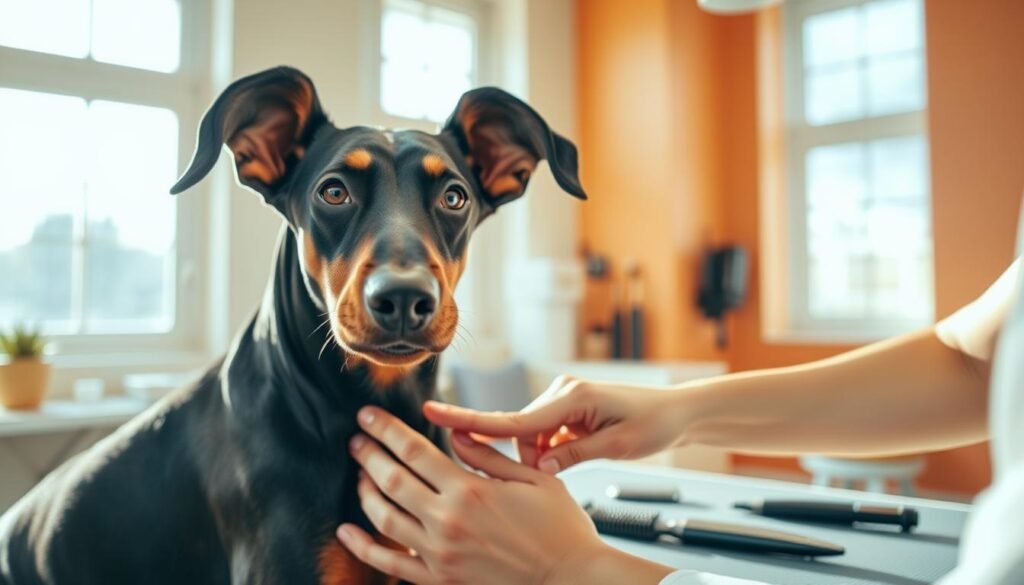
Grooming is key for a German Shepherd-Doberman mix, like those with floppy ears. It keeps their coat clean and healthy. It also helps spot health problems early.
Coat Care Requirements
This mix often has a medium to short coat. It needs regular brushing to reduce shedding and prevent mats. Brush at least twice a week, more often in shedding seasons.
Choosing the right brush is important. A pin brush or slicker brush is best. They help remove loose hair and keep the coat shiny.
Bathing Frequency
Bathing should be as needed, usually every 2-3 months. This depends on their activity and how dirty they get. Don’t over-bathe to avoid dry skin and irritation.
Use a mild dog shampoo when bathing. Make sure to rinse well to avoid skin irritation from shampoo residue.
Nail Trimming and Ear Cleaning
Nail trimming is crucial. Trim nails every 4-6 weeks to avoid health problems. Use a nail clipper or grinder for dogs and be careful not to cut too short.
Ear cleaning is also important for floppy eared Dobermans. Their ears can trap dirt and moisture, leading to infections. Clean their ears weekly with a dog ear cleaner and cotton balls. Never put anything in the ear canal to avoid harm.
Exercise Requirements for the Mix
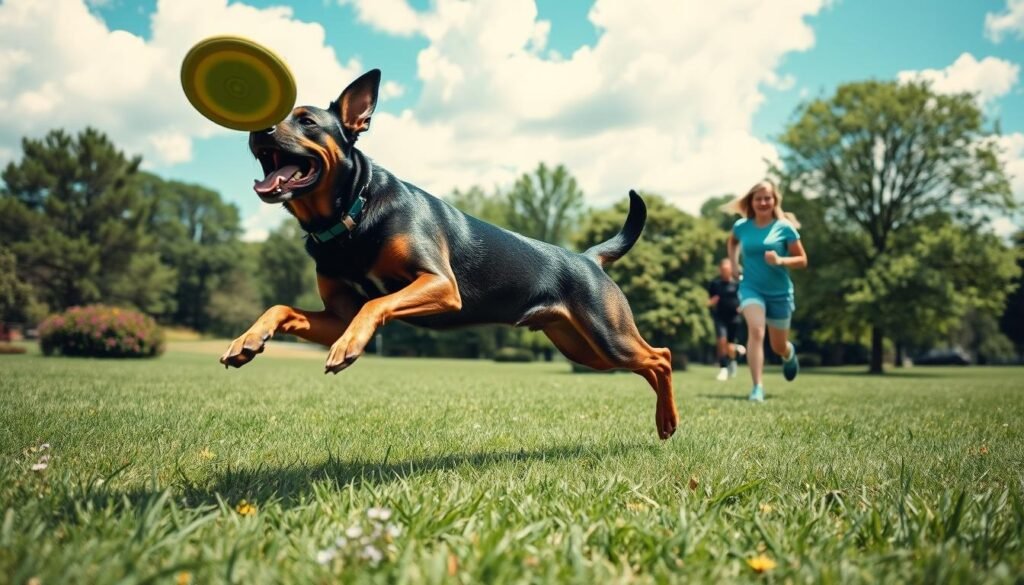
The German Shepherd-Doberman mix is very energetic. It needs lots of exercise to stay healthy in body and mind. This mix, being a mix of two active breeds, needs a varied and regular workout routine.
Daily Activity Levels
This mix needs a lot of daily activity. I suggest at least 60 to 90 minutes of exercise each day. You can break this into several sessions to keep your dog active and interested.
For more insights on exercise needs for similar breeds, you can check out how much exercise a Doberman needs. This can give you a useful reference for the exercise needs of Doberman Pinschers.
Recommended Exercises
There are many exercises that can keep your German Shepherd-Doberman mix happy and healthy. Some good activities include:
- Running: A great way to burn off excess energy.
- Brisk Walking: Ideal for dogs that need to maintain a steady pace.
- Playtime: Engage your dog in fetch or tug-of-war to stimulate mental and physical health.
- Agility Training: Provides a challenging workout and strengthens the bond between dog and owner.
Benefits of Regular Exercise
Regular exercise has many benefits for the German Shepherd-Doberman mix, including:
- Improved Physical Health: Maintains a healthy weight and strengthens muscles.
- Mental Well-being: Reduces stress and prevents boredom.
- Enhanced Trainability: Exercise can improve focus and responsiveness to training.
- Better Socialization: Regular walks and outings can help socialize your dog.
By adding a mix of these exercises to your daily routine, you can ensure your German Shepherd-Doberman mix has a happy, healthy, and balanced life.
Training Tips for the German Shepherd-Doberman Mix
Training is key for the German Shepherd-Doberman mix. They need a structured plan to use their energy and smarts well. This mix comes from two disciplined breeds, so they need a training plan that meets their physical and mental needs.
Basic Obedience Training
Basic obedience is the base for a well-behaved German Shepherd-Doberman mix. It covers housebreaking and learning commands. A regular routine for meals, exercise, and potty breaks helps with housebreaking.
Use treats and praise to encourage good behavior. Start with simple commands like “sit,” “stay,” and “come.” This builds a strong bond with your dog.
To learn more about training a Doberman Pinscher, which shares some traits with this mix, you can visit this resource for detailed guidance.
Socialization Strategies
Socialization is key to make sure your German Shepherd-Doberman mix is okay with people and other animals. Early socialization helps avoid aggression and fear. Expose your dog to different places, people, and animals early on.
Take them to dog parks, puppy classes, and have friends over. Also, introduce them to various sounds, sights, and experiences. This helps them feel confident and calm in new places.
Positive Reinforcement Techniques
Positive reinforcement is a great way to train your German Shepherd-Doberman mix. It rewards them with treats, praise, or play for good behavior. Their intelligence and desire to please make them respond well to positive reinforcement.
Clicker training and reward-based methods work well. Be consistent and patient. Reward good behavior right away and don’t punish bad behavior. This avoids anxiety and helps the training go smoothly.
Ideal Living Environment for This Hybrid
To keep a German Shepherd-Doberman mix happy and healthy, their living environment must be carefully considered. This hybrid breed has specific needs that must be met to ensure they thrive.
Best Home Setup
The ideal home for a German Shepherd-Doberman mix is one that provides ample space for them to move around. A house with a yard is preferable, but not strictly necessary if the owners are committed to providing regular exercise.
Apartment living can be challenging for this breed due to their high energy levels, but it’s not impossible. With consistent training and regular exercise, they can adapt to apartment life.
Adaptability to Apartment Living
While a large yard is beneficial, it’s not a requirement. What’s crucial is the owner’s ability to provide regular exercise and mental stimulation. For apartment dwellers, this means committing to long walks and playtime.
Here are some key considerations for apartment living:
- Regular exercise routines
- Mental stimulation through training and play
- Adequate space within the apartment for movement
Outdoor Space Requirements
For homes with a yard, it’s essential to have a secure, fenced area where the dog can safely exercise. The size of the yard can vary, but it should be large enough for the dog to run around comfortably.
A comparison of different yard sizes and their suitability for the German Shepherd-Doberman mix is provided below:
| Yard Size | Suitability |
|---|---|
| Small (less than 1/4 acre) | Limited suitability; regular external exercise needed |
| Medium (1/4 acre to 1/2 acre) | Moderately suitable; some external exercise still needed |
| Large (more than 1/2 acre) | Highly suitable; ample space for exercise |
Nutrition and Diet Considerations
Feeding your German Shepherd-Doberman mix the right food is key for their health and long life. A balanced diet helps keep their high energy levels up and supports their overall health.
Recommended Diet for the Mix
This mix needs a diet full of high-quality protein for muscle growth and upkeep. Choose dog food with meat as the first ingredient and avoid fillers like corn or wheat.
A balanced diet for this mix should include:
- Protein-rich ingredients like chicken, beef, or lamb
- Complex carbohydrates such as brown rice or sweet potatoes
- Healthy fats for coat and skin health
- Essential vitamins and minerals for overall health
Feeding Schedule Tips
It’s important to have a regular feeding schedule to keep your mix at the right weight and energy level. Adult dogs should be fed twice a day.
Here’s a sample feeding schedule:
| Age | Feeding Frequency | Portion Size |
|---|---|---|
| Puppy (up to 6 months) | 3-4 times a day | 1/4 to 1/2 cup per meal |
| Adolescent (6-12 months) | 2-3 times a day | 1/2 to 3/4 cup per meal |
| Adult | 2 times a day | 3/4 to 1 cup per meal |
Special Dietary Needs
Some German Shepherd-Doberman mixes may need special diets due to health issues or allergies. For example, dogs with food sensitivities might need a hypoallergenic diet.
It’s crucial to talk to your vet to find the best diet for your mix. This is even more important if they have special needs or health problems.
Finding Your German Shepherd-Doberman Mix
Getting a German Shepherd-Doberman mix can be very rewarding. If you want a unique pet with floppy ears, look for a good breeder or rescue. They should have the right mix for you.
Reputable Sources
Look for local breeders and rescues that focus on these mixes. Make sure they check the health of the parents. They should care about the dogs’ well-being.
Pre-Adoption Questions
Before you adopt, ask about the dog’s background, personality, and health. Find out about the parents’ traits, like their fur and size.
Preparing Your Home
After finding your new pet, get your home ready. Dog-proof your space and plan for their exercise and food. A prepared home will make your new pet feel safe and happy.