


I’m excited to share with you the unique traits of the Doberman Poodle mix. This mix combines the intelligence and loyalty of two popular breeds. It makes for a loyal companion.
I’ve always been fascinated by the intelligence and trainability of this mix. The Doberman cross Poodle has the best traits of both breeds. It’s a great choice for active families or individuals.
In this article, we’ll explore the traits, size, temperament, and grooming needs of this breed. You’ll get a full understanding of what to expect.
Key Takeaways
- Understanding the traits of the Doberman Poodle mix
- Exploring the size and temperament of this hybrid breed
- Learning about the grooming needs of the Doberman cross Poodle
- Discovering the benefits of this unique breed
- Preparing for the responsibilities of owning a Doberman Poodle mix
Overview of the Doberman Cross Poodle
The Doberman Cross Poodle is a mix of a Doberman Pinscher and a Poodle. It gets the Doberman’s smarts, loyalty, and protective side. Plus, it gets the Poodle’s trainability and low-shedding coat.
What is a Doberman Cross Poodle?
The Doberman Cross Poodle is a mix of a Doberman Pinscher and a Poodle. It’s smart, athletic, and loving. It’s very trainable, perfect for active families or those who love the outdoors.
This breed has a low-shedding coat, great for people with allergies or who don’t like dog hair. But, it needs regular grooming to avoid matting and tangling.
History of the Doberman and Poodle Breeds
The Doberman Pinscher came from Germany in the late 19th century. It was made to be smart, loyal, and protective. The Poodle was bred for water retrieval and is very smart and trainable.
“The Poodle is one of the most intelligent dog breeds, ranking second only to the Border Collie in Stanley Coren’s book ‘The Intelligence of Dogs’.”
By mixing these two breeds, the Doberman Cross Poodle gets the best of both worlds. Here’s a table showing the key traits of each breed:
| Breed Characteristics | Doberman Pinscher | Poodle |
|---|---|---|
| Intelligence | High | High |
| Loyalty | High | High |
| Shedding | Moderate | Low |
| Trainability | High | High |
The Doberman Cross Poodle is a great pet for many families. It’s smart and can learn lots of things. It’s also very loyal, making it a wonderful family member.
Physical Traits of Doberman Cross Poodles

Doberman Cross Poodles come in a variety of looks, making each one unique. This variety comes from mixing the Doberman and Poodle breeds’ traits.
Size and Weight Variations
The size of a Doberman Cross Poodle can vary a lot. It depends on the Poodle’s size used in breeding. These dogs can be medium to large in size. Their weight can be between 40 to 80 pounds, showing the impact of both breeds.
Size Variations: Their height can be from 20 to 28 inches at the shoulder. This depends on whether the Poodle parent is a Toy, Miniature, or Standard Poodle.
Coat Types and Colors
The coat of a Doberman Cross Poodle shows the influence of both breeds. It can be the Doberman’s short, sleek coat or the Poodle’s curly, non-shedding coat. Or, it can be a mix of both.
- Coat Types: Coat types can include straight, wavy, curly, or a mix.
- Colors: Common colors are black, white, brown, and various shades of gray. They can also have parti-color or phantom patterns.
Knowing these physical traits is key for potential owners. It helps them prepare for grooming and exercise needs of their Doberman Cross Poodle.
Temperament and Behavior

The Doberman Cross Poodle has a unique mix of loyalty and smarts. This mix comes from the Doberman’s protective side and the Poodle’s trainability. This makes them loving and quick to follow commands.
Typical Personality Traits
Doberman Cross Poodles are very loyal and loving to their families. They have the Doberman’s protective nature, making them great watchdogs. They also get their intelligence from the Poodle, making them easy to train.
Stanley Coren, a famous dog intelligence expert, said, “The intelligence of a dog is a gift, and it’s up to us to nurture it.” This is very true for Doberman Cross Poodles. They love to learn and need lots of mental and obedience training.
Socialization Needs
It’s very important to socialize Doberman Cross Poodles early. This helps them feel comfortable around people and other pets. Without it, they might become too protective or wary, leading to bad behavior. They need to meet new places and people from a young age.
“Socialization is not just about exposing your dog to new experiences; it’s about helping them develop good manners and reducing anxiety in new situations.”
Compatibility with Families and Pets
With the right training and socialization, Doberman Cross Poodles are great for families with kids and pets. They are usually friendly and can live well with other animals if introduced right.
But, they need lots of time and attention from their family. As smart and active dogs, they need regular exercise and mental games to stay happy and not get into trouble.
Grooming Requirements
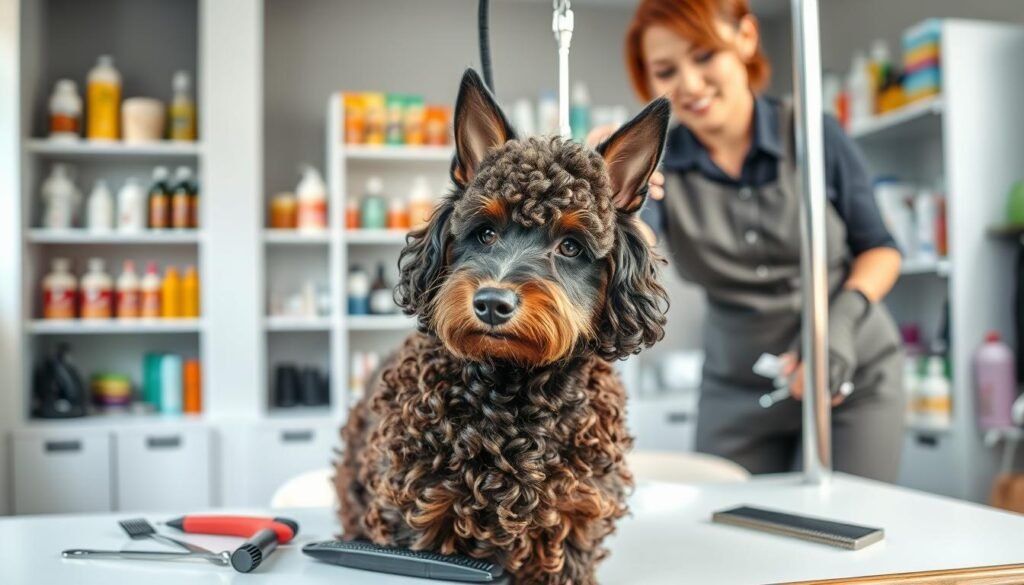
Regular grooming is key for Doberman cross Poodles to avoid coat problems. Their coat can be curly or straight, depending on their parents. It needs constant care.
Understanding Coat Types
Doberman cross Poodles can have different coats. They might get the Poodle’s curly, low-shedding coat or the Doberman’s short, smooth coat. Knowing your dog’s coat type helps you groom them right.
Coat Care and Maintenance
Keeping your Doberman cross Poodle’s coat healthy means regular brushing. This stops mats and tangles, mainly in curlier coats.
- Brush your dog 2-3 times a week. Use a slicker or pin brush that fits their coat.
- For curlier coats, a detangling spray can help. It makes brushing easier and less painful for your dog.
- Check your dog’s coat often for mats or tangles. Fix these problems right away.
Bathing and Brushing Tips
Bathing is also vital for grooming. How often you bathe depends on your dog’s lifestyle and coat.
- Bathe your Doberman cross Poodle every 4-6 weeks. Or bathe them more often if they’re active or get dirty.
- Choose a mild dog shampoo that matches their coat. Curlier coats might need conditioner for easier handling.
- Brush your dog well before bathing. This prevents mats and makes bathing smoother.
Regular grooming not only keeps your Doberman cross Poodle looking great. It also strengthens your bond with them.
Training Tips for Doberman Cross Poodles
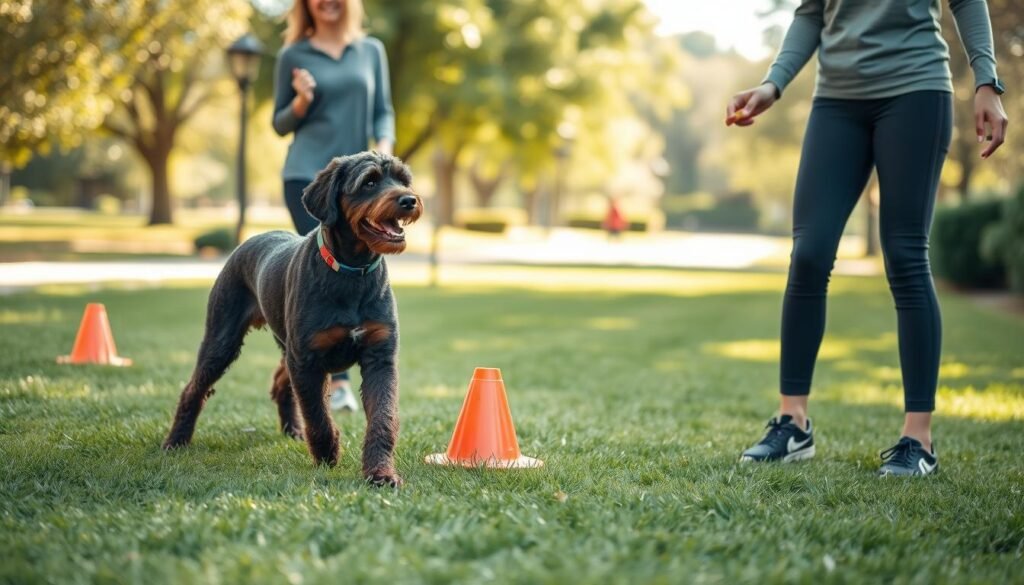
Doberman Cross Poodles are very smart and love to please. They need lots of mental and physical activities. This makes training very important for their growth.
Basic Obedience Training
Basic obedience is key for a well-behaved Doberman Cross Poodle. Teach them commands like “sit,” “stay,” “come,” and “leave it.” Be consistent and use positive rewards like treats and praise.
For more tips on training hybrid breeds, check out Doodleman Pinscher 101. It offers great advice on training smart and active dogs.
Advanced Training and Tricks
After basic obedience, you can teach advanced tricks and tasks. Agility training and complex tricks are great. They challenge your dog’s mind and strengthen your bond.
Tips for Advanced Training:
- Start with new commands slowly, adding to what they already know.
- Use different rewards to keep training fun.
- Practice often to keep and improve their skills.
By following these tips, you can raise a well-behaved and loyal Doberman Cross Poodle. They will love the structure and mental challenges of training.
Health Considerations
As a responsible dog owner, it’s important to know about the health of Doberman Cross Poodles. They can face health problems like any other breed. Knowing these issues helps keep them healthy.
Common Health Issues
Doberman Cross Poodles might get health problems from their parents. These include hip dysplasia, eye issues, and autoimmune diseases. Hip dysplasia, for example, can lead to arthritis and make moving hard. Early detection is possible with regular vet visits.
| Health Issue | Description | Preventive Measures |
|---|---|---|
| Hip Dysplasia | A condition causing arthritis and mobility issues due to a malformed hip joint. | Regular veterinary check-ups, maintaining a healthy weight. |
| Eye Problems | Includes conditions like cataracts and progressive retinal atrophy. | Annual eye exams. |
| Autoimmune Disorders | Conditions where the immune system attacks the body’s own tissues. | Monitoring for symptoms, regular blood tests. |
Regular Veterinary Care and Screenings
Regular vet visits are key for Doberman Cross Poodles. They need routine check-ups, shots, and screenings for health issues. This care helps prevent or manage health problems that could harm their quality of life.
Annual screenings for hip dysplasia and eye problems can catch issues early. Also, keeping up with vaccinations and preventing parasites like fleas and ticks is vital.
Exercise Needs for Doberman Cross Poodles
Doberman Cross Poodles are full of energy and need regular exercise. They are an active breed that requires various activities to stay happy and healthy. The American Kennel Club says dogs like them need regular exercise to avoid obesity and health problems.
Daily Activity Requirements
Doberman Cross Poodles need at least 60 minutes of exercise every day. This can include walks, playtime, and training sessions. Consistency is key to keep them engaged and prevent bad behavior.
A good exercise routine might include:
- A morning walk to start the day
- Playtime in the yard or park
- Training sessions to challenge their minds
Fun Activities and Games
Doing fun activities and games not only exercises them but also strengthens the bond with their owners. Interactive toys and puzzle games are great for their mental challenge.
Some fun activities to consider:
- Agility training
- Hide and seek games
- Scent work
One dog trainer says, “Exercise is not just about physical health; it’s also about mental well-being. Dogs that are exercised regularly are less likely to develop behavioral problems.”
“A tired dog is a happy dog.” This old saying is true for Doberman Cross Poodles, who love to be active and engaged.
Nutrition and Diet Essentials
Knowing what your Doberman cross Poodle needs to eat is key to their health. A good diet is vital for their well-being and long life.
This breed needs a diet full of quality protein, some fat, and not too many carbs. A nutrient-rich dog food that fits their size, age, and how active they are is best.
Recommended Diet for Optimal Health
A diet rich in protein from sources like chicken, beef, or fish is best for them. Whole foods and avoiding fillers ensure they get the nutrients they need. It’s also important to consider their life stage, as puppies, adults, and seniors have different needs.
A renowned canine nutritionist says, “A balanced diet for a Doberman cross Poodle should include protein, healthy fats, and complex carbs, along with essential vitamins and minerals.”
“Feeding your dog a well-balanced diet is one of the most important things you can do for their health.”
Treats and Feeding Guidelines
Treats are great for training and bonding, but use them sparingly. Limiting treats to 10% of their daily calories helps prevent obesity and keeps them at a healthy weight.
Feeding guidelines depend on the dog’s size, age, and activity level. Always follow the food packaging’s instructions and adjust as needed. Keeping an eye on their weight and body condition is crucial for their health.
By focusing on a balanced diet and being mindful of treats, your Doberman cross Poodle can thrive and live a long, healthy life.
Choosing the Right Environment
Creating a good home for your Doberman cross Poodle is key for their happiness and health. The right place can greatly affect their well-being and behavior.
Ideal Living Conditions
Doberman cross Poodles need room to move and play. A house with a yard is best because it gives them space to run and play. But, they can also live in apartments if they get enough exercise and mental play.
Think about your lifestyle and home before getting a Doberman cross Poodle. If you’re busy, make sure you can give them the exercise and attention they need.
Safety Considerations for Your Home
It’s important to make your home safe for your Doberman cross Poodle. This means keeping toxic things, electrical cords, and small items out of reach.
For more tips on getting your home ready for a new dog, check out Wisdom Panel.
| Living Situation | Ideal Conditions | Adaptability |
|---|---|---|
| House with Yard | Provides ample space for exercise and play | Highly suitable |
| Apartment | Requires regular exercise and mental stimulation | Moderately suitable with proper care |
In conclusion, picking the right home for your Doberman cross Poodle means thinking about their space, exercise, and safety needs. By understanding what they need, you can make a happy and safe home for them.
Finding Your Perfect Doberman Cross Poodle Name
Naming your doberman cross poodle is a fun and creative process. It shows their unique identity and strengthens your bond. After learning about their traits, temperament, and grooming needs, it’s time to choose a name.
Popular Names for Inspiration
Popular Doberman names can inspire you. Names like Apollo, Zeus, or Akira are strong and majestic. They fit well with the doberman cross poodle’s loyal and intelligent nature.
Creative Naming Ideas
If you want something unique, think about their appearance or personality. For example, if they have a curly coat, names like Curly or Fifi might be perfect. You can also pick names that mean something to you, making it even more special.
The name you choose will be a big part of your dog’s identity and your bond. Take your time and enjoy finding the perfect name for your doberman cross poodle.