

Did you know that Dobermans and Rottweilers are often misunderstood? They were once seen as just guard dogs. But, they are actually very loyal and loving. As someone who loves dogs, I’m excited to compare these two breeds. This will help you choose the best one for you.
Choosing the right dog breed is a big decision. It’s important to know what each breed is like. In this article, we’ll look at their history, how they act, and what they look like. This will give you a full picture of owning a Doberman or a Rottweiler.
Key Takeaways
- Both breeds have a history as guard dogs but are also known for their loyalty.
- Their temperaments differ, with Dobermans being more energetic and Rottweilers more confident.
- Physical characteristics vary, including size, coat, and color.
- Understanding these differences is key to choosing the right breed.
- Both breeds require proper training and socialization.
Overview of Doberman and Rottweiler Breeds
Exploring the history and traits of Dobermans and Rottweilers gives us insight into these breeds. Both are known for being loyal and protective. Yet, their origins and characteristics are unique.
Brief History of Dobermans
The Doberman breed was created in the late 19th century by Friedrich Louis Dobermann. He was a German tax collector and dog breeder. He wanted a dog that looked intimidating but was also loyal.
He mixed several breeds, including the German Pinscher, Weimaraner, and Black and Tan Terrier. This mix created a sleek, agile dog with a strong protective instinct.
Brief History of Rottweilers
Rottweilers have a long history, dating back to the Roman Empire. They were used as guard dogs and draft animals. The breed is named after the town of Rottweil in Germany.
They were used to drive cattle and guard the town. Their strength, loyalty, and protective nature made them invaluable. Today, Rottweilers are known for their confidence and courage, making them excellent companions and guardians.
Common Traits of Both Breeds
Dobermans and Rottweilers share several traits. Both are known for their loyalty and intelligence. They are also athletic and need regular exercise to stay healthy and happy.
They have a protective nature, making them excellent guard dogs. But, they need careful socialization from an early age. This ensures they are well-behaved around strangers.
Both breeds have a strong bond with their families. They are generally good with children if socialized properly. Their size and energy levels might accidentally knock over or intimidate smaller children. With proper training and socialization, both Dobermans and Rottweilers can be wonderful family pets.
Appearance and Size Differences
At first glance, Dobermans and Rottweilers look very different. Their size and coat are striking. Knowing these differences helps decide which breed is best.
Physical Characteristics of Dobermans
Dobermans have sleek, muscular bodies. They weigh 60-80 pounds and are 24-28 inches tall. Their coat is short and smooth, needing little grooming.
Dobermans are known for their athletic look. They have an agile physique and distinctive coat color. Their colors include black, red, blue, and fawn.
Physical Characteristics of Rottweilers
Rottweilers are bigger and stronger. They weigh 85-130 pounds and are 24-27 inches tall. Their coat is dense and coarse, with a black-and-tan pattern.
Rottweilers have a robust build and a confident demeanor. They are intimidating but loyal. A dog owner notes, “Rottweilers command respect but are loving with their families.” Comparing breeds is complex, but their physical traits are key.
| Breed | Weight Range (lbs) | Height Range (inches) | Coat Type |
|---|---|---|---|
| Doberman | 60-80 | 24-28 | Short, smooth |
| Rottweiler | 85-130 | 24-27 | Dense, coarse |
In conclusion, Dobermans and Rottweilers are both powerful and majestic. But they look very different. Dobermans are sleek and agile, while Rottweilers are robust and powerful.
Temperament and Personality Comparison
Dobermans and Rottweilers are both loyal dogs. But they have different temperaments. Knowing these differences helps owners choose the right dog for them.
Doberman Temperament
Dobermans are alert and smart. They are great companions because of their loyalty. But, they need early socialization to be friendly.
Key Traits of Dobermans:
- Loyal and loving to their family
- Highly intelligent and trainable
- Alert and responsive, making them good watchdogs
Rottweiler Temperament
Rottweilers are calm and confident. They are powerful dogs with a strong protective instinct. With the right training, they can be loving family members.
Key Traits of Rottweilers:
- Confident and calm, with a courageous spirit
- Strong protective instinct, requiring consistent training
- Loyal and loving to their family, including children
To understand the differences, let’s look at a table:
| Trait | Doberman | Rottweiler |
|---|---|---|
| Loyalty | Highly loyal | Extremely loyal |
| Protective Nature | Strong, requires socialization | Very strong, needs consistent training |
| Intelligence | Highly intelligent | Intelligent, but can be stubborn |
By looking at the temperaments of Dobermans and Rottweilers, owners can choose the best dog for them.
Trainability and Intelligence

Doberman and Rottweiler breeds are known for their high intelligence. They are quick to learn and adapt. This is great for owners who are ready to invest time in training.
Eagerness to Please in Dobermans
Dobermans are eager to please, making them easy to train. They love positive reinforcement and respond well to rewards. This makes them perfect for active owners who can provide consistent training and mental challenges.
Rottweilers and Their Learning Ability
Rottweilers are also very intelligent, even if they seem independent. They need consistent, positive reinforcement training to show their best side. With patience and the right approach, they can become loyal and obedient.
Training Techniques for Both Breeds
Positive reinforcement training works well for both Dobermans and Rottweilers. Use treats, praise, and play to encourage good behavior. Remember, consistency and patience are key. Early socialization and obedience training are essential for well-behaved adult dogs.
Keep training sessions fun and varied to avoid boredom. Both breeds need mental and physical challenges as part of their training.
Health Issues and Lifespan
Thinking about getting a Doberman or Rottweiler? It’s important to know about their health. Both breeds are loyal and strong, but they face specific health problems.
Common Health Problems in Dobermans
Dobermans are usually healthy, but they can get sick. Heart problems like dilated cardiomyopathy are common. Regular vet visits can catch these early.
Dobermans also get hip dysplasia. This affects the hip joint, causing arthritis and mobility issues.
Common Health Problems in Rottweilers
Rottweilers are generally healthy, but they have health concerns too. Like Dobermans, they can get hip dysplasia. They’re also at risk for cancer, like osteosarcoma and lymphoma.
Lifespan Expectations for Both Breeds
Dobermans usually live 10 to 12 years. Rottweilers live 8 to 11 years. Diet, exercise, and genetics affect their lifespan.
Proper care, like a balanced diet and exercise, can help them live longer.
Knowing about these health issues and taking steps to prevent them can help your dog live a long, healthy life. Regular vet visits and a healthy lifestyle are crucial.
Exercise and Activity Requirements

To keep your Doberman or Rottweiler happy and healthy, it’s key to know their exercise needs. Both breeds are active and need regular physical activity. This helps keep them physically and mentally well.
Exercise Needs of Dobermans
Dobermans are energetic dogs that need daily exercise to stay healthy. They require at least 30 minutes of exercise each day. This can include walks, playtime, and training sessions.
Key Exercise Activities for Dobermans:
- Daily walks
- Playtime in securely fenced areas
- Training sessions that challenge them mentally
Exercise Needs of Rottweilers
Rottweilers are also energetic and need regular exercise. But, their needs are slightly different from Dobermans. They need at least 45 minutes of exercise per day. This is because of their larger size and energy level.
Key Exercise Activities for Rottweilers:
- Longer walks or jogs
- Playtime that involves strength and endurance
- Mental stimulation through obedience training
Comparison of Energy Levels
While both breeds are energetic, Rottweilers generally have a higher energy level. This is due to their larger size and muscular build. It’s important to understand these differences to provide the right exercise.
Grooming Needs and Maintenance
Knowing how to groom Dobermans and Rottweilers is key for their health and looks. Each breed has its own coat type and needs. These needs affect how they should be groomed.
Coat Care for Dobermans
Dobermans have a short, smooth coat that needs little grooming. They are easy to care for in terms of coat maintenance. Still, they benefit from regular brushing to get rid of dead hair and spread skin oils.
Key aspects of Doberman coat care include:
- Occasional brushing with a rubber grooming mitt or a soft-bristle brush
- Rare bathing, as their coat is short and doesn’t mat easily
Coat Care for Rottweilers
Rottweilers have a double coat: a soft undercoat and a coarse outer coat. They shed a lot, mainly during shedding season. Regular brushing is needed to stop matting and tangling.
Rottweiler coat care involves:
- Regular brushing, ideally 2-3 times a week, using a slicker brush or a pin brush
- Frequent bathing, specially during heavy shedding periods
Additional Grooming Considerations
Both breeds need regular nail trimming, ear cleaning, and dental care. These steps help prevent health problems.
| Grooming Aspect | Doberman | Rottweiler |
|---|---|---|
| Nail Trimming | Every 4-6 weeks | Every 4-6 weeks |
| Ear Cleaning | Weekly | Weekly |
| Dental Care | Daily brushing recommended | Daily brushing recommended |
By understanding and meeting these grooming needs, owners can ensure their Doberman or Rottweiler stays healthy and happy.
Strength and Protective Instincts
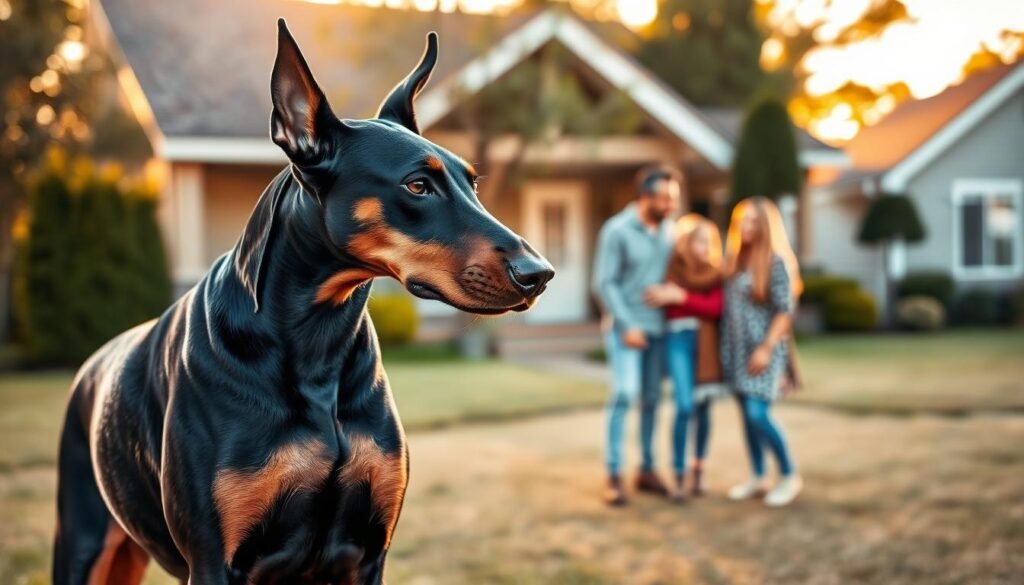
Dobermans and Rottweilers both have strong protective instincts. But they guard differently. Their temperaments and how they react to threats vary.
Protective Nature of Dobermans
Dobermans are alert and always ready to respond. They love to be close to their owners, earning them the nickname “velcro dogs.” Their athleticism, intelligence, and loyalty make them great watchdogs.
They are quick to be suspicious of strangers. They bark to warn their owners of potential threats.
Protective Nature of Rottweilers
Rottweilers are calm but confident guardians. Their powerful build and fearless attitude can scare off intruders. Unlike Dobermans, Rottweilers are not always quick to react to strangers.
They observe and assess situations before acting. This doesn’t mean they’re less protective; they’re just more careful.
“Rottweilers are often considered one of the best breeds for guarding due to their natural protective instincts and intimidating appearance.”
When to Choose Based on Protection Needs
Choosing between a Doberman and a Rottweiler depends on your needs. If you want a breed that’s always alert, a Doberman might be best. But if you prefer a calm yet powerful guardian, a Rottweiler could be better.
For more information on breeds for protection, visit Guardians at the Gate: Exploring the Best Dog Breeds for Protection.
- Dobermans are ideal for owners who want an alert and responsive watchdog.
- Rottweilers are better suited for those who need a calm yet powerful guardian.
Family Compatibility and Socialization
Dobermans and Rottweilers can be great family pets. But, they need proper socialization to get along well with everyone. This is key for a happy home.
Dobermans with Children and Other Pets
Dobermans are loyal and gentle with kids, making them perfect family pets. Still, it’s important to watch how they interact with young ones. Early socialization helps them stay calm and friendly around kids and other pets.
- Introduce your Doberman to various environments and people.
- Ensure positive interactions with children and other pets.
- Reward calm behavior to reinforce good manners.
Rottweilers with Children and Other Pets
Rottweilers are laid-back and can be great family pets. They protect their family but are gentle with kids if socialized right. Consistent training and socialization from the start helps them know who to trust.
- Socialize your Rottweiler to be calm in the presence of children.
- Introduce them to other pets gradually.
- Monitor their behavior and reward good interactions.
Best Practices for Socialization
Socialization is key for a happy pet. Introduce your dog to different people, places, and animals early. This prevents bad behavior. Here’s how to do it right:
- Start socialization early, ideally from 8 weeks old.
- Be consistent in your training and socialization efforts.
- Use positive reinforcement to encourage good behavior.
In conclusion, Dobermans and Rottweilers can be wonderful family pets with the right care and socialization. Understanding their needs and using good socialization methods will make them loving and loyal friends.
Costs and Financial Considerations

Thinking about getting a Doberman or Rottweiler? It’s key to know the money side of dog ownership. These breeds can cost a lot, and being ready is vital for their happiness.
Initial Purchase Price of Each Breed
The first cost of getting a Doberman or Rottweiler varies a lot. It depends on the breeder, the dog’s bloodline, and where you are. Doberman puppies usually cost between $500 and $2,000. Rottweilers can be more, from $800 to $3,000 or more.
Ongoing Care Costs
There are ongoing costs like food, vet bills, and supplies. Dobermans and Rottweilers eat a lot, so food is expensive. Expect to spend $50 to $100 a month on good dog food.
Vet visits, shots, and care add up to $500 to $1,000 a year. For more on Doberman costs, check the complete Doberman cost guide.
Insurance Considerations for Both Breeds
Pet insurance is a big financial factor. Premiums for Dobermans and Rottweilers depend on age, health, and where you live. You’ll likely pay $30 to $70 a month for insurance.
Some insurers have plans for specific breeds. It’s smart to compare to find the best deal for your dog.
Knowing these costs helps you decide if owning a Doberman or Rottweiler is right for you. It prepares you for the financial commitment.
Recommendations Based on Lifestyle
Choosing between a Doberman and a Rottweiler depends on your daily life and home. Each breed fits different lifestyles better.
Ideal Owners for Dobermans
Dobermans are perfect for those who love to stay active. They need lots of exercise and mental games. If you enjoy going out or running, a Doberman is a great friend.
Key characteristics of ideal Doberman owners include:
- Active lifestyle with regular exercise routines
- Experience with dog training and socialization
- A commitment to providing mental stimulation
Ideal Owners for Rottweilers
Rottweilers are great for those who want a loyal and protective pet. They need a calm home where they get lots of attention. Families with some activity and a safe home are best for Rottweilers.
Characteristics of ideal Rottweiler owners include:
- A stable home environment
- Understanding of the breed’s protective nature
- Ability to provide regular, but not excessive, exercise
Making the Right Choice for Your Family
Choosing between a Doberman and a Rottweiler depends on your family’s needs. Think about your activity level, home, and time for your pet. This helps you pick the right dog for a happy life together.
Conclusion: Which Breed is Right for You?
As we wrap up our comparison of Doberman and Rottweiler breeds, it’s key to remember the main differences and similarities. Both breeds are great companions, but the right one for you depends on your lifestyle and needs.
Key Takeaways
We’ve looked at many aspects of Doberman and Rottweiler breeds, like their history, temperament, and health. Both are loyal and protective, but they differ in size, energy, and grooming. The doberman shepherd stands out for its intelligence and agility.
Final Considerations
Choosing between a Doberman and a Rottweiler depends on your personal situation and what you want in a pet. Think about your living situation, exercise routine, and dog experience. This comparison aims to help you pick the best companion for you.
FAQ
What are the main differences between a Doberman and a Doberman Shepherd mix?
Are Rottweilers and Dobermans good with children?
How often should I exercise my Doberman or Rottweiler?
What are the common health issues in Dobermans and Rottweilers?
How much do Dobermans and Rottweilers cost?
FAQ
What are the main differences between a Doberman and a Doberman Shepherd mix?
A Doberman Shepherd mix is a mix of a Doberman Pinscher and a German Shepherd. It has traits from both breeds. A pure Doberman is a distinct breed with its own characteristics.
Are Rottweilers and Dobermans good with children?
Both breeds can be good with children if they are socialized right. It’s important to watch them when they’re with young kids to keep everyone safe.
How often should I exercise my Doberman or Rottweiler?
Both breeds need regular exercise. Dobermans need daily walks and playtime. Rottweilers need more exercise because of their size and energy.
What are the common health issues in Dobermans and Rottweilers?
Dobermans can have heart problems and hip dysplasia. Rottweilers are at risk for hip dysplasia and some cancers. Regular vet visits are key for both breeds.
How much do Dobermans and Rottweilers cost?
The cost of a puppy can range from
FAQ
What are the main differences between a Doberman and a Doberman Shepherd mix?
A Doberman Shepherd mix is a mix of a Doberman Pinscher and a German Shepherd. It has traits from both breeds. A pure Doberman is a distinct breed with its own characteristics.
Are Rottweilers and Dobermans good with children?
Both breeds can be good with children if they are socialized right. It’s important to watch them when they’re with young kids to keep everyone safe.
How often should I exercise my Doberman or Rottweiler?
Both breeds need regular exercise. Dobermans need daily walks and playtime. Rottweilers need more exercise because of their size and energy.
What are the common health issues in Dobermans and Rottweilers?
Dobermans can have heart problems and hip dysplasia. Rottweilers are at risk for hip dysplasia and some cancers. Regular vet visits are key for both breeds.
How much do Dobermans and Rottweilers cost?
The cost of a puppy can range from $1,000 to $3,000. Ongoing costs include food, vet care, and supplies. Insurance costs also vary.
Are Dobermans and Rottweilers easy to train?
Yes, both breeds are smart and easy to train. Dobermans are eager to please. Rottweilers are more independent but still trainable with the right approach.
What are the grooming needs for Dobermans and Rottweilers?
Dobermans have a short coat that needs little grooming. Rottweilers have a thick coat that needs brushing to prevent mats. Both need nail trimming, ear cleaning, and dental care.
,000 to ,000. Ongoing costs include food, vet care, and supplies. Insurance costs also vary.
Are Dobermans and Rottweilers easy to train?
Yes, both breeds are smart and easy to train. Dobermans are eager to please. Rottweilers are more independent but still trainable with the right approach.
What are the grooming needs for Dobermans and Rottweilers?
Dobermans have a short coat that needs little grooming. Rottweilers have a thick coat that needs brushing to prevent mats. Both need nail trimming, ear cleaning, and dental care.