
Did you know Doberman Pinschers, including those with a stunning brown coat, are among the top 20 most popular breeds in the United States? Their loyalty, intelligence, and athletic ability make them a favorite among dog owners.
As a proud owner of a brown Doberman, I’m excited to share with you everything you need to know about this captivating breed. From their unique characteristics to their loyal nature, we’ll dive into the world of these wonderful companions.
This article will cover the essential aspects of owning a brown Doberman. It will provide you with a comprehensive guide to understanding and caring for your pet.
Key Takeaways
- Understand the unique characteristics of brown Dobermans.
- Learn about the loyal nature of this breed.
- Discover essential care tips for your brown Doberman.
- Explore the benefits of having a Doberman Pinscher as a pet.
- Get insights into training your brown Doberman effectively.
Introduction to the Brown Doberman
The Brown Doberman is known for its rich, chocolate-brown coat. It’s a special version of the Doberman breed. This breed is smart, athletic, and very loyal, making it a favorite among dog lovers. The Brown Doberman is loved for its beautiful looks and kind heart.ben-doberman
What Makes the Brown Doberman Unique?
The Brown Doberman is special because of its beautiful coat and its personality. It comes from the Doberman Pinscher breed. These dogs were first bred in Germany in the late 1800s as guard dogs and police dogs. They are strong, agile, and protective, which made them very valuable.
Dog breeders say, “The Doberman Pinscher is a breed that thrives on activity and mental stimulation.” This shows how important it is to keep Brown Dobermans active and smart to keep them happy and healthy.
Brief History of the Doberman Breed
The Doberman breed started in Germany in the late 1800s. Friedrich Louis Dobermann, a German tax collector and dog breeder, created them. He wanted a dog that was loyal and protective. He mixed different dogs, like the Thuringian Shepherd, German Pinscher, and Black and Tan Terrier, to make a dog that was fierce, smart, and loyal.
Over time, Dobermans became famous for guarding and were used by police and the military. Today, the Doberman Pinscher, including the Brown Doberman, is known for its smarts, loyalty, and versatility.
In short, the Brown Doberman is an amazing dog. It has all the great qualities of the Doberman breed and a unique look. If you want a loyal friend or a protective dog, the Brown Doberman is a great choice.
Physical Characteristics of the Brown Doberman
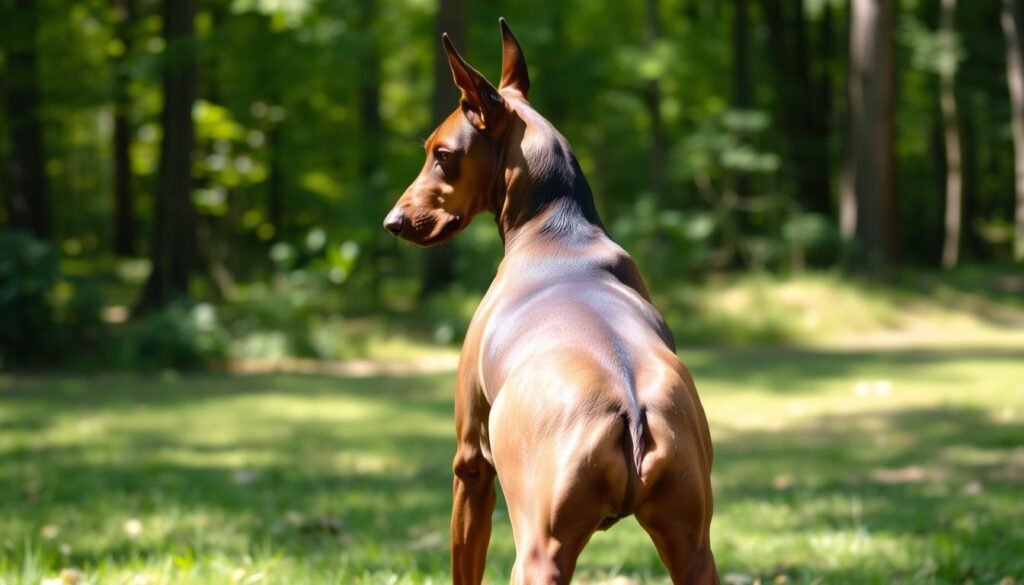
The Brown Doberman is a stunning example of canine elegance. It boasts a unique set of physical characteristics that set it apart from other breeds. Their appeal lies in their coat color, size, and overall build.german-shepherd-and-doberman-cross
Color Variations and Markings
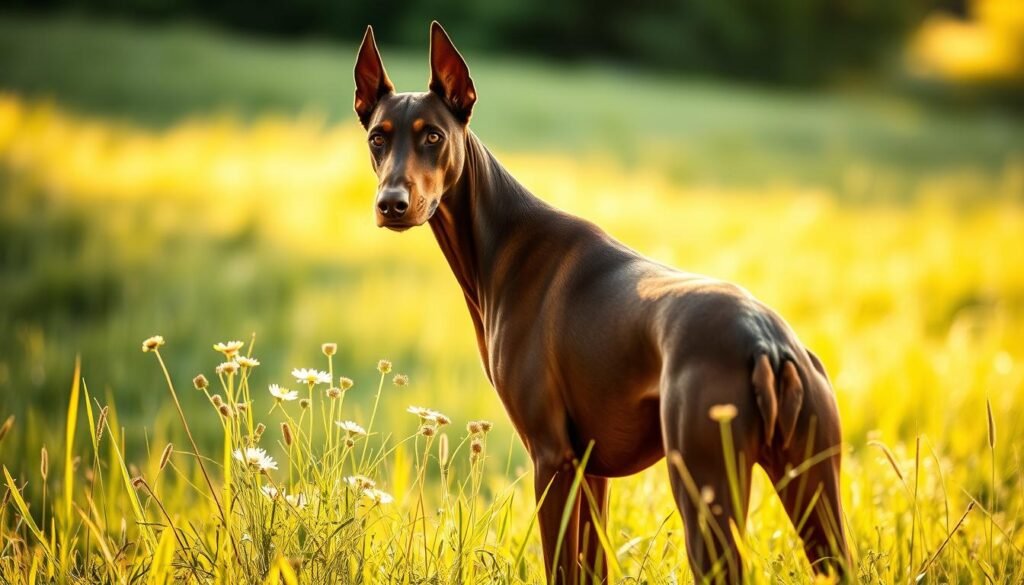
Brown Dobermans have rich, chocolate-brown coats. These coats can range from a light, golden brown to a deep, dark brown. The breed standard allows for a variety of brown shades, making each dog unique.
In addition to their primary coat color, brown Dobermans often have specific markings. These include rust-colored points on their legs, chest, and face.
Size and Build
Brown Dobermans are known for their athletic build and muscular physique. Males typically weigh between 75-100 pounds and stand between 26-28 inches tall. Females are generally slightly smaller.
Their size and build contribute to their overall appearance of strength and agility.
Distinctive Features of the Breed
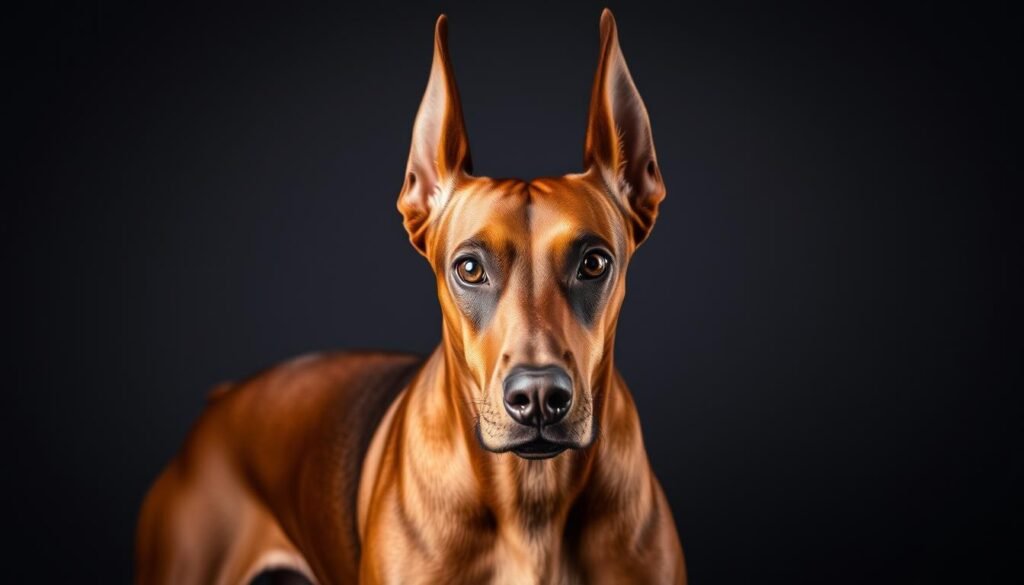
The Brown Doberman has several distinctive features that contribute to its unique appearance. These include a wedge-shaped head, almond-shaped eyes, and cropped ears. Their sleek, muscular build and agile physique make them a breed that is both aesthetically pleasing and physically capable.
| Characteristic | Description | Specification |
|---|---|---|
| Coat Color | Varied shades of brown | Light golden brown to deep dark brown |
| Size (Males) | Weight and Height | 75-100 pounds, 26-28 inches tall |
| Build | Muscular and athletic | Sleek physique |
| Head Shape | Wedge-shaped | Distinctive breed characteristic |
Temperament and Personality Traits
The temperament and personality of a Brown Doberman are crucial to understanding their behavior. Brown Dobermans are known for their loyalty and protective nature. They make excellent companions and guard dogs.
Loyal and Protective Nature
Brown Dobermans are loyal and protective. They form strong bonds with their families and defend them. This loyal and protective nature makes them great guard dogs. But, they need careful handling and training.
To get the best from a Brown Doberman, set clear boundaries and train consistently. With the right approach, they become loving and trustworthy friends.doberman-lab-mix-dog
Socialization Needs
Socialization is key for Brown Dobermans, starting early. It helps them be confident and calm in new situations. This reduces anxiety or aggression. It’s important to expose them to various environments, people, and animals.
Regular socialization includes walks, dog park visits, and pet interactions. This makes your Brown Doberman well-adjusted and responsive to commands in different situations.
Energy Levels and Activity Requirements
Brown Dobermans are very energetic and need regular exercise and mental stimulation. Without enough activity, they can get bored and destructive. A daily routine with exercise, playtime, and training is vital for their happiness and health.
Running, agility training, and interactive games meet their energy needs. Offering a variety of activities keeps your Brown Doberman engaged and prevents behavioral problems.
Training Your Brown Doberman
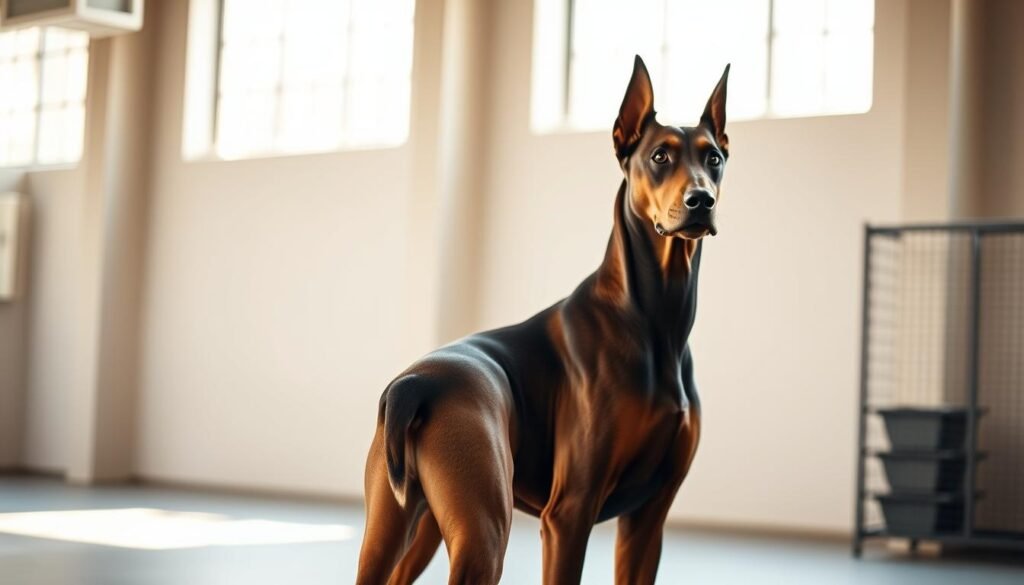
Training is crucial for your brown Doberman’s growth. They are smart and loyal, needing clear rules and communication. With dedication, your dog will become a well-behaved and loyal friend.
Basic Obedience Training
Start basic training early with commands like “sit,” “stay,” and “come.” Being consistent is key. For more on Doberman training, check https://dogacademy.org/breeds/doberman.
Use treats and praise to encourage good behavior. As your dog gets better, you can stop using rewards.
Advanced Training Tips
When your Doberman gets older, try agility and protection training. These activities keep them physically and mentally sharp. They also strengthen your bond, reducing behavioral issues.
Be patient and consistent when teaching new skills. Dobermans are sensitive to criticism. Break tasks into steps and reward progress to build confidence.
Socialization Techniques
Socialization is vital for your Doberman’s confidence in new situations. Introduce them to various environments, people, and animals. This helps prevent anxiety and behavioral problems.
Start socialization with positive, controlled experiences. Gradually add more complexity, always watching your dog’s comfort. Adjust your approach as needed.doberman-brown-dog
Health Considerations for Brown Dobermans
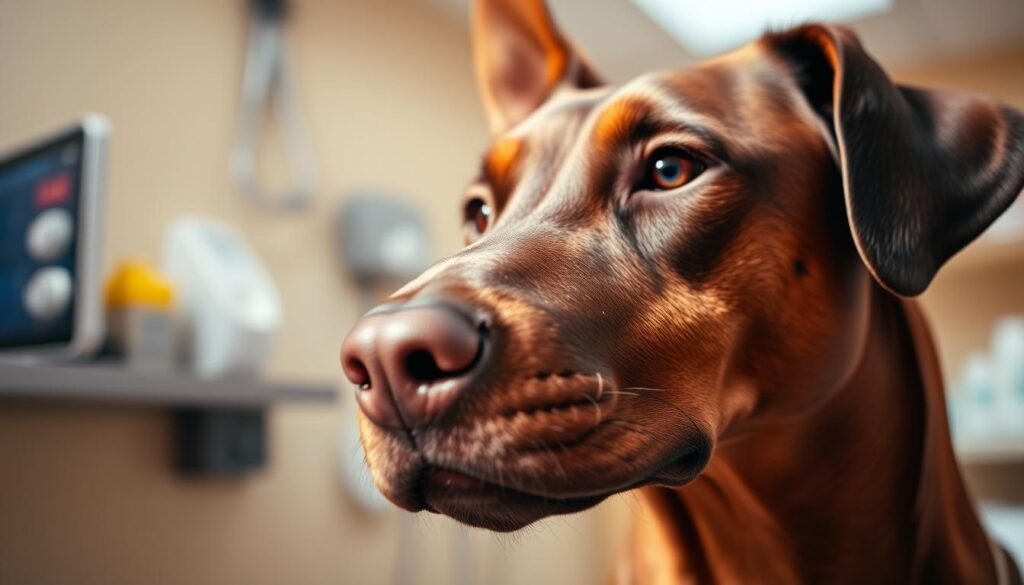
As a responsible dog owner, it’s crucial to understand the health considerations for your brown Doberman. Like all breeds, brown Dobermans are prone to certain health issues that can impact their quality of life.
Common Health Issues
Brown Dobermans are susceptible to various health problems. These include hip dysplasia, cardiomyopathy, and eye issues. Hip dysplasia is a genetic condition that affects the hip joint, causing arthritis and mobility problems. Cardiomyopathy refers to diseases of the heart muscle, which can lead to heart failure. Regular checkups with your veterinarian can help identify these issues early on.
Preventive Care and Regular Checkups
Preventive care is essential for maintaining your brown Doberman’s health. This includes regular vaccinations, parasite control, and dental care. It’s also important to monitor your dog’s overall health and report any changes or concerns to your veterinarian. For more information on specific health issues like skin problems, you can visit The Pet Lab Co..
| Health Issue | Description | Preventive Measures |
|---|---|---|
| Hip Dysplasia | Genetic condition affecting the hip joint | Regular checkups, maintaining a healthy weight |
| Cardiomyopathy | Diseases of the heart muscle | Regular heart checkups, healthy diet |
| Eye Issues | Various conditions affecting the eyes | Regular eye exams, proper eye care |
By staying informed and working closely with your veterinarian, you can help your brown Doberman live a long, healthy, and happy life.
Grooming Your Brown Doberman
To keep your Brown Doberman healthy and looking great, regular grooming is key. Grooming does more than just make them look good. It’s also vital for their health and happiness.rottweiler-cross-with-doberman
Coat Care and Maintenance
The Brown Doberman’s coat is truly unique. Brushing regularly helps prevent mats and keeps their coat shiny. Choosing the right brush is crucial; a pin brush or slicker brush is best for their coat.
Bathing and Brushing Frequency
Bathing your Brown Doberman often is important, but too much can harm their coat. Bath them every 2-3 months, or when needed. Brush them 2-3 times a week to keep their coat in great shape.
Nail Care and Ear Cleaning
Nail care is a big part of grooming. Long nails can be painful and unhealthy for your Doberman. Trim their nails every 4-6 weeks. Cleaning their ears is also key to avoid infections. Use dog ear cleaner and cotton balls for this.
Following these grooming tips will keep your Brown Doberman looking and feeling wonderful. Regular grooming not only makes them look good but also strengthens your bond with them.
Nutrition for Optimal Health
Nutrition is key for your brown Doberman’s health and happiness. A balanced diet helps keep their coat shiny and supports their lively nature.
Choosing the Right Dog Food
Choosing the right dog food for your brown Doberman is important. Consider their age, size, and how active they are. Also, think about any food allergies they might have.
Puppies need more protein and calories than adult dogs. Active dogs might need extra calories to keep up their energy.
- Consider your dog’s life stage (puppy, adult, senior)
- Assess their activity level (low, moderate, high)
- Look for dog food that matches their nutritional needs
Portion Sizes and Feeding Schedule
Finding the right portion sizes and feeding schedule is crucial. Too much food can cause obesity, while too little can lead to malnutrition. Always follow the feeding guidelines from the dog food manufacturer and adjust as needed.
Having a regular feeding schedule helps your dog’s digestion. Most adult dogs do well with two meals a day. Puppies might need more frequent feedings.
Treats and Special Diets
Treats are great for training and rewarding your brown Doberman. But, they should not be more than 10% of their daily calories. Choose low-calorie treats to avoid weight gain. Some brown Dobermans might need special diets due to allergies or sensitivities.
Introduce new foods or treats slowly to avoid stomach problems. Always talk to your vet before changing your dog’s diet.
Exercise and Activity Needs
Brown Dobermans have lots of energy and need regular exercise and mental challenges. It’s important to give them activities that match their needs to keep them happy and healthy.
Daily Exercise Routines
Daily exercise is key for Brown Dobermans. They need a variety of activities like walks, runs, and playtime. Try to give them at least 60 minutes of exercise each day, spread out in two or more sessions.
A good daily routine could be a morning walk, playtime in the evening, and quiet time with puzzle toys. This keeps them both active and mentally sharp.
Fun Activities for Your Dog
It’s fun and important to keep your Brown Doberman engaged with activities. Some great options include:
- Agility training
- Hiking or long walks
- Swimming
- Interactive puzzle toys
- Scent work or hide-and-seek games
Importance of Mental Stimulation
Mental challenges are as crucial as physical exercise for Brown Dobermans. Activities like training, puzzle toys, and games keep their minds sharp. This helps prevent boredom and bad behavior.
Here’s a look at different ways to keep their minds active:
| Activity | Description | Benefits |
|---|---|---|
| Training Sessions | Regular training sessions to learn new commands or tricks. | Improves obedience, strengthens bond. |
| Puzzle Toys | Toys filled with treats that challenge the dog to figure out how to get them out. | Reduces boredom, stimulates problem-solving. |
| Scent Work | Activities that involve finding specific scents or objects. | Engages natural instincts, provides mental stimulation. |
By mixing physical exercise with mental challenges, you can ensure your Brown Doberman is happy, healthy, and well-rounded.
Living with a Brown Doberman
Bringing a brown Doberman into your life is more than just a home. It’s about forming a lifelong bond. Understanding their needs and traits is key.
Ideal Living Environments
Brown Dobermans can do well in many homes, from big houses with yards to apartments. They need regular exercise and attention. Their adaptability makes them great for different lifestyles.
But, think about their space and exercise needs. A daily routine with physical activity and mental stimulation is crucial. For apartment dwellers, walks and playtime are essential.
Integrating with Family Life
Adding a brown Doberman to your family needs careful thought. They love being part of the family and need interaction.
For a peaceful home, set clear rules and boundaries. Early training and socialization are vital. For help, check out Doberman Planet.
Tips for First-Time Doberman Owners
First-time Doberman owners need to know the breed’s specific needs. Their protective nature and high energy require careful handling.
- Start a consistent training routine.
- Ensure regular exercise and mental challenges.
- Put time into socialization to help them feel confident and calm.
To make your brown Doberman happy and well-adjusted, understand their needs. With the right care, they’ll be a loving and loyal friend.
| Aspect | Description | Importance Level |
|---|---|---|
| Exercise Needs | Regular physical activity and mental stimulation | High |
| Training | Consistent training and socialization | High |
| Family Dynamics | Integration into family life with clear rules and boundaries | Medium |
| Living Space | Adaptable to various living situations with proper care | Medium |
Understanding Brown Doberman Behavior
Being a brown Doberman owner is rewarding. You get to understand their behavior deeply. This helps you bond with them and meet their needs.
Instincts and Natural Behaviors
Brown Dobermans have instincts that shape their actions. These can be guarding, herding, or chasing prey. It’s important to know these behaviors to train them right.
They are very loyal and protective of their family. Knowing this helps you guide them well.
Signs of Stress or Anxiety
Spotting stress or anxiety in your brown Doberman is key. Look for signs like pacing, panting, or avoiding things. Catching these early helps ease their stress.
Stress can come from many things like new places, loud sounds, or social issues. Knowing these can help you reduce their stress.
Behavioral Training Methods
Good training is crucial for your brown Doberman. Positive reinforcement works best for them. It’s about rewarding good behavior.
Training needs patience and consistency. Set clear rules and use positive rewards. This makes your dog well-adjusted and friendly.
Conclusion: Embracing Life with a Brown Doberman
Reflecting on owning a brown Doberman, it’s clear they offer loyalty, intelligence, and companionship. Understanding their unique traits, needs, and challenges helps create a happy life for them.
Key Considerations for Ownership
Being a brown Doberman owner means committing to regular exercise, training, and socialization. With proper care, your dog will flourish and become a loving companion.
A Rewarding Companion
A brown Doberman is perfect for active families or individuals. Their loyalty and smarts make them great companions, offering years of love. Whether you’re new to dog ownership or already have one, a brown Doberman will bring joy and fulfillment to your life.