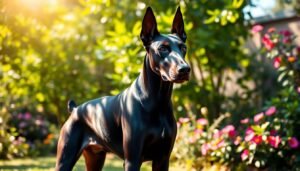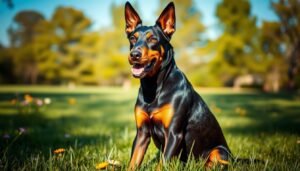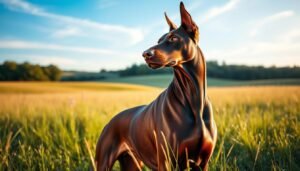

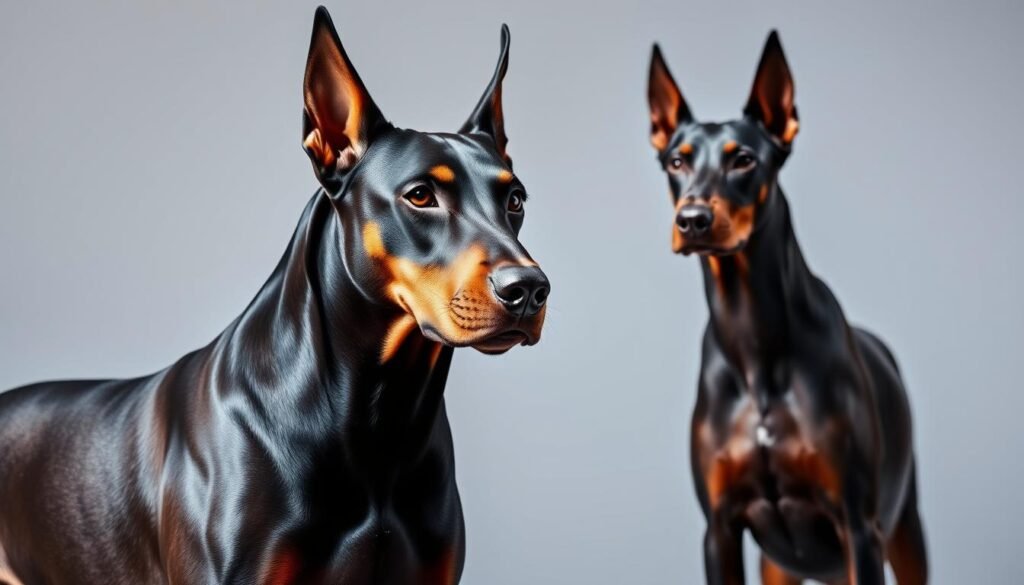
Did you know Doberman Pinschers come in many stunning colors? Each color has its own special traits. As a dog lover, I’m excited to share a detailed guide on Doberman Pinscher colors. We’ll explore the different hues and patterns that make this breed so eye-catching.
The world of Doberman Pinscher colors is truly fascinating. It ranges from common black and tan to rare white Dobermans. Knowing about these colors is more than just about looks. It’s about understanding the breed’s diversity and the genetics behind their coat colors.
In this guide, we’ll dive into the various colors and patterns. We’ll see what makes each Doberman Pinscher unique. Whether you’re already a Doberman owner or thinking of getting one, this guide aims to deepen your appreciation for their stunning coat colors.
Key Takeaways
- Overview of the different Doberman Pinscher colors
- Understanding the genetics behind Doberman coat colors
- Exploring the common and rare colors of Doberman Pinschers
- Insights into the breed’s diversity and unique characteristics
- Tips for appreciating and caring for your Doberman’s coat
Understanding the Doberman Pinscher Breed
The Doberman Pinscher is a well-known dog breed with a rich history. To appreciate the variety of Doberman colors, we must understand their background and what makes them unique.
Brief History of the Doberman
In the late 19th century, Germany saw the birth of the Doberman Pinscher. Friedrich Louis Dobermann, a tax collector and dog catcher, bred them. He aimed to create a loyal and fierce guard dog.
The Doberman’s lineage includes the German Pinscher, the Beauceron, and the Rottweiler. These breeds added to the Doberman’s strength, smarts, and loyalty.
Characteristics of Dobermans
Doberman Pinschers are known for their athletic build and sleek coat. They are smart and easy to train, making them great family pets and working dogs. The American Kennel Club ranks them among the top 20 most popular breeds in the U.S.
“The Doberman Pinscher is a noble and majestic breed, known for its loyalty and intelligence.” – American Kennel Club
Importance of Color in Breed Standards
Coat color is key in the Doberman Pinscher breed standard. They come in colors like black, red, blue, and fawn, often with rust markings. The American Kennel Club says the ideal Doberman should have rust on the muzzle, chest, and legs.
Understanding Doberman color genetics is important for breeders and owners. It helps in appreciating the breed’s beauty and heritage.
| Color | Description | Breed Standard Acceptance |
|---|---|---|
| Black and Tan | Black coat with rust markings | Accepted |
| Red and Rust | Red coat with rust markings | Accepted |
| Blue and Rust | Diluted black coat with rust markings | Accepted |
| Fawn and Rust | Isabella coat with rust markings | Accepted |
Knowing the importance of color in Doberman Pinschers helps us appreciate the breed more. The variety of dóberman colores shows the breed’s complexity and richness.
Common Doberman Colors and Patterns
The Doberman Pinscher is known for its sleek coat. It comes in many colors and patterns. These colors are not just pretty; they also follow breed standards.
Doberman Pinschers have several coat colors. Each color has its own look. The most common are black and tan, red and rust, blue and rust, and fawn and rust. These colors are not just different; they also have breed standards.
Black and Tan
The black and tan Doberman is very recognizable. It has a shiny black coat and tan markings. These markings are on the face, legs, and chest. The color comes from genetics that affect melanin, the pigment in hair.
Red and Rust
Red and rust Dobermans have a reddish-brown coat. They also have rust-colored markings. This color comes from diluting the black pigment, making it red. The rust markings make them stand out.
Blue and Rust
The blue and rust Doberman has a coat that looks blue-gray. They also have rust markings. This color is from a genetic effect that changes the black pigment, making it blue.
Fawn and Rust
Fawn and rust Dobermans have a light tan or fawn coat. They also have rust markings. This color comes from genetics that dilute the black pigment, making it fawn. The fawn and rust contrast is striking.
For more on the Doberman breed, check out the Wikipedia page on Dobermann. Learning about the breed’s history and traits can help understand why certain colors are more common or preferred.
Rare Doberman Colors
Doberman Pinschers come in many rare colors. These colors come from genetic variations that don’t fit into the usual categories.
White Dobermans
White Dobermans are not albinos. They have a genetic condition that makes their coat white. Experts say that Doberman Pinschers with this condition might have health problems. This makes it important for breeders to focus on health over rare colors.
White Dobermans are not recognized by traditional breed standards because of health risks.
Chocolate Dobermans
Chocolate Dobermans have a rare, rich coat color. This color comes from a specific genetic mix that dilutes the black pigment, making it brown.
“The chocolate color in Dobermans is a result of a recessive gene, making it less common than the traditional black and tan.”
Silver Dobermans
Silver Dobermans have a dilution of the black pigment, giving them a striking silver look. They are rare but gaining popularity among some breeders and owners.
The genetic basis of the silver color is similar to that of the blue Doberman, involving a dilution gene.
In conclusion, rare Doberman colors like white, chocolate, and silver show the breed’s genetic diversity. Understanding these colors and their genetics is key to appreciating the full range of dóberman colores.
Color Genetics in Dobermans
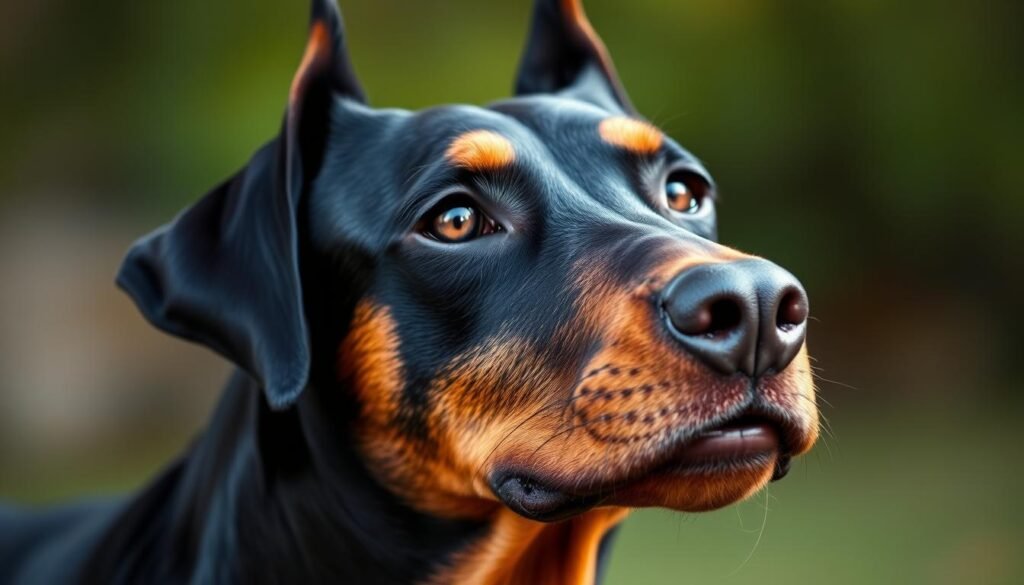
Studying Doberman color genetics helps us understand their history, traits, and health. This knowledge is key for breeders and owners. It explains why Dobermans come in so many colors.
Basics of Canine Color Genetics
Canine color genetics involves many genes that control melanin, the pigment in fur. Eumelanin and pheomelanin mix to create different colors. The Doberman Pinscher Club of America says knowing this is important for seeing the breed’s variety.
“The genetics of coat color in dogs is complex,” say geneticists. This is true for Dobermans, where many genes combine to create their colors.
Inheritance Patterns in Dobermans
In Dobermans, coat color genes include those for black, red, blue, and fawn. These genes interact to decide the final color. For example, black is dominant, and red is recessive. Knowing this helps predict a puppy’s color.
The genetic diversity of Dobermans leads to many colors. But, breeders need to know about these genetics to breed healthy dogs.
How Color Affects Health
Some Doberman colors are linked to health problems. White Dobermans, for example, might have deafness and skin issues. Knowing this helps breeders and owners watch for health issues.
Reflecting on Doberman color genetics shows it’s more than looks. It’s about their health and well-being. By understanding their coat colors, we can appreciate their diversity and aim for healthier dogs.
Age and Color Changes in Dobermans
Knowing how a Doberman’s coat color changes is key for any owner. As Dobermans grow up, their coat colors can change a lot. It’s important to know what to expect.
Puppy Coat Colors
Doberman puppies are often born with coat colors that are different from their adult colors. Puppy coat colors can change as the dog gets older. For example, a puppy with a dark coat might get lighter as an adult.
The first coat color of a Doberman puppy comes from genetics. It’s common for puppies in the same litter to have different colors. This is because of the complex genetics of coat color inheritance.
Color Changes in Adult Dobermans
As Dobermans grow up, their coat colors can keep changing. Some may get darker or lighter, while others stay the same. Genetics, nutrition, and health can all play a role in these changes.
Some Dobermans may also experience color fading or darkening due to the environment or health issues. Keeping their coat clean and healthy can help it stay vibrant.
Graying and Aging Effects
Like humans, Dobermans can get gray as they age. This is often seen around the muzzle, eyes, and eyebrows. How fast and how much they gray can vary a lot.
As Dobermans get older, their coat may lose its shine or become thinner. Regular vet visits and a good diet can help with these aging effects.
In summary, a Doberman’s coat color is not fixed and can change a lot over their life. Understanding these changes helps owners enjoy their Doberman’s dóberman colores journey.
Color Preferences Among Doberman Owners
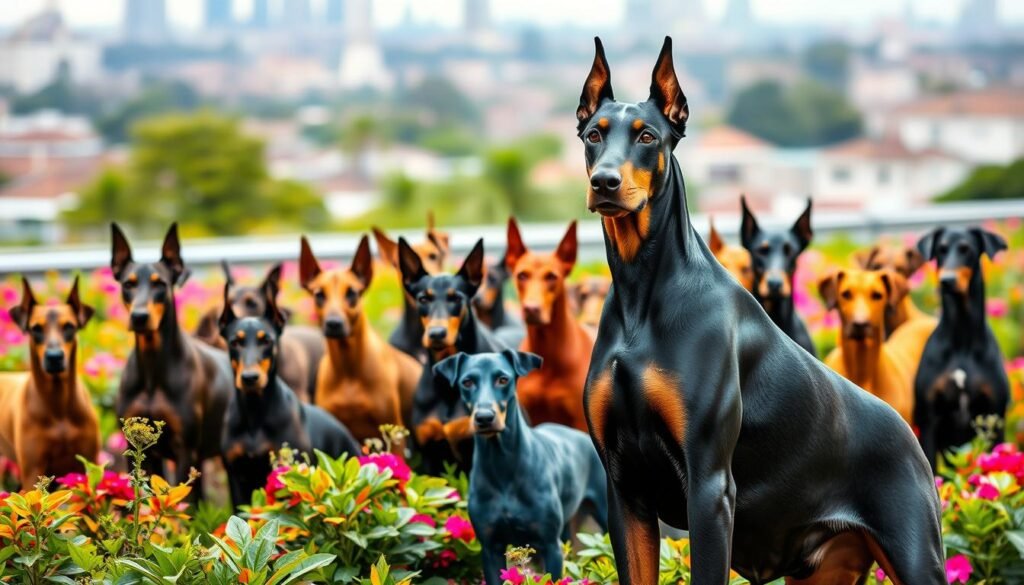
Doberman Pinscher colors have a wide range of preferences among owners. These preferences are shaped by tradition and how rare a color is. As someone who loves Dobermans, I’ve seen how different dóberman colores attract various people.
Popularity of Traditional Colors
Black and tan Dobermans are very popular. These colors are seen as the breed’s classic look. They are known for their sleek and elegant appearance.
“The black and tan Doberman is a quintessential representation of the breed’s athleticism and loyalty,” says breed standards. The timeless appeal of these traditional colors ensures their continued popularity.
Demand for Rare Colors
On the other hand, rare colors like white, chocolate, and silver are also sought after. Their uniqueness and exclusivity draw many fans. A breeder noted, “Rare colors bring a new dimension to the breed, appealing to owners who seek something beyond the traditional.”
But, it’s important to breed responsibly. This ensures the health and well-being of the dogs.
Regional Variations in Preferences
Regional preferences also shape Doberman color trends. Certain colors are more common in specific areas. This is due to local breeding practices and cultural influences.
“Regional variations highlight the diversity within the Doberman community, reflecting local tastes and breeding traditions,” a veteran breeder said. Knowing these differences helps breeders and owners make better choices.
In conclusion, Doberman color preferences are diverse. They are influenced by tradition, rarity, and regional factors. As we celebrate the variety of Doberman colores, we must always put the welfare and health of these amazing animals first.
Health Issues Linked to Coat Color
The coat color of a Doberman Pinscher is more than just looks. It can also point to health problems. Certain colors are linked to genetic conditions that impact their health.
Genetic Conditions in Rare Colors
Rare colors in Dobermans, like white, can lead to health issues. White Dobermans often face deafness and vision problems because of their genetics. Experts say breeding for rare colors can sometimes cause health problems.
It’s important for those thinking of getting a Doberman to know about these risks. Responsible breeding can help avoid these health issues.
Common Myths About Color and Health
Many myths exist about coat color and health in Dobermans. Some think certain colors are healthier, but this isn’t true. Health problems can happen in any color if breeding isn’t careful.
“The health of a Doberman is not determined by its coat color alone but by a complex interplay of genetic factors.” – Canine Health Expert
Responsible Breeding Practices
To avoid health problems tied to coat color, responsible breeding is key. Breeders should focus on their dogs’ health over coat color. This means genetic testing and selective breeding to lower health risks.
Choosing a reputable breeder who follows these practices helps ensure a healthy Doberman. This is true, no matter the coat color.
Grooming and Care Based on Color
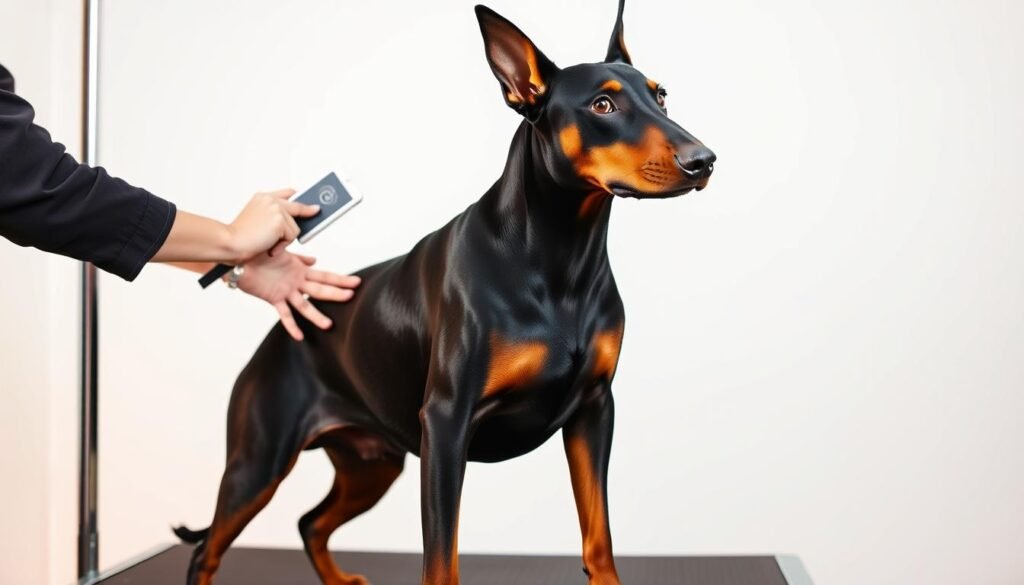
The color of a Doberman’s coat affects its grooming needs. It’s important for owners to know these needs. Dobermans have short, sleek coats, but the color can change how often they need grooming and the methods used.
Coat Maintenance Tips
Dobermans need regular grooming to keep their coats healthy and looking good. Brushing is key to this, as it spreads skin oils and removes dirt. A weekly brushing with a rubber mitt or soft-bristle brush is good for any Doberman color.
Nail care is also crucial. Trimming their nails regularly prevents overgrowth, which can be painful and unhealthy. How often to trim nails depends on the dog’s lifestyle and activity level.
Grooming Tools for Dobermans
Choosing the right grooming tools is important for coat care. A rubber grooming mitt is great for removing loose hair and improving blood flow. For deeper grooming, a soft-bristle brush or slicker brush works well.
| Grooming Tool | Purpose | Benefit for Dobermans |
|---|---|---|
| Rubber Grooming Mitt | Removes loose hair, stimulates blood flow | Reduces shedding, improves coat health |
| Soft-Bristle Brush | Distributes skin oils, removes dirt | Enhances coat shine, reduces dirt accumulation |
| Slicker Brush | Detangles, removes mats | Prevents matting, reduces grooming time |
Seasonal Considerations by Color
Seasonal changes impact a Doberman’s coat, regardless of color. More brushing is needed during shedding season. For Dobermans with lighter colors, sun protection is key in summer. Dog-safe sunscreen can protect their skin from UV damage.
In conclusion, while Dobermans’ grooming needs are similar across colors, knowing specific needs based on coat color is important. Using the right grooming techniques and tools helps keep Dobermans healthy and vibrant.
Training Dobermans with Different Colors
Dobermans are known for being versatile and easy to train. Their intelligence and desire to please make them great learners. This is true for all colors, including black, red, blue, and fawn.
Color Perception in Dogs
Dogs see colors differently than humans. They can spot blues and yellows but struggle with reds and greens. This doesn’t affect their ability to learn, but knowing how they see colors helps in training.
Behavioral Studies Related to Coat Color
Studies on dog behavior and coat color have mixed results. Some say certain colors might link to specific traits, but others find no clear link. It’s best to treat each Doberman as unique, not based on color.
“The temperament of a Doberman is influenced more by genetics, environment, and training than by its coat color.” – Expert Canine Trainer
Tips for Training Dobermans of Any Color
Training a Doberman needs consistency, positive feedback, and patience. Here are some tips:
- Use positive reinforcement like treats and praise for good behavior.
- Be consistent with commands and expectations.
- Socialize your Doberman a lot to help them feel confident and calm in new places.
| Training Aspect | Tips |
|---|---|
| Consistency | Use the same commands and hand signals every time. |
| Positive Reinforcement | Reward good behavior with treats and praise. |
| Socialization | Expose your Doberman to various environments and people. |
By following these training tips, you can raise a well-behaved and loyal Doberman, no matter their color.
The Doberman in Popular Culture
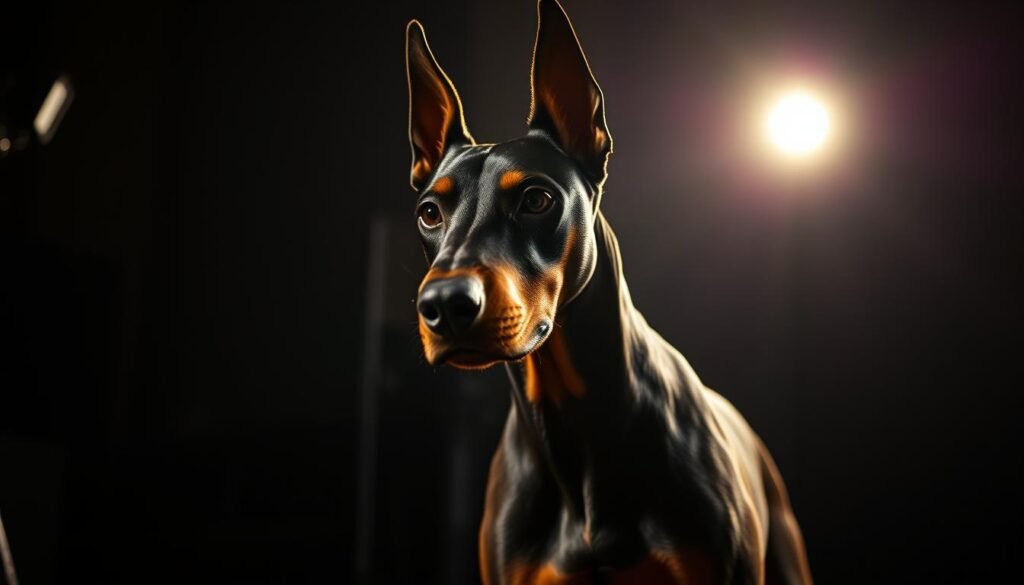
The Doberman Pinscher is a beloved breed in movies and media. Their sleek looks and smart nature have won hearts around the world. They are a key part of the entertainment world.
Iconic Dobermans in Movies
Dobermans have starred in many films, often as faithful friends or protectors. One famous role is in “The Doberman,” where they play different parts. Their movie presence is linked with protection and loyalty, traits they are known for.
Representation of Doberman Colors
Doberman colors are shown in many ways in popular culture. You’ll see traditional colors like black and tan, but also blue and fawn. These colors in media can shape how people see them, with each color linked to certain traits.
| Color | Representation in Media | Associated Traits |
|---|---|---|
| Black and Tan | Commonly depicted as sleek and mysterious | Loyal, intelligent |
| Blue | Often shown as unique and striking | Regal, alert |
| Fawn | Portrayed as warm and approachable | Gentle, friendly |
Influence on Public Perception
How Dobermans are shown in media affects how people see them. Their movie roles can change opinions on their nature and loyalty. It’s important to show them in a good light, highlighting their many colors and traits.
In summary, Dobermans’ fame in popular culture shows their lasting charm. By knowing how they are seen in media, we can better understand and appreciate their unique qualities.
Choosing the Right Doberman Color for You
Choosing the right Doberman color is more than a personal choice. It’s about finding a dog that fits your lifestyle. Coat color is important because it can show certain traits and health issues.
Factors to Consider
When picking a Doberman, several factors matter. Personal preference is key, as you’ll see your dog every day. But, it’s also important to think about health issues linked to certain colors. Some rare colors might be connected to genetic problems.
- Health implications of certain colors
- Lifestyle compatibility
- Grooming needs based on color
Knowing these factors helps you make a better choice. For example, a busy person might prefer a Doberman that needs less grooming.
Matching Personality with Colors
Doberman color doesn’t directly affect its personality. Yet, some believe there’s a link between coat color and temperament. But, remember, individual personalities can differ a lot, no matter the color.
When matching a Doberman’s personality with its color, consider these points:
- Research the breeder’s observations about the puppies’ temperaments.
- Spend time with the dog to gauge its personality.
- Think about how the dog’s energy and temperament match your lifestyle.
Finding a Responsible Breeder
Choosing the right Doberman color is important, but finding a responsible breeder is even more crucial. A good breeder cares more about the dog’s health, temperament, and well-being than its coat color.
“A good breeder will be transparent about the health and genetic history of their dogs, ensuring you’re making a well-informed decision.”
To find a responsible breeder, look for:
- Health clearances for the parents
- Transparency about the dog’s ancestry and potential genetic issues
- A willingness to provide references and allow visits to their facility
By considering these points, you can find a Doberman that matches your preferred color and lifestyle needs.
Conclusion: Embracing the Diversity of Doberman Colors
The world of Doberman colors is full of variety. It offers many colors that suit different tastes. As we look at the different colors and patterns, we see how important color diversity is for Dobermans.
Key Takeaways
In this guide, we’ve looked at common and rare Doberman colors. We’ve learned about the genetics of their coat colors and how age affects their look. We’ve also talked about health issues related to certain colors and the need for responsible breeding.
Celebrating Doberman Diversity
Celebrating the diversity of Dobermans is key to loving them. Whether you like the classic black and tan or the rare white Doberman, each color has its own charm.
Future Trends
Looking ahead, the demand for rare Doberman colors will likely grow. People want unique pets. But, it’s important for breeders to focus on health and temperament too.
By embracing Doberman color diversity, we can truly appreciate these amazing dogs. This way, they can keep thriving.