

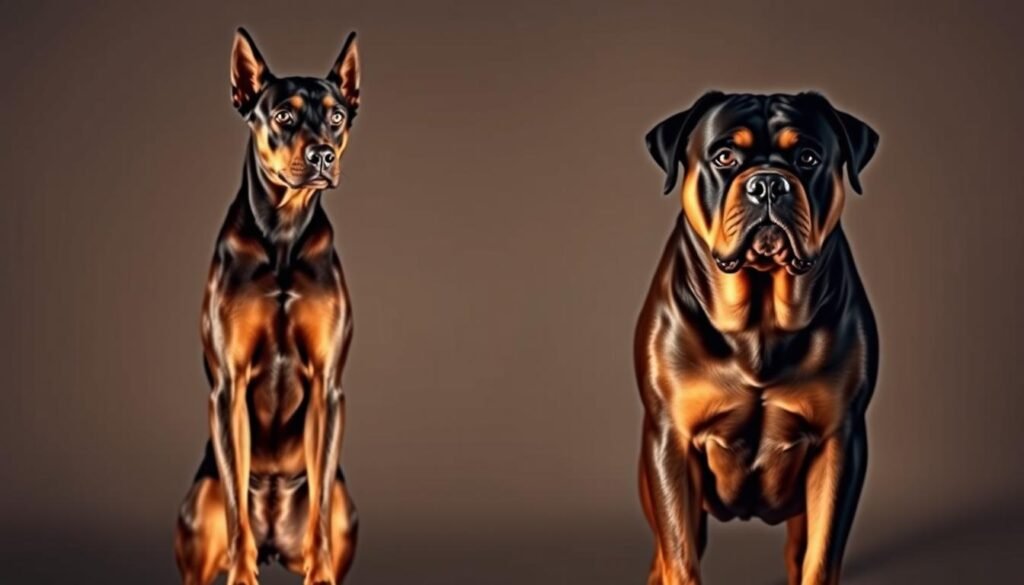
If you love dogs, you know how special they are. With over 340 breeds, picking the right one can be tough. The Doberman and Rottweiler are two breeds known for their loyalty and protection.
Both breeds have a bad rep because of their guard dog past. But, they can be great family pets for the right person. Let’s look at the similarities and differences between them to help you choose.
Key Takeaways
- Understanding the historical context of Doberman and Rottweiler breeds.
- Comparing the temperaments of both breeds.
- Examining the grooming needs of each breed.
- Assessing which breed is more suitable for families.
- Considering the exercise requirements for both breeds.
Overview of Doberman and Rottweiler Breeds
When thinking about guard dogs, the Doberman and Rottweiler often come up. Both have a rich history and special traits. They’re popular for families and individuals seeking a loyal guard dog.
History of the Doberman
The Doberman Pinscher was bred in Germany in the late 19th century. Friedrich Louis Dobermann created it as a guard and police dog. He mixed breeds like the German Pinscher, Weimaraner, and Black and Tan Terrier.
This mix aimed to create a dog that was fierce, smart, and loyal. For more on Dobermans as guard dogs, check out this article comparing Doberman and Rottweiler.
History of the Rottweiler
The Rottweiler’s history goes back to the Roman Empire. It was a guard dog and cattle drover. The name Rottweiler comes from Rottweil, Germany, where it guarded the treasury.
Rottweilers are known for their strength, courage, and loyalty. They were bred to protect and serve, traits they still have today.
Key Traits of Both Breeds
Dobermans and Rottweilers are both loyal and protective. They’re smart and trainable, making them great guard dogs. But, they differ in temperament, size, and grooming needs.
Knowing these differences helps decide which breed fits your lifestyle best.
- Loyalty and Protective Nature: Both breeds are loyal to their families and protective.
- Intelligence: Dobermans and Rottweilers are highly intelligent, making them trainable for various tasks.
- Size and Strength: Rottweilers are generally larger and stronger than Dobermans.
- Grooming Needs: Dobermans have a short, smooth coat that requires minimal grooming, whereas Rottweilers have a double coat that sheds heavily.
Physical Characteristics of Dobermans and Rottweilers
Knowing the physical differences between Dobermans and Rottweilers helps decide which breed fits your lifestyle. Both have unique features worth looking at.doberman-poodle-mix
Size and Weight Comparison
Dobermans and Rottweilers differ in size and weight. Dobermans are taller and leaner, with males up to 28 inches tall and 75-100 pounds. Rottweilers are bigger and heavier, with males up to 27 inches tall and 95-135 pounds.
- Doberman males: 26-28 inches tall, 75-100 pounds
- Rottweiler males: 24-27 inches tall, 95-135 pounds
This size difference is key for those with smaller living spaces.
Coat Color and Texture
Dobermans and Rottweilers have different coats. Dobermans have a short, smooth coat in black, red, blue, or fawn with rust markings. Rottweilers have a double coat, black with tan markings, and are harsh on the outside and soft inside.
Key differences in coat characteristics include:
- Dobermans: Short, smooth, various colors
- Rottweilers: Double coat, black with tan
Distinctive Features
Each breed has unique features. Dobermans have a muscular build and docked tails. Rottweilers have a broad chest and strong build.
Dog breed experts say, “A dog’s physical traits greatly affect its suitability as a pet.” Knowing these traits helps in making a better choice.
Temperament: What to Expect from Each Breed
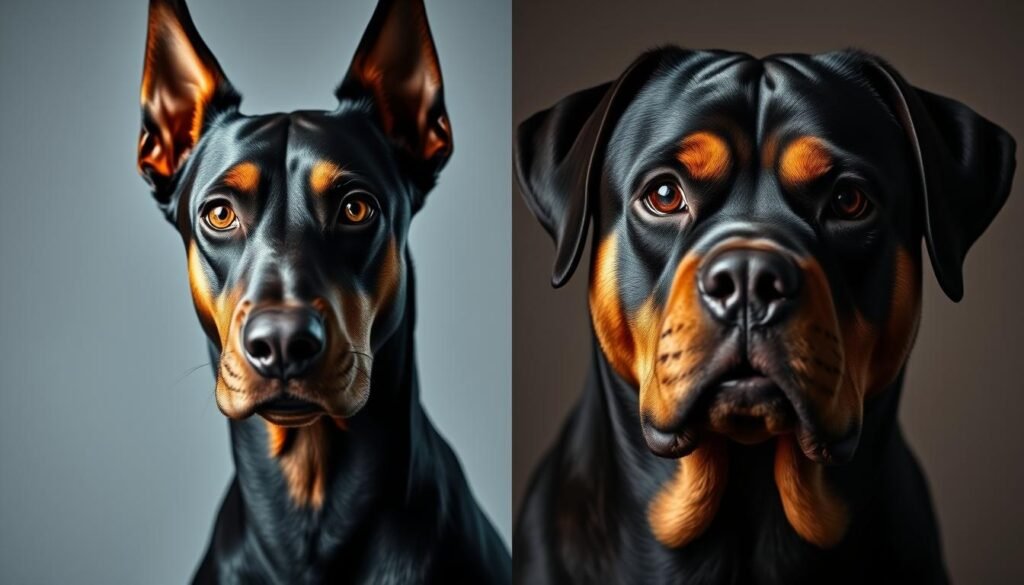
Knowing the temperament of Dobermans and Rottweilers is key for potential owners. They want a harmonious home. Both breeds are often misunderstood due to media and their past uses. But, they can be great companions for the right owner.rottie-cross-doberman
Doberman Temperament
Dobermans are known for their loyalty and smarts. They are often called velcro dogs because they stick close to their family. Despite looking tough, Dobermans are gentle and loving. They make excellent family pets when socialized right.
- Loyal and protective of their families
- Intelligent and trainable
- Athletic and agile
Rottweiler Temperament
Rottweilers are often seen as aggressive, but they are confident and courageous. They naturally protect their families. With the right training and socialization, Rottweilers can be gentle giants, loving and calm at home.
- Confident and courageous
- Powerful and athletic
- Loyal and loving to their families
Comparing Temperament Traits
Both breeds share similarities like loyalty and protectiveness. But, there are differences too. Dobermans are more reserved around strangers. Rottweilers are more laid-back but still watchful. Knowing these traits helps you choose the right breed for your lifestyle.
| Trait | Doberman | Rottweiler |
|---|---|---|
| Loyalty | High | High |
| Protective Nature | Strong | Strong |
| Socialization Needs | High | High |
In conclusion, both Dobermans and Rottweilers can be loving and loyal companions. Understanding their temperaments helps you choose the right breed for you.mix-breed-of-german-shepherd-and-doberman
Health Considerations for Dobermans and Rottweilers
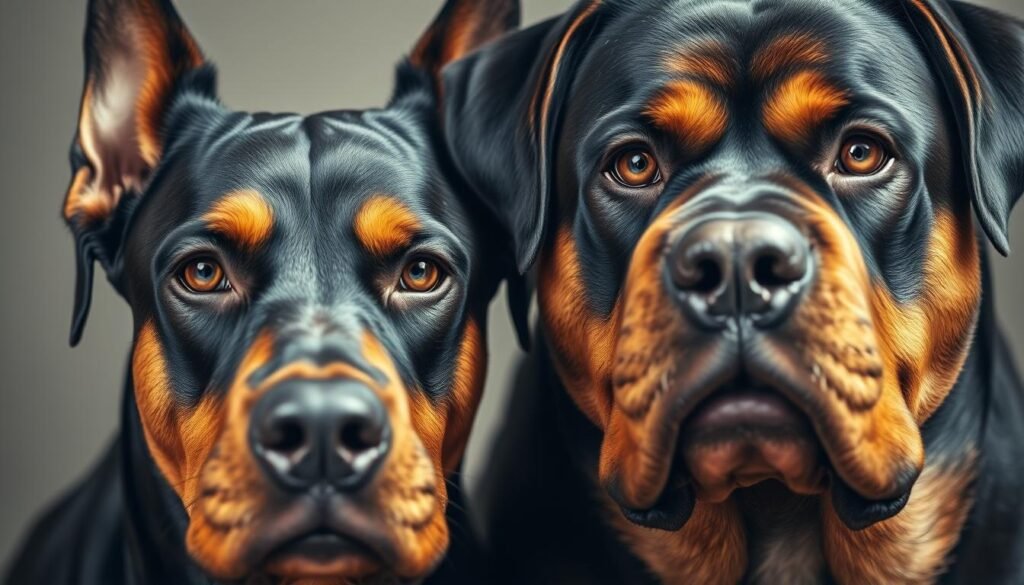
Dobermans and Rottweilers are loved by many, but they face health challenges. It’s important for owners to know about these issues. This knowledge helps in giving the best care to your dog.
Common Health Issues in Dobermans
Dobermans often deal with cardiomyopathy, a heart problem. They also face hip dysplasia, which can lead to arthritis. Regular vet visits are key to managing these conditions.
Common Health Issues in Rottweilers
Rottweilers are at risk for hip dysplasia and cancer. The PetMD notes they are more likely to get certain cancers. Regular health checks are essential for early detection.german-shepherd-doberman-mix
Lifespan Comparisons
Dobermans live about 10 to 12 years, while Rottweilers live 8 to 11 years. Diet, exercise, and genetics affect their lifespan. Proper care and vet visits can help them live longer.
Knowing about these health issues helps keep your Doberman or Rottweiler healthy and happy.
Exercise Needs for Doberman and Rottweiler Owners
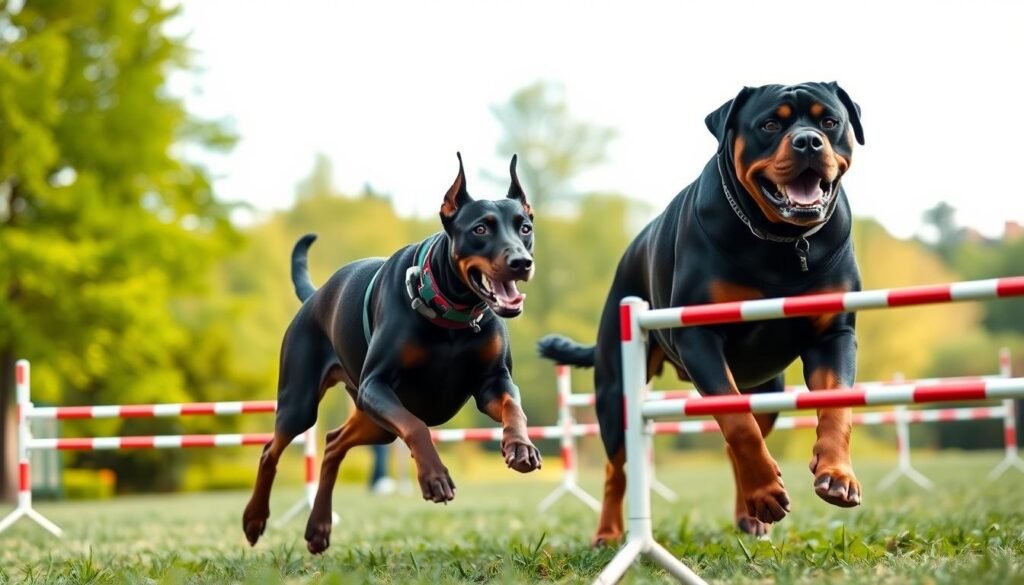
Dobermans and Rottweilers need lots of exercise to stay healthy and happy. As a dog owner, knowing their exercise needs is important. It helps keep your pet happy and healthy.
Daily Exercise Requirements
These breeds are full of energy and need lots of physical activity. Dobermans need at least 60 minutes of exercise each day. This can include walks, runs, and playtime. Rottweilers, on the other hand, need at least 90 minutes of exercise daily. They also need activities that challenge them physically and mentally.
Remember, these are just general guidelines. Your dog’s specific needs may vary based on their age, health, and energy level.
Suitable Activities for Each Breed
Both breeds enjoy a variety of activities. These include:
- Brisk walking or jogging
- Playtime in securely fenced areas
- Agility training
- Obedience training sessions
Dobermans do well in activities that require speed and agility. Rottweilers, on the other hand, are strong and can handle long activities. Tailoring their exercise to their breed can make it more enjoyable for them.doberman-lab-mix
Importance of Socialization
Exercise is not just for physical health. It’s also key for breed socialization. Socialization helps your dog feel confident and calm around new people, dogs, and places. Regular walks, dog park visits, and interactions with other dogs are crucial for their emotional health.
| Exercise Aspect | Doberman | Rottweiler |
|---|---|---|
| Daily Exercise Time | 60 minutes | 90 minutes |
| Preferred Activities | Agility, Speed Training | Strength Training, Endurance |
| Socialization Needs | High | High |
By understanding and meeting your Doberman or Rottweiler’s exercise needs, you can ensure they live a happy, healthy life. Regular exercise and proper socialization are essential for a well-adjusted and loving pet.
Grooming Needs for Dobermans and Rottweilers
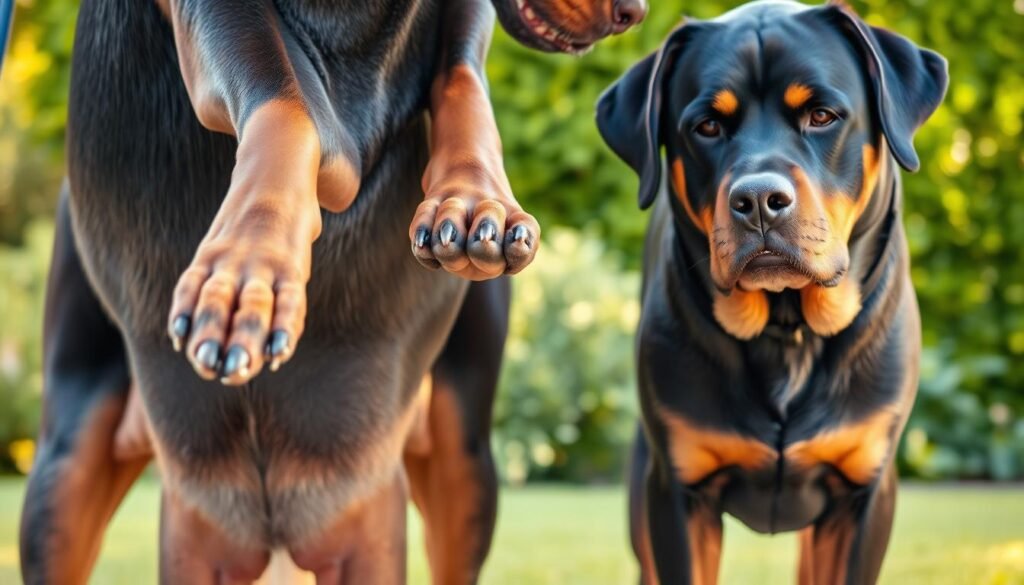
Knowing how to groom Dobermans and Rottweilers is key for any dog owner. It keeps their coat clean and healthy. Each breed has its own grooming needs that boost their health and looks.
Grooming Frequency
Dobermans and Rottweilers groom differently because of their coats. Dobermans have a short, smooth coat that’s easy to care for. Rottweilers, with their double coat, shed a lot. Regular brushing is crucial for both breeds to remove dirt and distribute skin oils.
Dobermans need a weekly brush. Rottweilers, though, may need brushing several times a week, more so during shedding season. Using the right brush is important for their grooming.
Shedding Differences
Both breeds shed, but Dobermans shed less than Rottweilers. Rottweilers shed a lot, mainly during certain seasons. Understanding these shedding patterns helps manage their coat better.
Dog grooming experts say, “Regular grooming not only reduces shedding but also helps in early detection of skin issues.” It serves many purposes.
“Grooming is not just about keeping your dog looking good; it’s about maintaining their overall health.”
Tips for Effective Grooming
Effective grooming is more than just brushing. It includes checking for skin issues, cleaning ears, and trimming nails. Creating a grooming routine that covers these areas is beneficial.
- Brush your dog regularly to remove dirt and reduce shedding.
- Check and clean their ears weekly to prevent infections.
- Trim their nails regularly to avoid overgrowth.
By following these tips, you can keep your Doberman or Rottweiler healthy and happy.
Trainability: Doberman vs. Rottweiler
Training is key for dog owners. Both Dobermans and Rottweilers are smart and easy to train. Knowing how to train them well is important for a strong bond and good behavior.
Basic Training Techniques
Dobermans and Rottweilers do well with positive training. Use treats, praise, and affection for good behavior. Being consistent and patient is crucial.
For example, effective training techniques include housebreaking and basic commands. Start training early to build good habits.
Advanced Training Options
After mastering basic training, both breeds can do advanced activities. These include agility, protection sports, and complex commands. Advanced training keeps the dog’s mind sharp and strengthens the bond.
As Renowned dog trainer, Ian Dunbar, once said, “The key to successful dog training is to make it fun and rewarding for the dog.” This is true for smart breeds like Dobermans and Rottweilers.
Comparing Intelligence Levels
Dobermans and Rottweilers are very smart. According to Stanley Coren’s book, Dobermans rank 5th and Rottweilers rank 9th in intelligence. They can learn many things but need mental challenges to avoid boredom.
In summary, both breeds are highly trainable. Their intelligence makes them great for various training and owners. Knowing their unique traits and needs is key for effective training.
Living Conditions: Which Dog Suits Your Home?
Choosing between a Doberman and a Rottweiler depends on your home. Both breeds have special needs to live happily in your space.
Ideal Environment for Dobermans
Dobermans love to stay active and need lots of exercise and mental play. They do best in homes with a big, fenced yard. This lets them run and play freely.
Ideal Environment for Rottweilers
Rottweilers are big and active, needing lots of room to move. They need a big, open space to live comfortably. Like Dobermans, they also like a quiet spot in the house to relax.
Allergies and Sensitivities
Both breeds can cause allergies in some people because they shed. But, Dobermans shed less than Rottweilers. If allergies are a concern, think about this when choosing a breed.
| Breed | Ideal Living Space | Shedding Level |
|---|---|---|
| Doberman | Securely fenced yard, active environment | Low |
| Rottweiler | Spacious living area, securely fenced yard | High |
Knowing what each breed needs can help you decide. Think about space, exercise, and shedding. This way, you can pick the best breed for your home and life.
Family Compatibility: Doberman & Rottweiler
Thinking about getting a Doberman or Rottweiler? It’s important to consider how they’ll fit with your family. You want your new pet to get along with everyone, including kids. Let’s look at how these breeds interact with family members.
Dobermans and Children
Dobermans are often seen as aggressive, but they can be sweet and loving. Early socialization is key for them to get along with kids. It’s also important to teach kids how to respect your Doberman.
With the right training and socialization, Dobermans can be a great fit for families. They are loyal and loving, making them a wonderful addition to many homes.
Rottweilers and Children
Rottweilers have a tough reputation, but they can also be great family pets. Supervision is crucial when they’re with young kids. Rottweilers are usually patient and gentle with children they know.
It’s important to socialize your Rottweiler early and teach kids how to interact with them gently.
General Family Considerations
Choosing a Doberman or Rottweiler means considering a few things. Establishing a routine early on helps your dog feel secure. It also helps them adjust to their new home.
Think about your family’s lifestyle and how a new dog will fit in. Making sure everyone agrees on dog care and responsibilities helps the transition go smoothly.
Choosing the Right Breed for You
Finding the perfect dog breed is a journey. It involves looking at your lifestyle, what you like, and what you need. Dobermans and Rottweilers can both be great pets. But, they are different, and one might fit your life better than the other.
Factors to Consider
Choosing between a Doberman and a Rottweiler requires thinking about a few things. Consider where you live, how much time you have for your dog, and your experience with training. For example, a Doberman might need more exercise if you live in a small apartment.
| Factor | Doberman | Rottweiler |
|---|---|---|
| Exercise Needs | High | Moderate to High |
| Training Experience | Recommended for experienced owners | Requires consistent, firm training |
| Living Space | Adaptable, but benefits from space | Prefers space to move around |
Personality Alignment with Lifestyle
It’s important to match your lifestyle with the right dog’s personality. If you love being active outdoors, a Doberman could be perfect. But, if you want a loyal and protective friend, a Rottweiler might be better.
For more help deciding between a Doberman Pinscher and a Rottweiler, check out this helpful resource.
Adoption vs. Breeder
Another big decision is whether to adopt or buy from a breeder. Adopting can be very rewarding, giving a loving home to a dog in need. But, if you want a specific breed or certain health clearances, a breeder might be better.
In the end, choosing a Doberman or Rottweiler should be a thoughtful decision. It should be based on what you need and what you’re looking for in a pet.
Conclusion: Making the Final Decision
Choosing between a Doberman and a Rottweiler as your next pet is a big decision. You need to know their unique traits and how they fit into your life. We’ve compared them, and now it’s time to decide based on your situation.
Key Differences Summarized
Dobermans and Rottweilers are both loyal and protective. But they differ in temperament, looks, and health. Dobermans are smart and active, needing lots of exercise and brain games. Rottweilers are strong and confident, needing regular training and socializing.
Recommendations for Your Lifestyle
Think about your home, family, and care abilities when choosing. Dobermans are great for active people or families because they’re full of energy. Rottweilers are perfect for those who want a loyal friend who’s a bit more relaxed.
Final Considerations
In conclusion, both breeds can be wonderful pets for the right owner. Knowing their needs helps you make a choice that fits your lifestyle. Whether you pick a Doberman or a Rottweiler, a loving home with proper care is essential for their happiness.