

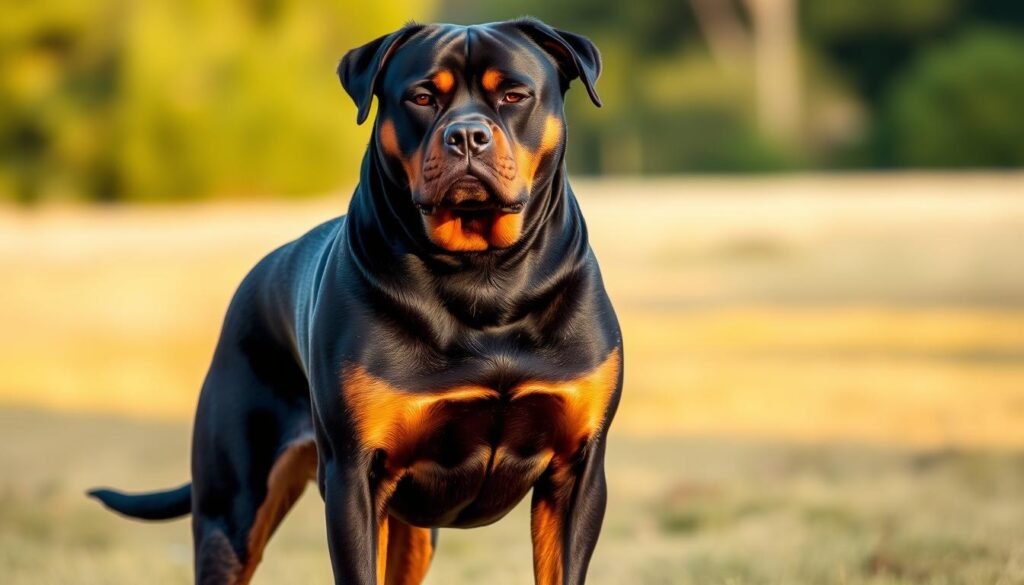
If you’re thinking about getting a Rottweiler-Doberman mix, you’re in for a treat. This mix combines the smarts, loyalty, and protective instincts of both Rottweilers and Dobermans. Learning about these breeds can give you a glimpse into what your dog might be like.
I’ll share some key points about the history, personality, health, and training of this mix. Knowing these things can help you decide if a Rottweiler-Doberman mix is the right pet for you. With the right care, they can be loving and loyal friends.
Key Takeaways
- Understand the characteristics of both Rottweiler and Doberman breeds.
- Learn about the potential health concerns of the Rottweiler-Doberman mix.
- Discover the training needs and exercise requirements for this hybrid breed.
- Find out how to provide the best possible home for your new pet.
- Gain insights into the temperament and loyalty of the Rottweiler-Doberman mix.
Introduction to Rottweilers and Dobermans
Knowing the history of Rottweilers and Dobermans is key for anyone thinking of getting one. Both breeds have a rich past that influences their traits and actions.
Brief History of Rottweilers
Rottweilers come from ancient times, starting with the Roman Empire. They were used as guard dogs and for tasks like pulling carts and herding animals. Their name comes from Rottweil in Germany, where they were common. For more on Rottweilers, check out Pet Place.
Brief History of Dobermans
Dobermans were created in the late 1800s by Friedrich Louis Dobermann, a German tax collector and dog breeder. They were bred as guard dogs and later became police dogs because of their smarts, loyalty, and agility.
Similarities Between the Breeds
Rottweilers and Dobermans may come from different backgrounds, but they share many traits. Both are known for their:
- Loyalty: They are very loyal to their families.
- Protective Nature: They have a strong urge to protect their loved ones.
- Intelligence: Both are smart and easy to train.
- Athleticism: They are both physically strong and need regular exercise.
These similarities make their mix a unique and potentially great pet. But, the owner must understand the needs and traits of both breeds.
Physical Characteristics of Rottweilers and Dobermans
To guess the size, coat, and look of a Rottweiler and Doberman mix, we need to look at each breed’s features. Both are strong and agile, but they look different.
Size and Weight Comparison
Rottweilers are bigger and stronger than Dobermans. A male Rottweiler weighs 95-135 pounds and is 24-27 inches tall. A male Doberman weighs 75-100 pounds and is 26-28 inches tall.
| Breed | Average Weight (Male) | Average Height (Male) |
|---|---|---|
| Rottweiler | 95-135 pounds | 24-27 inches |
| Doberman | 75-100 pounds | 26-28 inches |
Coat Types and Colors
Rottweilers have a short, dense coat that’s black with tan markings. Dobermans have a short coat too. It can be black, red, blue, or fawn, with rust markings.doberman-cross-chihuahua
Distinctive Features of Each Breed
Rottweilers have a broad chest and strong legs. Dobermans are sleek and athletic, with a wedge-shaped head. For more on the differences, check out Adopt A Pet.
Temperament and Personality Traits
Exploring the temperaments of Rottweilers and Dobermans shows they can be great pets. Both are loyal and protective, but they differ in many ways.
General Temperament of Rottweilers
Rottweilers are known for being confident and laid-back. They bond strongly with their families and are very affectionate. But, they can be cautious around strangers, so early socialization is key.
General Temperament of Dobermans
Dobermans are more alert and energetic than Rottweilers. They are smart and loyal, loving to interact and learn. Like Rottweilers, they protect their families, but their sensitivity to their surroundings and training is different.
Socialization Needs for Both Breeds
Socialization is vital for both Rottweilers and Dobermans. It helps them adjust to different people, places, and animals. This prevents problems like aggression and fear.
Here’s a comparison of their socialization needs:
| Aspect | Rottweilers | Dobermans |
|---|---|---|
| Socialization Need | High | High |
| Response to Strangers | Wary | Alert |
| Family Bonding | Strong | Strong |
| Energy Level | Moderate | High |
In summary, while both breeds are loyal and protective, they have unique traits. Rottweilers are more relaxed, while Dobermans are energetic and alert. Knowing these differences and focusing on socialization is crucial for raising happy pets.
Health Concerns for Rottweilers and Dobermans
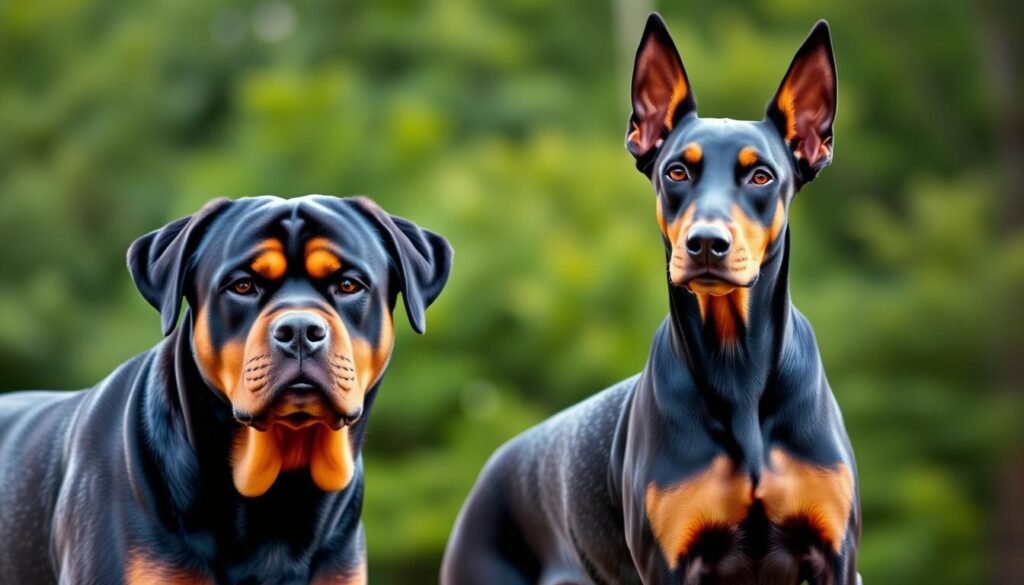
As a dog owner, knowing about health problems in Rottweilers and Dobermans is crucial. Both breeds face certain health issues that can affect their life quality. Regular vet visits and a healthy lifestyle can help manage these risks.
Common Health Issues in Rottweilers
Rottweilers often face hip dysplasia and cancer. Hip dysplasia causes arthritis and mobility issues. Keeping your dog healthy and at a good weight can help manage this.
Common cancers in Rottweilers include osteosarcoma and lymphoma. Catching these early through vet visits is key to managing them effectively.
Common Health Issues in Dobermans
Dobermans are at risk for heart problems like dilated cardiomyopathy. They also face genetic disorders like von Willebrand disease, a bleeding disorder.
Regular heart checks and genetic tests can spot these issues early. This allows for better care and management.doberman-and-husky-mix
Importance of Regular Vet Visits
Regular vet visits are crucial for catching health issues early in Rottweilers and Dobermans. A vet visit includes a physical check, vaccinations, and screenings for common problems.
| Health Issue | Rottweiler | Doberman |
|---|---|---|
| Hip Dysplasia | Common | Less Common |
| Heart Problems | Less Common | Common |
| Cancer | Common | Less Common |
Being informed and proactive about your dog’s health is important. Regular vet visits, a balanced diet, and a healthy lifestyle are essential. They help manage health concerns in Rottweilers and Dobermans.
Training Techniques for Rottweilers and Dobermans
Rottweilers and Dobermans are smart dogs that need structured training. As a dog owner, it’s key to know these breeds need consistent, positive training to be good friends.
Basic Obedience Training Tips
Basic obedience is the base for a well-behaved dog. For Rottweilers and Dobermans, start training early. Here are some tips:
- Start with simple commands like “sit,” “stay,” and “come.”
- Use positive reinforcement like treats and praise.
- Be consistent with commands and make sure everyone uses the same ones.
Advanced Training for Both Breeds
After mastering basic obedience, move to advanced training. This includes agility, complex commands, and therapy dog training. Advanced training keeps your dog challenged and strengthens your bond.
Advanced training techniques include:
- Agility training to improve fitness and coordination.
- Complex commands to test their smarts.
- Therapy dog training to make them social helpers.
Importance of Consistency in Training
Consistency is crucial when training Rottweilers and Dobermans. They love routine and clear rules. Without consistency, they might get confused and have behavior problems.doberman-floppy-ears
Tips for maintaining consistency:
- Set a regular training schedule.
- Always use the same commands and hand signals.
- Make sure everyone in the family agrees on training.
To show the training differences and similarities between Rottweilers and Dobermans, here’s a comparison:
| Training Aspect | Rottweiler | Doberman |
|---|---|---|
| Intelligence Level | High | High |
| Response to Commands | Good with consistent training | Excellent with positive reinforcement |
| Training Needs | Regular exercise and mental stimulation | Challenging tasks and socialization |
Nutrition Needs for Mixed Breed Dogs
Nutrition is key for the health of Rottweiler and Doberman mixes. A balanced diet keeps them energetic and healthy. Their diet needs are complex, needing careful thought.
Recommended Diet for Rottweilers
Rottweilers are big and strong, needing a special diet. They need high-quality protein for their muscles. A balanced diet with proteins, fats, carbs, vitamins, and minerals is best.
They can easily get too fat, so watch their food and make sure they exercise.
Recommended Diet for Dobermans
Dobermans are sleek and full of energy. They need a diet full of rich nutrients for their muscles. A diet with lots of protein and some fat is good for them.german-shepherd-and-doberman-cross-breed
They also need plenty of fresh water, because they are very active.
Dietary Considerations for Mixed Breeds
For a Rottweiler Doberman mix, consider both breeds’ needs. A diet rich in protein, with some fat and carbs, is best. Watch their calories to avoid obesity.
Seeing a vet regularly helps create a diet just right for your dog.
Feeding your Rottweiler Doberman mix the right food is more than just filling their bowl. It’s about giving them the nutrients they need to be healthy and happy. By understanding their diet needs, you can help them live a great life.
Exercise Requirements for Rottweilers and Dobermans
It’s key to know how much exercise Rottweilers and Dobermans need. Both are active and need regular physical activity. This keeps them healthy and happy.
Daily Exercise Recommendations
Rottweilers and Dobermans need at least 60 minutes of exercise daily. This can include walks, playtime, and activities like running or agility training. For Rottweilers, activities that challenge them physically and mentally are important. This includes obedience training or hiking.
Dobermans, being very energetic, need a variety of exercises. This includes sprinting, fetch, and interactive games. Both breeds need consistent and varied exercise to prevent boredom and keep them engaged.
Fun Activities for Both Breeds
Doing fun activities with your Rottweiler or Doberman is great. It provides exercise and strengthens your bond. Some fun activities include:
- Agility training
- Long walks or hikes
- Playing fetch
- Sprinting or running
- Interactive puzzle toys
These activities help burn off energy and keep your dog’s mind sharp.
Signs of Insufficient Exercise
If your Rottweiler or Doberman isn’t getting enough exercise, you might see signs. These include:
- Destructive behavior
- Restlessness or hyperactivity
- Weight gain or obesity
- Anxiety or stress
Spotting these signs early and adjusting their exercise can prevent these issues. It ensures your dog stays happy and healthy.
Living Conditions for Both Breeds
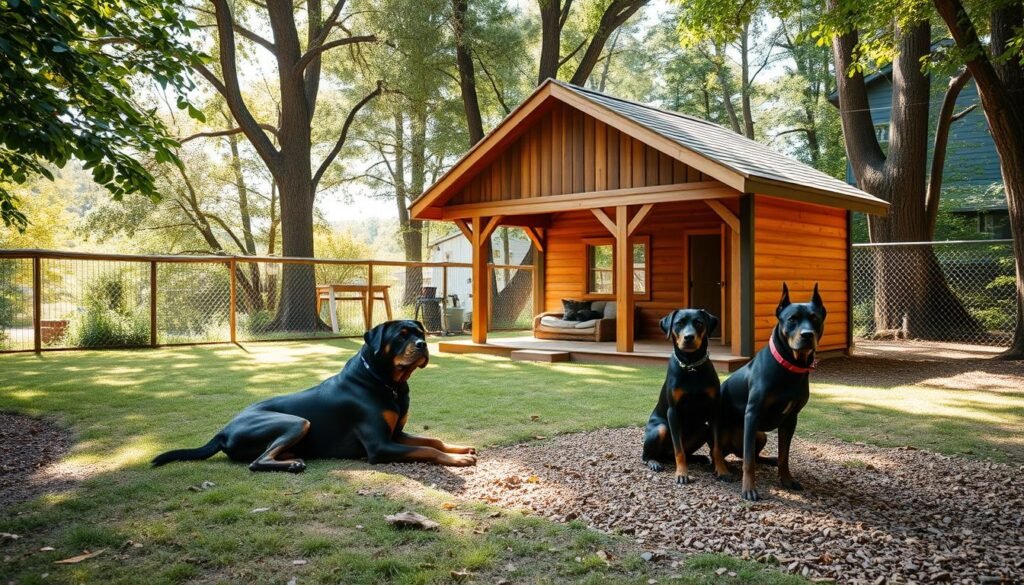
Creating a great living space for Rottweilers and Dobermans is key to their happiness. They need room to move and a safe yard. We’ll look at the best homes for them, tips for big dog spaces, and why outdoor safety matters.
Ideal Home Environments
Both breeds love homes with lots of room. An ideal home has a fenced yard for play and a cozy indoor spot for rest.
Rottweilers need more space because of their size. They love to run and play. Dobermans also need space but are flexible as long as they get to move.
Adapting Your Space for Large Dogs
Adjusting your home for big dogs like Rottweilers and Dobermans is important. First, make your home safe by removing dangers and keeping toxic stuff out of reach. Then, make sure they have comfy places to sleep.cane-corso-doberman-mix
- Secure your trash cans and toxic substances.
- Provide comfortable bedding areas.
- Ensure your yard is securely fenced.
Importance of Safe Outdoor Areas
Safe outdoor areas are vital for Rottweilers and Dobermans. A fenced yard lets them exercise and stay safe from dangers.
| Feature | Rottweilers | Dobermans |
|---|---|---|
| Space Requirements | Need a lot of space to move around | Adaptable but need regular exercise |
| Fencing Requirements | Securely fenced yard is essential | Securely fenced yard is essential |
| Indoor Comfort | Comfortable resting areas are necessary | Comfortable resting areas are necessary |
By following these tips, you can make a happy and healthy home for your Rottweiler or Doberman.
Grooming Rottweilers and Dobermans
Grooming Rottweilers and Dobermans is more than just brushing their coats. It’s about keeping them healthy and happy. Each breed has its own grooming needs that are important for their well-being.
Grooming Needs for Rottweilers
Rottweilers have a thick double coat that sheds a lot, mainly during shedding season. Brushing them regularly is essential to manage this shedding and prevent matting. A weekly brushing routine helps keep their coat healthy by distributing skin oils.
Nail care is also crucial for Rottweilers. Their nails need to be trimmed regularly to avoid overgrowth. This can cause discomfort and health problems.
Grooming Needs for Dobermans
Dobermans have a short, smooth coat that needs less care than Rottweilers. Still, they benefit from regular brushing to remove dead hair and distribute skin oils. Regular grooming helps keep their sleek appearance.
It’s also important to check their ears regularly for signs of infection and to clean them as needed. Ear care is a vital part of their grooming routine.
Tools and Tips for Effective Grooming
For both breeds, having the right grooming tools is crucial. You’ll need a good quality brush, nail clippers, and ear cleaning solution. For Rottweilers, a de-shedding tool is useful during shedding season.
- A slicker brush or pin brush for coat maintenance
- Nail clippers designed for large breeds
- Ear cleaning solution and cotton balls
Making grooming a positive experience for your dog is key. Start with short sessions and gradually increase the duration as they become more comfortable with the process.
Socialization Strategies for Rottweilers and Dobermans

Socialization is key for Rottweilers and Dobermans to become confident and calm friends. These breeds are known for their loyalty and protective nature. It’s important to start socialization early.
Importance of Early Socialization
Early socialization is crucial for Rottweilers and Dobermans. It helps them get used to different places, people, and animals. This reduces anxiety and aggression. Socialization classes are great for this, offering a safe space for puppies to meet others.
It’s important to introduce them to new things early on. This includes dog parks, new people, and different sounds and places. Positive reinforcement is essential, rewarding calm behavior and gently correcting any aggression or fear.
Group Classes vs. Individual Training
Choosing between group classes and individual training is a common debate. Group classes let dogs meet others and people, teaching them to handle crowds. Individual training gives focused attention, tackling specific issues.
| Training Method | Benefits | Drawbacks |
|---|---|---|
| Group Classes | Socialization with other dogs and people, cost-effective | Potential for dog conflicts, less personalized attention |
| Individual Training | Personalized attention, focus on specific behavioral issues | More expensive, limited socialization opportunities |
Managing Interaction with Other Dogs
It’s vital to manage how Rottweilers, Dobermans, and other dogs interact. Watch their body language and step in if you see aggression or fear. Gradual introductions to other dogs can prevent fights.
Understanding dog behavior and recognizing stress or aggression signs is important. Training your dog to respond to basic commands in busy places helps them interact calmly with others.
Compatibility with Other Pets
Adding a new pet to your home, like a Rottweiler or Doberman, needs careful thought. These breeds have strong personalities and can be assertive. It’s important to know how they get along with other pets for a happy home.
Rottweilers and Their Compatibility
Rottweilers are often misunderstood because of their size and protective nature. But, they can be great family pets. They do well with other animals if they’re socialized early.
Key Factors Influencing Rottweiler Compatibility:
- Early socialization
- Training and obedience
- Introduction to other pets at a young age
Dobermans and Their Compatibility
Dobermans are loyal and smart. They might be shy around strangers but usually get along with other pets. This is true if they’re raised together.
Tips for Enhancing Doberman Compatibility:
- Provide consistent training and mental stimulation.
- Ensure early socialization to various environments and pets.
- Supervise interactions with other pets, specially in the early stages.
Tips for Introducing New Pets
Bringing a new pet into a home with Rottweilers or Dobermans needs patience and planning. Here are some tips for a smooth introduction:
| Introduction Steps | Description |
|---|---|
| Prepare a separate room for the new pet | Keep the new pet isolated initially to prevent immediate face-to-face contact. |
| Use pheromones or calming aids | Reduce stress during the introduction process. |
| Gradually introduce scents and sounds | Allow pets to become familiar with each other’s presence without the stress of a face-to-face encounter. |
| Monitor body language | Watch for signs of aggression or fear, and intervene if necessary. |
“The key to successful pet introductions lies in patience and careful observation. Rushing the process can lead to conflicts and stress for both pets and owners.” – Pet Behavior Expert
By following these guidelines and understanding the specific needs of Rottweilers and Dobermans, you can create a harmonious household where all pets coexist peacefully.
Conclusion: Choosing Between a Rottweiler and a Doberman
Choosing between a Rottweiler and a Doberman, or thinking about owning both, requires careful thought. You need to consider your lifestyle, experience, and how much time you can spend with your dog. Both breeds have special qualities that make them great pets.
Factors to Consider When Deciding
When choosing Rottweiler or Doberman, think about their energy, training needs, and grooming. Rottweilers are calm and confident. Dobermans are loyal and protective.
Final Thoughts on Owning Both Breeds
Owning both breeds, or a mix, can be very rewarding. With the right training and socialization, they can do well in many homes. But, remember the health issues and costs that come with these breeds.
Encouragement for Potential Owners
If you’re thinking about getting a Rottweiler or Doberman, get ready to give them lots of love and care. With the right approach, owning one or both can be a very fulfilling experience.